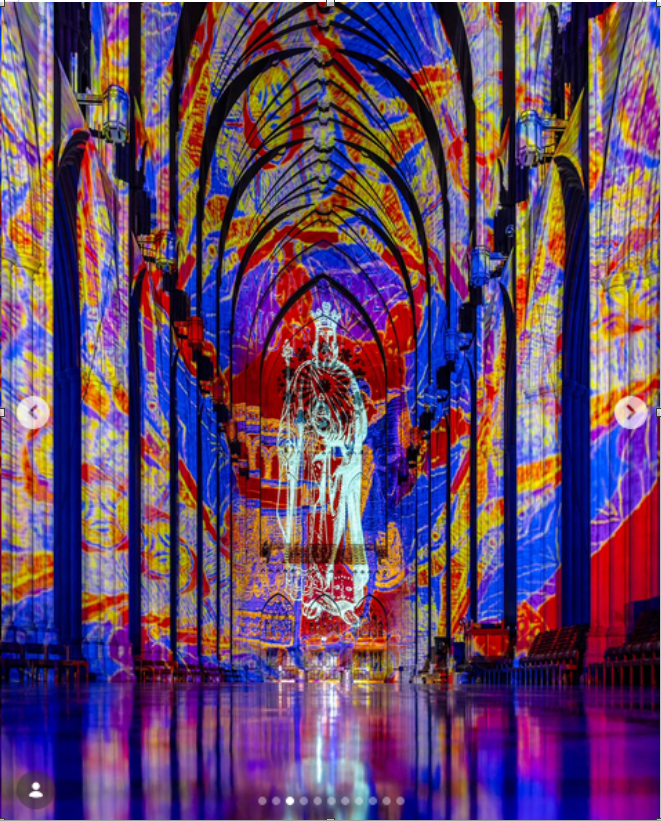
This section brings together reference texts and reflections on Christian art, distinguishing between the documents of the Magisterium and the contributions of various Christian authors.
The documents of the Magisterium contain texts that guide and underpin the relationship between the Church and art, whilst those by other Christian authors offer personal, historical and contemporary perspectives from different fields of knowledge and artistic creation.
This section provides insights into the meaning, function and evolution of Christian art.
HIS HOLINESS POPE BENEDICT XVI GENERAL AUDIENCE Paul VI Audience Hall Wednesday, November 18, 2009 The Cathedral from the Romanesque to the Gothic Architecture: The Theological Background Dear Brothers and Sisters, In the Catecheses of the past few weeks I have presented several aspects of medieval theology. The Christian faith, however...
FRANCIS - ADDRESS TO THE PATRONS OF THE ARTS IN THE VATICAN MUSEUMS, IX.28.2018
ADDRESS OF HIS HOLINESS POPE FRANCIS TO THE PATRONS OF THE ARTS IN THE VATICAN MUSEUMS Consistory Hall Friday, September 28, 2018 Dear Friends, I am pleased to welcome you on the occasion of your meeting in Rome, which this year coincides with the thirty-fifth anniversary of your Association’s foundation. Your generosity over these years...
LETTER OF HIS HOLINESS POPE JOHN PAUL II TO ARTISTS 1999 To all who are passionately dedicated to the search for new “epiphanies” of beauty so that through their creative work as artists they may offer these as gifts to the world. “God saw all that he had made, and it was very good” (Gn 1:31) The artist, image of God the Creator 1. None...
‘ARTISTS’ MASS’ IN THE SISTINE CHAPEL HOMILY BY PAUL VI Solemnity of the Ascension of Our Lord Thursday, May 7, 1964 Dear Gentlemen, and even dearer children! Before we begin this brief conversation, we would like to put your minds at ease regarding any apprehension or unease that might easily overcome anyone finding themselves in the...
ADDRESS OF HIS HOLINESS POPE LEO XIV TO THE ARTISTS AND CURATORS PARTICIPATING IN “THE ART OF POSSIBILITY: WEAVING TOGETHER” MEETING ORGANIZED BY THE DICASTERY FOR CULTURE AND EDUCATION Consistory Hall Friday, October, 2, 2026 In the name of the Father, and of the Son, and of the Holy Spirit. Peace be with you. Good morning, everyone...
HIS HOLINESS POPE BENEDICT XVI GENERAL AUDIENCE Castel Gandolfo Wednesday, August 31, 2011 Art and Prayer Dear Brothers and Sisters, In this period I have recalled several times the need for every Christian, in the midst of the many occupations that fill our days, to find time for God and for prayer. The Lord himself gives us many...
ADDRESS OF POPE PAUL VI TO ARTISTS December 8, 1965 We now address you, artists, who are taken up with beauty and work for it: poets and literary men, painters, sculptors, architects, musicians, men devoted to the theater and the cinema. To all of you, the Church of the council declares to you through our voice: if you are friends of...
FRANCISCO - DISCURSO 50º ANIVERSARIO INAUGURACIÓN COLECCIÓN ARTE RELIGIOSO MODERNO, 23.VI.2023
DISCURSO DEL SANTO PADRE FRANCISCO A LOS PARTICIPANTES EN EL ENCUENTRO DE ARTISTAS CON MOTIVO DEL 50 ANIVERSARIO DE LA INAUGURACIÓN DE LA COLECCIÓN DE ARTE RELIGIOSO MODERNO DE LOS MUSEOS VATICANOS Capilla Sixtina Viernes, 23 de junio de 2023 ________________________________________ ¡Buenos días, bienvenidos! ¡Aquí todo es arte, ahí...
JOHN PAUL II - APOSTOLIC LETTER DOUDECIMUM SAECULUM, XII.4.1987
APOSTOLIC LETTER DUODECIMUM SAECULUM OF THE SUPREME PONTIFF JOHN PAUL II TO THE EPISCOPATE OF THE CATHOLIC CHURCH ON THE OCCASION OF THE 1200th ANNIVERSARY OF THE SECOND COUNCIL OF NICAEA December 4, 1987 Venerable Brothers, Greetings and the Apostolic Blessing! 1. The Twelfth Centenary of the Second Council of Nicaea (787) was the...
LEO XIV - HOMILY AT THE SAGRADA FAMILIA, BARCELONA, VI.10.2026
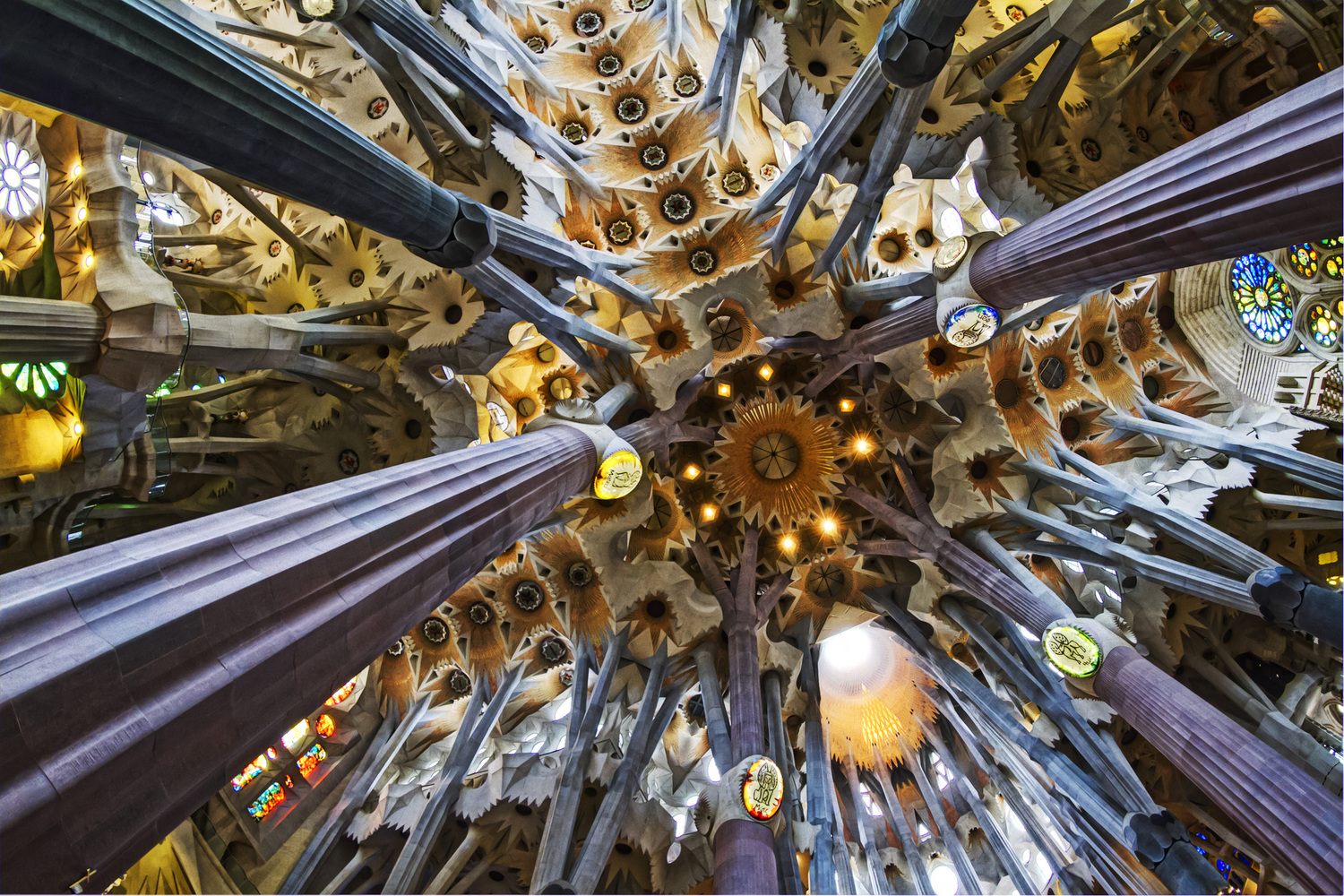
HOMILY OF HIS HOLINESS POPE LEO XIV Basilica of the Sagrada Família (Barcelona) Wednesday, June, 10, 2026 “Senyor, sobirà nostre, que n’és, de gloriós, el vostre nom per tota la terra!” (Ps 8:1). With the praise of this psalm, so full of joy and wonder, I greet all of you, dear brothers and sisters. I express my gratitude to their...
MESSAGE FROM CARD. RATZINGER - CONTEMPLATION OF BEAUTY, VIII.24.2002
MESSAGE OF HIS EMINENCE CARD. JOSEPH RATZINGER TO THE COMMUNION AND LIBERATION (CL) MEETING AT RIMINI (AUGUST 24-30, 2002) "The Feeling of Things, the Contemplation of Beauty" Every year, in the Liturgy of the Hours for the Season of Lent, I am struck anew by a paradox in Vespers for Monday of the Second Week of the Psalter. Here, side...
FRANCIS - ADDRESS TO THE MEMBERS OF THE DIACONIE DE LA BEAUTÉ ASSOCIATION, II.17.2022
ADDRESS BY HIS HOLINESS POPE FRANCIS TO THE MEMBERS OF THE “DIACONIE DE LA BEAUTÉ” ASSOCIATION Clementine Hall Thursday, February, 17, 2022 Dear friends, dear artists! I am delighted to receive you and to extend a warm welcome to you in Rome. Thank you, Monsignor Le Gall, for taking the initiative to organise this meeting to mark the...
JOHN PAUL II - ADDRESS AT THE OPENING OF THE EXIBITION PAUL VI, IV.23.1999
ADDRESS OF JOHN PAUL II AT THE OPENING OF THE EXHIBITION "PAUL VI, A LIGHT FOR ART" Friday, April 23, 1999 Your Eminence, Venerable Brothers in the Episcopate, Distinguished Ladies and Gentlemen, With great joy I welcome all of you who are taking part in the inauguration of the exhibition "Paul VI, a light for art", which opened in the...
PAUL VI - MESSAGE INAUGURATION COLLECTION OF MODERN RELIGIOUS ART, VI.23.1973
MESSAGE BY PAUL VI ON THE OCCASION OF THE INAUGURATION OF THE COLLECTION OF MODERN RELIGIOUS ART IN THE VATICAN MUSEUMS Saturday, June, 23, 1973. Ladies and gentlemen, You will see that this opening of a new collection of modern religious art in the Vatican immediately takes on the character of a sacred ceremony: praying and singing, we...
LEO XIV - GREETING OF THE LOUISIANA PATRONS OF THE ARTS, X.7.2026
GREETING OF HIS HOLINESS POPE LEO XIV TO THE LOUISIANA PATRONS OF THE ARTS IN THE VATICAN MUSEUMS October 7, 2026 In the name of the Father, and of the Son, and of the Holy Spirit. Peace be with you. Dear friends, I am pleased to meet with you this morning and welcome you to the Vatican. As Patrons of the Arts in the Vatican Museums, you...
BENEDICT XVI - HOMILY AT THE SAGRADA FAMILIA, VII.11.2010
HOLY MASS WITH DEDICATION OF THE CHURCH OF THE SAGRADA FAMILIA AND OF THE ALTAR HOMILY OF HIS HOLINESS BENEDICT XVI Barcelona Sunday, November 7, 2010 Dear Brothers and Sisters in the Lord, “This day is holy to the Lord your God; do not mourn or weep. … The joy of the Lord is your strength” (Neh 8:9-11). With these words from the first...
JOHN PAUL II - HOMILY IN THE SISTINE CHAPEL, IV.8.1994
CELEBRATION OF THE THE UNVEILING OF THE RESTORATIONS OF MICHELANGELO'S FRESCOS IN THE SISTINE CHAPEL HOMILY OF HIS HOLINESS JOHN PAUL II April, 8, 1994 "We believe in one God, the Father, the Almighty, maker of heaven and earth, of all that is seen and unseen." Today we are entering the Sistine Chapel to admire the marvellously restored...
PAUL VI - HOMILY IN THE FIFTH CENTENARY OF THE BIRTH OF MICHELANGELO, II.29.1976
FIFTH CENTENARY OF THE BIRTH OF MICHELANGELO HOMILY BY PAUL VI Sunday, February, 29,1976 Dear children, fellow artists and lovers of art, For the third time during our pontificate, you have been invited to gather, and today for an event which we consider to be of great significance. The first meeting in the Sistine Chapel was intended to...
ENCUENTRO CON LOS ARTISTAS DISCURSO DEL SANTO PADRE BENEDICTO XVI Capilla Sixtina Sábado 21 de noviembre de 2009 Señores cardenales; venerados hermanos en el episcopado y en el sacerdocio; ilustres artistas; señoras y señores: Con gran alegría os acojo en este lugar solemne y rico de arte y de recuerdos. A todos y cada uno dirijo mi...
BENEDICT XVI - HOMILY REOPENING PAULINE CHAPEL, VII.4.2009
VESPERS ON THE OCCASION OF THE REOPENING OF THE RECENTLY RESTORED PAULINE CHAPEL IN THE VATICAN APOSTOLIC PALACE HOMILY OF HIS HOLINESS POPE BENEDICT XVI Pauline Chapel Saturday, July 4, 2009 Your Eminences, Venerable Brothers in the Episcopate and in the Priesthood, Dear Brothers and Sisters, Today, a few days after the Solemnity of Sts...
CONSTITUTION ON THE SACRED LITURGY SACROSANCTUM CONCILIUM SOLEMNLY PROMULGATED BY HIS HOLINESS POPE PAUL VI ON DECEMBER 4, 1963 INTRODUCTION 1. This sacred Council has several aims in view: it desires to impart an ever increasing vigor to the Christian life of the faithful; to adapt more suitably to the needs of our own times those...
CHALLENGES FACING CONTEMPORARY CHRISTIAN ARCHITECTURE
Joaquín González-Miranda
The author highlights the characteristics of religious art and the challenges facing contemporary religious architecture in providing appropriate responses. He emphasises the need to seek the transcendence of sacred space.
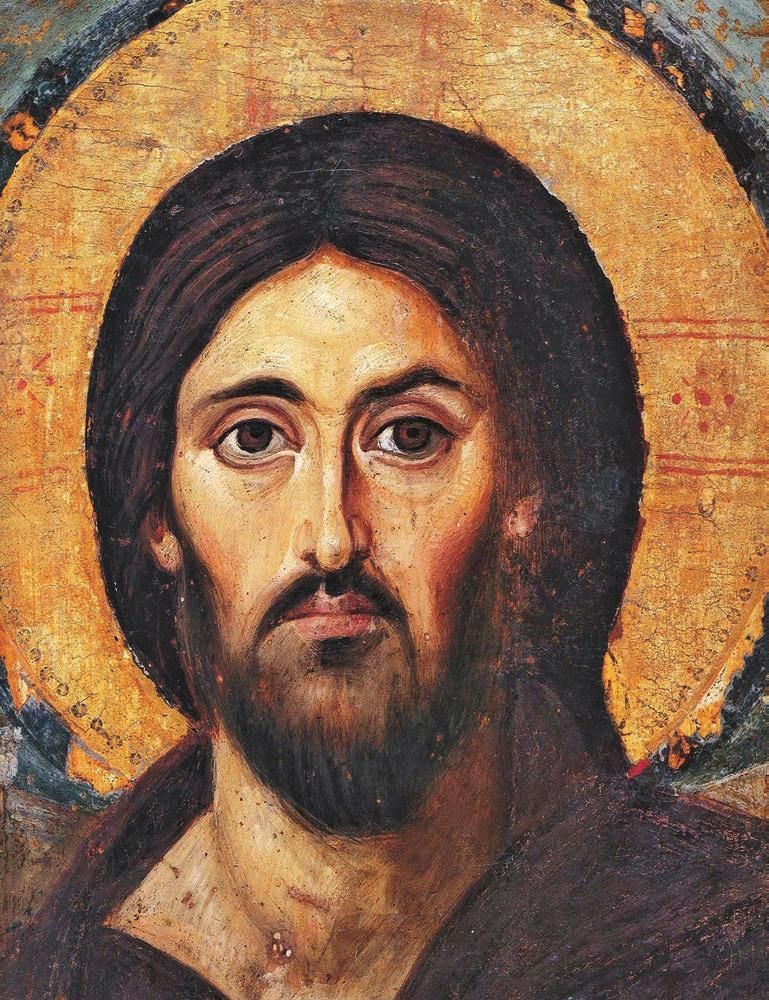
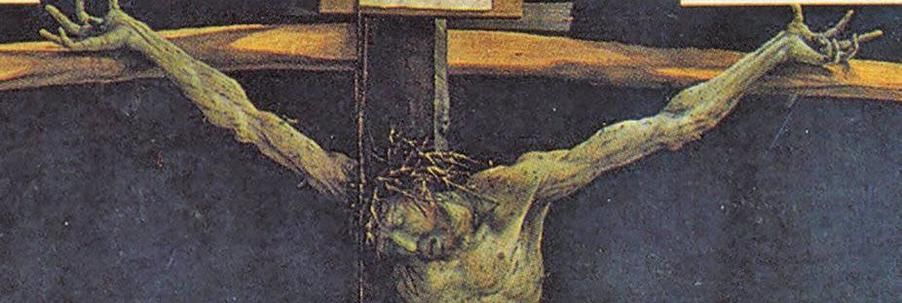
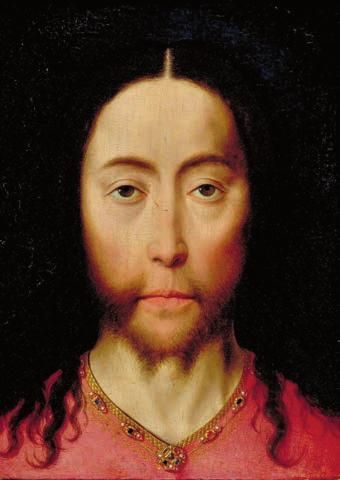
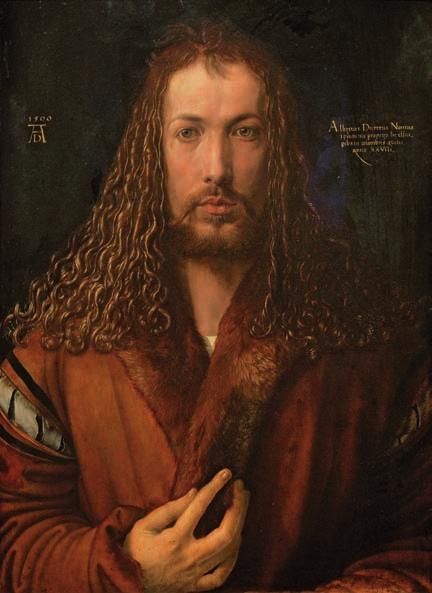
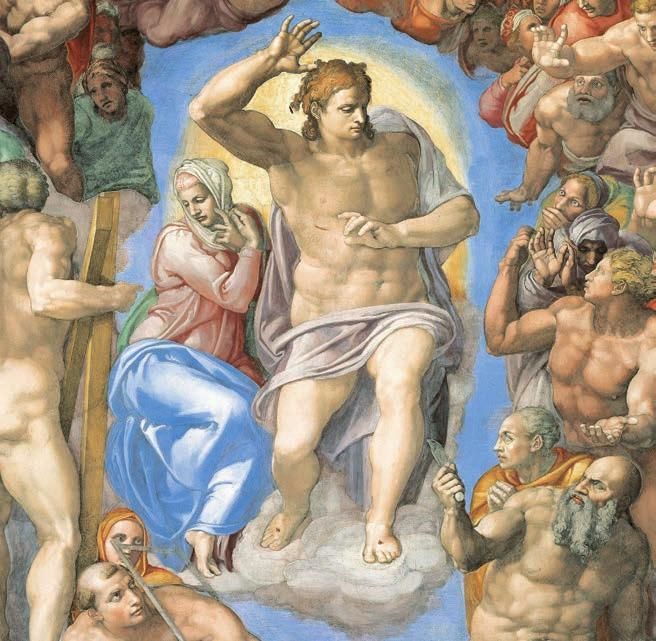
EL ROSTRO DE CRISTO EN EL ARTE FERMÍN LABARGA Universidad de Navarra Facultad de Teología Vultum tuum requiram, Domine! Nadie en toda la historia de la humanidad ha suscitado tanto interés como Jesucristo. Todo lo que se refiere a Él resulta interesante: sus hechos, sus palabras, los lugares donde vivió, … Y también, por supuesto, su...
THE SACRAMENTAL NATURE OF LITURGICAL SPACE Some theological insights for contemporary liturgical architecture Félix María Arocena Full Professor Emeritus of Liturgy Faculty of Theology – University of Navarra In these pages, the aim is to strike a balance between the architectural and liturgical aspects, in a synergy that we all find...
Paul VI Audience Hall Wednesday, November 18, 2009
The Cathedral from the Romanesque to the Gothic Architecture: The Theological Background
Dear Brothers and Sisters,
In the Catecheses of the past few weeks I have presented several aspects of medieval theology. The Christian faith, however, deeply rooted in the men and women of those centuries, did not only give rise to masterpieces of theological literature, thought and faith. It also inspired one of the loftiest expressions of universal civilization: the cathedral, the true glory of the Christian Middle Ages. Indeed, for about three centuries, from the beginning of the 11th century Europe experienced extraordinary artistic creativity and fervour. An ancient chronicler described the enthusiasm and the hard-working spirit of those times in these words: "It happens that throughout the world, but especially in Italy and in Gaul, people began rebuilding churches although many had no need of such restoration because they were still in good condition. "It was like a competition between one people and another; one might have believed that the world, shaking off its rags and tatters, wanted to be reclad throughout in the white mantle of new churches. In short, all these cathedral churches, a large number of monastic churches and even village oratories, were restored by the faithful at that time" (Rodolphus Glaber, Historiarum, libri quinque, 3, 4).
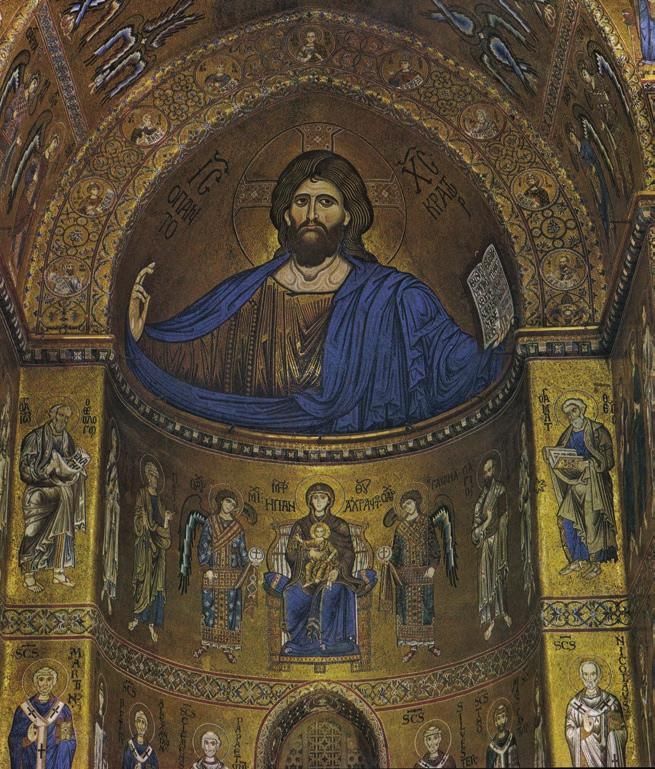
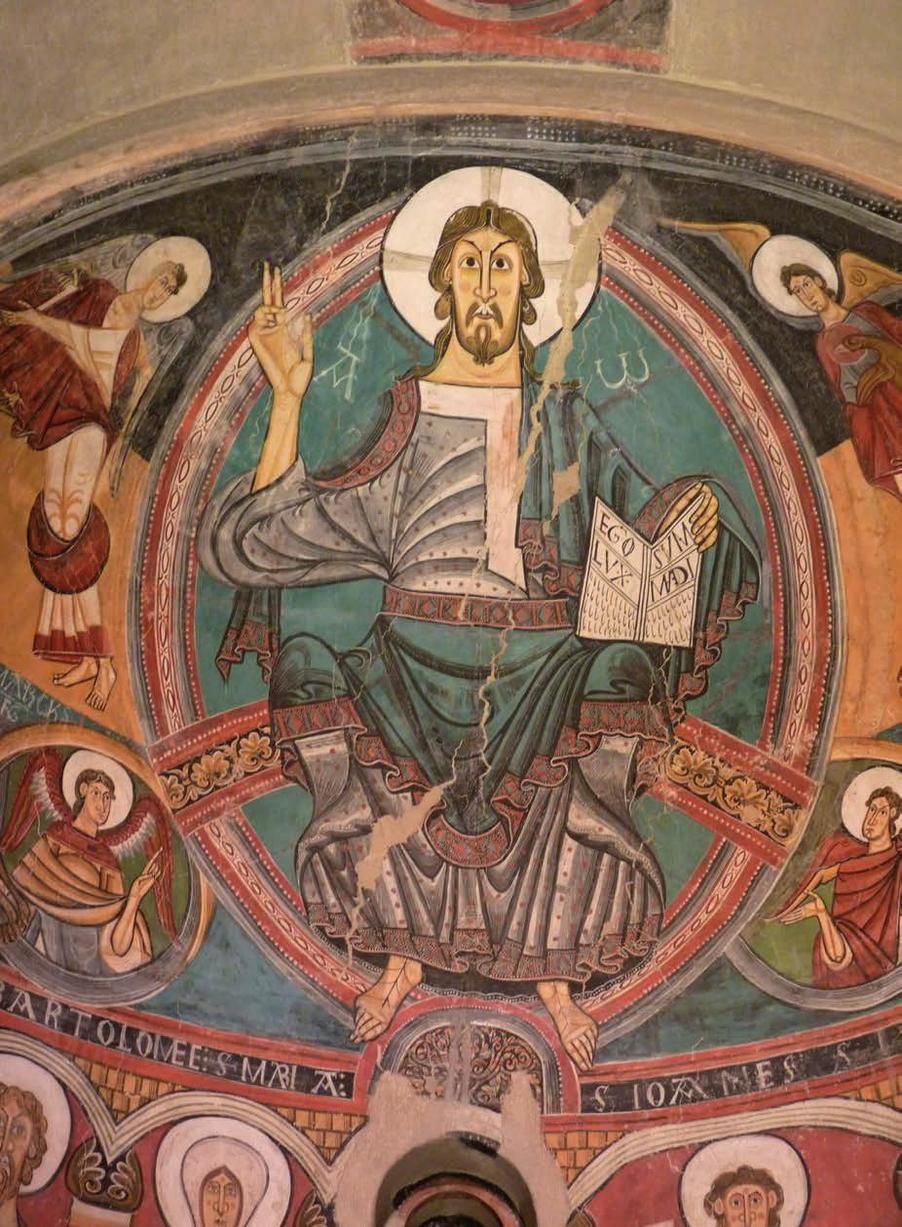
Various factors contributed to this rebirth of religious architecture. First of all more favourable historical conditions, such as greater political stability, accompanied by a constant increase in the population and the gradual development of the cities, trade and wealth. Furthermore, architects found increasingly complicated technical solutions to increase the size of buildings, at the same time guaranteeing them both soundness and majesty. It was mainly thanks to the enthusiasm and spiritual zeal of monasticism, at the height of its expansion, that abbey churches were built in which the Liturgy might be celebrated with dignity and solemnity. They became the destination of continuous pilgrimages where the faithful, attracted by the veneration of saints' relics, could pause in prayer. So it was that the Romanesque churches and cathedrals came into being. They were characterized by the longitudinal development, in length, of the aisles, in order to accommodate numerous faithful. They were very solid churches with thick walls, stone vaults and simple, spare lines. An innovation was the introduction of sculptures. Because Romanesque churches were places for monastic prayer and for the worship of the faithful, rather than being concerned with technical perfection the sculptors turned their attention in particular to the educational dimension. Since it was necessary to inspire in souls strong impressions, sentiments that could persuade them to shun vice and evil and to practise virtue and goodness, the recurrent theme was the portrayal of Christ as Universal Judge surrounded by figures of the Apocalypse. It was usually the portals of the Romanesque churches which displayed these figures, to emphasize that Christ is the Door that leads to Heaven. On crossing the threshold of the sacred building, the faithful entered a space and time different from that of their ordinary life. Within the church, believers in a sovereign, just and merciful Christ in the artists' intention could enjoy in anticipation eternal beatitude in the celebration of the liturgy and of devotional acts carried out in the sacred building.
In the 12th and 13th centuries another kind of architecture for sacred buildings spread from the north of France: the Gothic. It had two new characteristics in comparison with the Romanesque, a soaring upward movement and luminosity. Gothic cathedrals show a synthesis of faith and art harmoniously expressed in the fascinating universal language of beauty which still elicits wonder today. By the introduction of vaults with pointed arches supported by robust pillars, it was possible to increase their height considerably. The upward thrust was intended as an invitation to prayer and at the same time was itself a prayer. Thus the Gothic cathedral intended to express in its architectural lines the soul's longing for God. In addition, by employing the new technical solutions, it was possible to make openings in the outer walls and to embellish them with stained-glass windows. In other words the windows became great luminous images, very suitable for instructing the people in faith. In them scene by scene the life of a saint, a parable or some other biblical event were recounted. A cascade of light poured through the stained-glass upon the faithful to tell them the story of salvation and to involve them in this story.
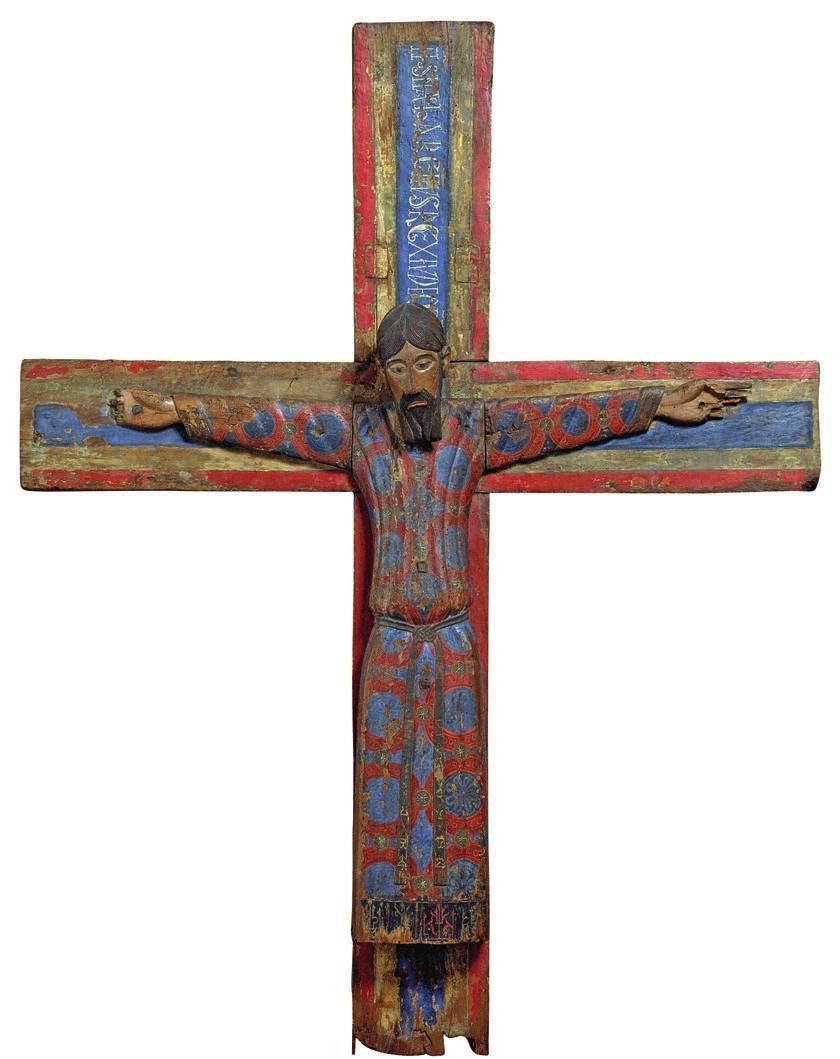
Another merit of Gothic cathedrals is that the whole Christian and civil community participated in their building and decoration in harmonious and complementary ways. The lowly and the powerful, the illiterate and the learned; all participated because in this common house all believers were instructed in the faith. Gothic sculpture in fact has made cathedrals into "stone Bibles", depicting Gospel episodes and illustrating the content of the liturgical year, from the Nativity to the glorification of the Lord. In those centuries too, the perception of the Lord's humanity became ever more widespread and the sufferings of his Passion were represented realistically: the suffering Christ (Christus patiens) an image beloved by all and apt to inspire devotion and repentance for sins. Nor were Old Testament figures lacking; thus to the faithful who went to the cathedral their histories became familiar as part of the one common history of salvation. With faces full of beauty, gentleness and intelligence, Gothic sculpture of the 13th century reveals a happy and serene religious sense, glad to show a heartfelt filial devotion to the Mother of God, sometimes seen as a young woman, smiling and motherly, but mainly portrayed as the Queen of Heaven and earth, powerful and merciful. The faithful who thronged the Gothic cathedrals also liked to find there, expressed in works of art, saints, models of Christian life and intercessors with God. And there was no shortage of the "secular" scenes of life, thus, here and there, there are depictions of work in the fields, of the sciences and arts. All was oriented and offered to God in the place in which the Liturgy was celebrated. We may understand better the meaning attributed to a Gothic cathedral by reflecting on the text of the inscription engraved on the central portal of Saint-Denis in Paris: "Passerby, who is stirred to praise the beauty of these doors, do not let yourself be dazzled by the gold or by the magnificence, but rather by the painstaking work. Here a famous work shines out, but may Heaven deign that this famous work that shines make spirits resplendent so that, with the luminous truth, they may walk toward the true light, where Christ is the true door".
Dear brothers and sisters, I would now like to emphasize two elements of Romanesque and Gothic art that are also helpful to us. The first: the masterpieces of art created in Europe in past centuries are incomprehensible unless one takes into account the religious spirit that inspired them. Marc Chagall, an artist who has always witnessed to the encounter between aesthetics and faith, wrote that "For centuries painters dipped their brushes into that colourful alphabet which was the Bible". When faith, celebrated in the Liturgy in a special way, encounters art, it creates a profound harmony because each can and wishes to speak of God, making the Invisible visible. I would like to share this encounter with artists on 21 November, renewing to them the proposal of friendship between Christian spirituality and art that my venerable Predecessors hoped for, especially the Servants of God Paul VI and John Paul II. The second element: the strength of the Romanesque style and the splendour of the Gothic cathedrals remind us that the via pulchritudinis, the way of beauty, is a privileged and fascinating path on which to approach the Mystery of God. What is the beauty that writers, poets, musicians, and artists contemplate and express in their language other than the reflection of the splendour of the eternal Word made flesh? Then St Augustine says: "Question the beauty of the earth, question the beauty of the sea, question the beauty of the air, amply spread around everywhere, question the beauty of the sky, question the serried ranks of the stars, question the sun making the day glorious with its bright beams, question the moon tempering the darkness of the following night with its shining rays, question the animals that move in the waters, that amble about on dry land, that fly in the air; their souls hidden, their bodies evident; the visible bodies needing to be controlled, the invisible souls controlling them. Question all these things. They all answer you, "Here we are, look; we're beautiful!' Their beauty is their confession. Who made these beautiful changeable things, if not one who is beautiful and unchangeable?" (Sermo CCXLI, 2: PL 38, 1134).
Dear brothers and sisters, may the Lord help us to rediscover the way of beauty as one of the itineraries, perhaps the most attractive and fascinating, on which to succeed in encountering and loving God.
FRANCIS - ADDRESS TO THE PATRONS OF THE ARTS IN THE VATICAN MUSEUMS, IX.28.2018
I am pleased to welcome you on the occasion of your meeting in Rome, which this year coincides with the thirty-fifth anniversary of your Association’s foundation.
Your generosity over these years has contributed to the restoration of numerous art treasures held in the Vatican Museums. In this way you have continued a centuries-long tradition, imitating the achievements of those who contributed to the Church’s history through art. These works include the frescoes and sarcophagi in the catacombs, the great Romanesque and Gothic cathedrals, and the masterpieces of Michelangelo, Raphael, Bernini and Canova.
Throughout history, art has been second only to life in bearing witness to the Lord. It was, and remains, a majestic road allowing us more than by words and ideas to approach the faith, because it follows the same path of faith, that of beauty. The beauty of art enriches life and creates communion, because it unites God, man and creation in a single symphony. It connects the past, the present and the future, and it attracts – in the same place and with the same gaze – different and far-off peoples.
Celebrating your anniversary allows us to recall this history with gratitude, but it also enables us to renew our awareness of the important mission of preserving such a beautiful heritage that is so beneficial to men and women. Contemplating great art, which expresses the faith, helps us rediscover what truly matters in life. In leading us both within and above ourselves Christian art points us to the love that created us, to the mercy which saves us, and to the hope that awaits us.
In today’s troubled world, unfortunately so often torn and damaged by selfishness and the thirst for power, art represents, perhaps even more than in the past, a universal need because it is a source of harmony and peace, and it expresses the dimension of generosity. Thanking you warmly for the good that you do, I willingly impart my Blessing accompanied by my best wishes for peace, to you and your families. And please do not forget to pray for me. May the Lord bless you all!
LETTER OF HIS HOLINESS POPE JOHN PAUL II TO ARTISTS
1999
To all who are passionately dedicated to the search for new “epiphanies” of beauty so that through their creative work as artists they may offer these as gifts to the world.
“God saw all that he had made, and it was very good” (Gn 1:31)
The artist, image of God the Creator
1. None can sense more deeply than you artists, ingenious creators of beauty that you are, something of the pathos with which God at the dawn of creation looked upon the work of his hands. A glimmer of that feeling has shone so often in your eyes when—like the artists of every age—captivated by the hidden power of sounds and words, colours and shapes, you have admired the work of your inspiration, sensing in it some echo of the mystery of creation with which God, the sole creator of all things, has wished in some way to associate you.
That is why it seems to me that there are no better words than the text of Genesis with which to begin my Letter to you, to whom I feel closely linked by experiences reaching far back in time and which have indelibly marked my life. In writing this Letter, I intend to follow the path of the fruitful dialogue between the Church and artists which has gone on unbroken through two thousand years of history, and which still, at the threshold of the Third Millennium, offers rich promise for the future.
In fact, this dialogue is not dictated merely by historical accident or practical need, but is rooted in the very essence of both religious experience and artistic creativity. The opening page of the Bible presents God as a kind of exemplar of everyone who produces a work: the human craftsman mirrors the image of God as Creator. This relationship is particularly clear in the Polish language because of the lexical link between the words stwórca (creator) and twórca (craftsman).
What is the difference between “creator” and “craftsman”? The one who creates bestows being itself, he brings something out of nothing—ex nihilo sui et subiecti, as the Latin puts it—and this, in the strict sense, is a mode of operation which belongs to the Almighty alone. The craftsman, by contrast, uses something that already exists, to which he gives form and meaning. This is the mode of operation peculiar to man as made in the image of God. In fact, after saying that God created man and woman “in his image” (cf. Gn 1:27), the Bible adds that he entrusted to them the task of dominating the earth (cf. Gn 1:28). This was the last day of creation (cf. Gn 1:28-31). On the previous days, marking as it were the rhythm of the birth of the cosmos, Yahweh had created the universe. Finally he created the human being, the noblest fruit of his design, to whom he subjected the visible world as a vast field in which human inventiveness might assert itself.
God therefore called man into existence, committing to him the craftsman's task. Through his “artistic creativity” man appears more than ever “in the image of God”, and he accomplishes this task above all in shaping the wondrous “material” of his own humanity and then exercising creative dominion over the universe which surrounds him. With loving regard, the divine Artist passes on to the human artist a spark of his own surpassing wisdom, calling him to share in his creative power. Obviously, this is a sharing which leaves intact the infinite distance between the Creator and the creature, as Cardinal Nicholas of Cusa made clear: “Creative art, which it is the soul's good fortune to entertain, is not to be identified with that essential art which is God himself, but is only a communication of it and a share in it”.(1)
That is why artists, the more conscious they are of their “gift”, are led all the more to see themselves and the whole of creation with eyes able to contemplate and give thanks, and to raise to God a hymn of praise. This is the only way for them to come to a full understanding of themselves, their vocation and their mission.
The special vocation of the artist
2. Not all are called to be artists in the specific sense of the term. Yet, as Genesis has it, all men and women are entrusted with the task of crafting their own life: in a certain sense, they are to make of it a work of art, a masterpiece. It is important to recognize the distinction, but also the connection, between these two aspects of human activity. The distinction is clear. It is one thing for human beings to be the authors of their own acts, with responsibility for their moral value; it is another to be an artist, able, that is, to respond to the demands of art and faithfully to accept art's specific dictates.(2) This is what makes the artist capable of producing objects, but it says nothing as yet of his moral character. We are speaking not of moulding oneself, of forming one's own personality, but simply of actualizing one's productive capacities, giving aesthetic form to ideas conceived in the mind.
The distinction between the moral and artistic aspects is fundamental, but no less important is the connection between them. Each conditions the other in a profound way. In producing a work, artists express themselves to the point where their work becomes a unique disclosure of their own being, of what they are and of how they are what they are. And there are endless examples of this in human history. In shaping a masterpiece, the artist not only summons his work into being, but also in some way reveals his own personality by means of it. For him art offers both a new dimension and an exceptional mode of expression for his spiritual growth. Through his works, the artist speaks to others and communicates with them. The history of art, therefore, is not only a story of works produced but also a story of men and women. Works of art speak of their authors; they enable us to know their inner life, and they reveal the original contribution which artists offer to the history of culture.
The artistic vocation in the service of beauty
3. A noted Polish poet, Cyprian Norwid, wrote that “beauty is to enthuse us for work, and work is to raise us up”.(3) The theme of beauty is decisive for a discourse on art. It was already present when I stressed God's delighted gaze upon creation. In perceiving that all he had created was good, God saw that it was beautiful as well.(4) The link between good and beautiful stirs fruitful reflection. In a certain sense, beauty is the visible form of the good, just as the good is the metaphysical condition of beauty. This was well understood by the Greeks who, by fusing the two concepts, coined a term which embraces both: kalokagathía, or beauty-goodness. On this point Plato writes: “The power of the Good has taken refuge in the nature of the Beautiful”.(5)
It is in living and acting that man establishes his relationship with being, with the truth and with the good. The artist has a special relationship to beauty. In a very true sense it can be said that beauty is the vocation bestowed on him by the Creator in the gift of “artistic talent”. And, certainly, this too is a talent which ought to be made to bear fruit, in keeping with the sense of the Gospel parable of the talents (cf. Mt 25:14-30).
Here we touch on an essential point. Those who perceive in themselves this kind of divine spark which is the artistic vocation—as poet, writer, sculptor, architect, musician, actor and so on—feel at the same time the obligation not to waste this talent but to develop it, in order to put it at the service of their neighbour and of humanity as a whole.
The artist and the common good
4. Society needs artists, just as it needs scientists, technicians, workers, professional people, witnesses of the faith, teachers, fathers and mothers, who ensure the growth of the person and the development of the community by means of that supreme art form which is “the art of education”. Within the vast cultural panorama of each nation, artists have their unique place. Obedient to their inspiration in creating works both worthwhile and beautiful, they not only enrich the cultural heritage of each nation and of all humanity, but they also render an exceptional social service in favour of the common good.
The particular vocation of individual artists decides the arena in which they serve and points as well to the tasks they must assume, the hard work they must endure and the responsibility they must accept. Artists who are conscious of all this know too that they must labour without allowing themselves to be driven by the search for empty glory or the craving for cheap popularity, and still less by the calculation of some possible profit for themselves. There is therefore an ethic, even a “spirituality” of artistic service, which contributes in its way to the life and renewal of a people. It is precisely this to which Cyprian Norwid seems to allude in declaring that “beauty is to enthuse us for work, and work is to raise us up”.
Art and the mystery of the Word made flesh
5. The Law of the Old Testament explicitly forbids representation of the invisible and ineffable God by means of “graven or molten image” (Dt 27:15), because God transcends every material representation: “I am who I am” (Ex 3:14). Yet in the mystery of the Incarnation, the Son of God becomes visible in person: “When the fullness of time had come, God sent forth his Son born of woman” (Gal 4:4). God became man in Jesus Christ, who thus becomes “the central point of reference for an understanding of the enigma of human existence, the created world and God himself”.(6)
This prime epiphany of “God who is Mystery” is both an encouragement and a challenge to Christians, also at the level of artistic creativity. From it has come a flowering of beauty which has drawn its sap precisely from the mystery of the Incarnation. In becoming man, the Son of God has introduced into human history all the evangelical wealth of the true and the good, and with this he has also unveiled a new dimension of beauty, of which the Gospel message is filled to the brim.
Sacred Scripture has thus become a sort of “immense vocabulary” (Paul Claudel) and “iconographic atlas” (Marc Chagall), from which both Christian culture and art have drawn. The Old Testament, read in the light of the New, has provided endless streams of inspiration. From the stories of the Creation and sin, the Flood, the cycle of the Patriarchs, the events of the Exodus to so many other episodes and characters in the history of salvation, the biblical text has fired the imagination of painters, poets, musicians, playwrights and film-makers. A figure like Job, to take but one example, with his searing and ever relevant question of suffering, still arouses an interest which is not just philosophical but literary and artistic as well. And what should we say of the New Testament? From the Nativity to Golgotha, from the Transfiguration to the Resurrection, from the miracles to the teachings of Christ, and on to the events recounted in the Acts of the Apostles or foreseen by the Apocalypse in an eschatological key, on countless occasions the biblical word has become image, music and poetry, evoking the mystery of “the Word made flesh” in the language of art.
In the history of human culture, all of this is a rich chapter of faith and beauty. Believers above all have gained from it in their experience of prayer and Christian living. Indeed for many of them, in times when few could read or write, representations of the Bible were a concrete mode of catechesis.(7) But for everyone, believers or not, the works of art inspired by Scripture remain a reflection of the unfathomable mystery which engulfs and inhabits the world.
A fruitful alliance between the Gospel and art
6. Every genuine artistic intuition goes beyond what the senses perceive and, reaching beneath reality's surface, strives to interpret its hidden mystery. The intuition itself springs from the depths of the human soul, where the desire to give meaning to one's own life is joined by the fleeting vision of beauty and of the mysterious unity of things. All artists experience the unbridgeable gap which lies between the work of their hands, however successful it may be, and the dazzling perfection of the beauty glimpsed in the ardour of the creative moment: what they manage to express in their painting, their sculpting, their creating is no more than a glimmer of the splendour which flared for a moment before the eyes of their spirit.
Believers find nothing strange in this: they know that they have had a momentary glimpse of the abyss of light which has its original wellspring in God. Is it in any way surprising that this leaves the spirit overwhelmed as it were, so that it can only stammer in reply? True artists above all are ready to acknowledge their limits and to make their own the words of the Apostle Paul, according to whom “God does not dwell in shrines made by human hands” so that “we ought not to think that the Deity is like gold or silver or stone, a representation by human art and imagination” (Acts 17:24, 29). If the intimate reality of things is always “beyond” the powers of human perception, how much more so is God in the depths of his unfathomable mystery!
The knowledge conferred by faith is of a different kind: it presupposes a personal encounter with God in Jesus Christ. Yet this knowledge too can be enriched by artistic intuition. An eloquent example of aesthetic contemplation sublimated in faith are, for example, the works of Fra Angelico. No less notable in this regard is the ecstatic lauda, which Saint Francis of Assisi twice repeats in the chartula which he composed after receiving the stigmata of Christ on the mountain of La Verna: “You are beauty... You are beauty!”.(8) Saint Bonaventure comments: “In things of beauty, he contemplated the One who is supremely beautiful, and, led by the footprints he found in creatures, he followed the Beloved everywhere”.(9)
A corresponding approach is found in Eastern spirituality where Christ is described as “the supremely Beautiful, possessed of a beauty above all the children of earth”.(10) Macarius the Great speaks of the transfiguring and liberating beauty of the Risen Lord in these terms: “The soul which has been fully illumined by the unspeakable beauty of the glory shining on the countenance of Christ overflows with the Holy Spirit... it is all eye, all light, all countenance”.(11)
Every genuine art form in its own way is a path to the inmost reality of man and of the world. It is therefore a wholly valid approach to the realm of faith, which gives human experience its ultimate meaning. That is why the Gospel fullness of truth was bound from the beginning to stir the interest of artists, who by their very nature are alert to every “epiphany” of the inner beauty of things.
The origins
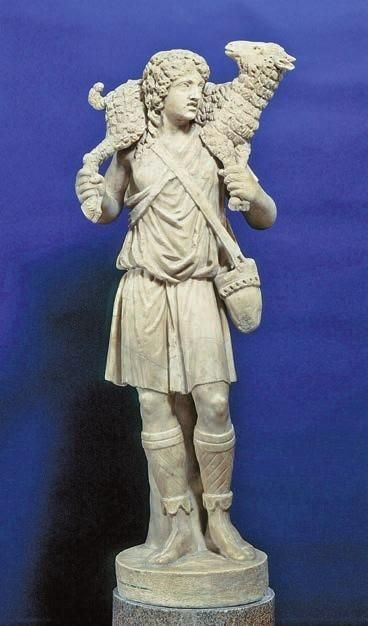
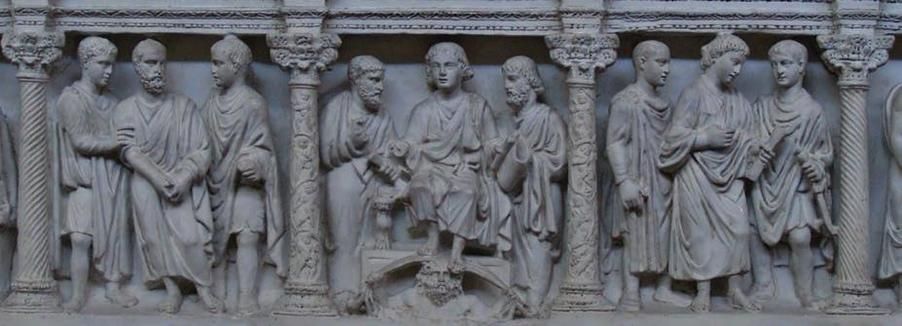
7. The art which Christianity encountered in its early days was the ripe fruit of the classical world, articulating its aesthetic canons and embodying its values. Not only in their way of living and thinking, but also in the field of art, faith obliged Christians to a discernment which did not allow an uncritical acceptance of this heritage. Art of Christian inspiration began therefore in a minor key, strictly tied to the need for believers to contrive Scripture-based signs to express both the mysteries of faith and a “symbolic code” by which they could distinguish and identify themselves, especially in the difficult times of persecution. Who does not recall the symbols which marked the first appearance of an art both pictorial and plastic? The fish, the loaves, the shepherd: in evoking the mystery, they became almost imperceptibly the first traces of a new art.
When the Edict of Constantine allowed Christians to declare themselves in full freedom, art became a privileged means for the expression of faith. Majestic basilicas began to appear, and in them the architectural canons of the pagan world were reproduced and at the same time modified to meet the demands of the new form of worship. How can we fail to recall at least the old Saint Peter's Basilica and the Basilica of Saint John Lateran, both funded by Constantine himself? Or Constantinople's Hagia Sophia built by Justinian, with its splendours of Byzantine art?
While architecture designed the space for worship, gradually the need to contemplate the mystery and to present it explicitly to the simple people led to the early forms of painting and sculpture. There appeared as well the first elements of art in word and sound. Among the many themes treated by Augustine we find De Musica; and Hilary of Poitiers, Ambrose, Prudentius, Ephrem the Syrian, Gregory of Nazianzus and Paulinus of Nola, to mention but a few, promoted a Christian poetry which was often of high quality not just as theology but also as literature. Their poetic work valued forms inherited from the classical authors, but was nourished by the pure sap of the Gospel, as Paulinus of Nola put it succinctly: “Our only art is faith and our music Christ”.(12) A little later, Gregory the Great compiled the Antiphonarium and thus laid the ground for the organic development of that most original sacred music which takes its name from him. Gregorian chant, with its inspired modulations, was to become down the centuries the music of the Church's faith in the liturgical celebration of the sacred mysteries. The “beautiful” was thus wedded to the “true”, so that through art too souls might be lifted up from the world of the senses to the eternal.
Along this path there were troubled moments. Precisely on the issue of depicting the Christian mystery, there arose in the early centuries a bitter controversy known to history as “the iconoclast crisis”. Sacred images, which were already widely used in Christian devotion, became the object of violent contention. The Council held at Nicaea in 787, which decreed the legitimacy of images and their veneration, was a historic event not just for the faith but for culture itself. The decisive argument to which the Bishops appealed in order to settle the controversy was the mystery of the Incarnation: if the Son of God had come into the world of visible realities—his humanity building a bridge between the visible and the invisible— then, by analogy, a representation of the mystery could be used, within the logic of signs, as a sensory evocation of the mystery. The icon is venerated not for its own sake, but points beyond to the subject which it represents.(13)
The Middle Ages
8. The succeeding centuries saw a great development of Christian art. In the East, the art of the icon continued to flourish, obeying theological and aesthetic norms charged with meaning and sustained by the conviction that, in a sense, the icon is a sacrament. By analogy with what occurs in the sacraments, the icon makes present the mystery of the Incarnation in one or other of its aspects. That is why the beauty of the icon can be best appreciated in a church where in the shadows burning lamps stir infinite flickerings of light. As Pavel Florensky has written: “By the flat light of day, gold is crude, heavy, useless, but by the tremulous light of a lamp or candle it springs to life and glitters in sparks beyond counting—now here, now there, evoking the sense of other lights, not of this earth, which fill the space of heaven”.(14)
In the West, artists start from the most varied viewpoints, depending also on the underlying convictions of the cultural world of their time. The artistic heritage built up over the centuries includes a vast array of sacred works of great inspiration, which still today leave the observer full of admiration. In the first place, there are the great buildings for worship, in which the functional is always wedded to the creative impulse inspired by a sense of the beautiful and an intuition of the mystery. From here came the various styles well known in the history of art. The strength and simplicity of the Romanesque, expressed in cathedrals and abbeys, slowly evolved into the soaring splendours of the Gothic. These forms portray not only the genius of an artist but the soul of a people. In the play of light and shadow, in forms at times massive, at times delicate, structural considerations certainly come into play, but so too do the tensions peculiar to the experience of God, the mystery both “awesome” and “alluring”. How is one to summarize with a few brief references to each of the many different art forms, the creative power of the centuries of the Christian Middle Ages? An entire culture, albeit with the inescapable limits of all that is human, had become imbued with the Gospel; and where theology produced the Summa of Saint Thomas, church art moulded matter in a way which led to adoration of the mystery, and a wonderful poet like Dante Alighieri could compose “the sacred poem, to which both heaven and earth have turned their hand”,(15) as he himself described the Divine Comedy.
Humanism and the Renaissance
9. The favourable cultural climate that produced the extraordinary artistic flowering of Humanism and the Renaissance also had a significant impact on the way in which the artists of the period approached the religious theme. Naturally, their inspiration, like their style, varied greatly, at least among the best of them. But I do not intend to repeat things which you, as artists, know well. Writing from this Apostolic Palace, which is a mine of masterpieces perhaps unique in the world, I would rather give voice to the supreme artists who in this place lavished the wealth of their genius, often charged with great spiritual depth. From here can be heard the voice of Michelangelo who in the Sistine Chapel has presented the drama and mystery of the world from the Creation to the Last Judgement, giving a face to God the Father, to Christ the Judge, and to man on his arduous journey from the dawn to the consummation of history. Here speaks the delicate and profound genius of Raphael, highlighting in the array of his paintings, and especially in the “Dispute” in the Room of the Signatura, the mystery of the revelation of the Triune God, who in the Eucharist befriends man and sheds light on the questions and expectations of human intelligence. From this place, from the majestic Basilica dedicated to the Prince of the Apostles, from the Colonnade which spreads out from it like two arms open to welcome the whole human family, we still hear Bramante, Bernini, Borromini, Maderno, to name only the more important artists, all rendering visible the perception of the mystery which makes of the Church a universally hospitable community, mother and travelling companion to all men and women in their search for God.
This extraordinary complex is a remarkably powerful expression of sacred art, rising to heights of imperishable aesthetic and religious excellence. What has characterized sacred art more and more, under the impulse of Humanism and the Renaissance, and then of successive cultural and scientific trends, is a growing interest in everything human, in the world, and in the reality of history. In itself, such a concern is not at all a danger for Christian faith, centred on the mystery of the Incarnation and therefore on God's valuing of the human being. The great artists mentioned above are a demonstration of this. Suffice it to think of the way in which Michelangelo represents the beauty of the human body in his painting and sculpture.(16)
Even in the changed climate of more recent centuries, when a part of society seems to have become indifferent to faith, religious art has continued on its way. This can be more widely appreciated if we look beyond the figurative arts to the great development of sacred music through this same period, either composed for the liturgy or simply treating religious themes. Apart from the many artists who made sacred music their chief concern—how can we forget Pier Luigi da Palestrina, Orlando di Lasso, Tomás Luis de Victoria?—it is also true that many of the great composers—from Handel to Bach, from Mozart to Schubert, from Beethoven to Berlioz, from Liszt to Verdi—have given us works of the highest inspiration in this field.
Towards a renewed dialogue
10. It is true nevertheless that, in the modern era, alongside this Christian humanism which has continued to produce important works of culture and art, another kind of humanism, marked by the absence of God and often by opposition to God, has gradually asserted itself. Such an atmosphere has sometimes led to a separation of the world of art and the world of faith, at least in the sense that many artists have a diminished interest in religious themes.
You know, however, that the Church has not ceased to nurture great appreciation for the value of art as such. Even beyond its typically religious expressions, true art has a close affinity with the world of faith, so that, even in situations where culture and the Church are far apart, art remains a kind of bridge to religious experience. In so far as it seeks the beautiful, fruit of an imagination which rises above the everyday, art is by its nature a kind of appeal to the mystery. Even when they explore the darkest depths of the soul or the most unsettling aspects of evil, artists give voice in a way to the universal desire for redemption.
It is clear, therefore, why the Church is especially concerned for the dialogue with art and is keen that in our own time there be a new alliance with artists, as called for by my revered predecessor Paul VI in his vibrant speech to artists during a special meeting he had with them in the Sistine Chapel on 7 May 1964.(17) From such cooperation the Church hopes for a renewed “epiphany” of beauty in our time and apt responses to the particular needs of the Christian community.
In the spirit of the Second Vatican Council
11. The Second Vatican Council laid the foundation for a renewed relationship between the Church and culture, with immediate implications for the world of art. This is a relationship offered in friendship, openness and dialogue. In the Pastoral Constitution Gaudium et Spes, the Fathers of the Council stressed “the great importance” of literature and the arts in human life: “They seek to probe the true nature of man, his problems and experiences, as he strives to know and perfect himself and the world, to discover his place in history and the universe, to portray his miseries and joys, his needs and strengths, with a view to a better future”.(18)
On this basis, at the end of the Council the Fathers addressed a greeting and an appeal to artists: “This world—they said—in which we live needs beauty in order not to sink into despair. Beauty, like truth, brings joy to the human heart and is that precious fruit which resists the erosion of time, which unites generations and enables them to be one in admiration!”.(19) In this spirit of profound respect for beauty, the Constitution on the Sacred Liturgy Sacrosanctum Concilium recalled the historic friendliness of the Church towards art and, referring more specifically to sacred art, the “summit” of religious art, did not hesitate to consider artists as having “a noble ministry” when their works reflect in some way the infinite beauty of God and raise people's minds to him.(20) Thanks also to the help of artists “the knowledge of God can be better revealed and the preaching of the Gospel can become clearer to the human mind”.(21) In this light, it comes as no surprise when Father Marie Dominique Chenu claims that the work of the historian of theology would be incomplete if he failed to give due attention to works of art, both literary and figurative, which are in their own way “not only aesthetic representations, but genuine 'sources' of theology”.(22)
The Church needs art
12. In order to communicate the message entrusted to her by Christ, the Church needs art. Art must make perceptible, and as far as possible attractive, the world of the spirit, of the invisible, of God. It must therefore translate into meaningful terms that which is in itself ineffable. Art has a unique capacity to take one or other facet of the message and translate it into colours, shapes and sounds which nourish the intuition of those who look or listen. It does so without emptying the message itself of its transcendent value and its aura of mystery.
The Church has need especially of those who can do this on the literary and figurative level, using the endless possibilities of images and their symbolic force. Christ himself made extensive use of images in his preaching, fully in keeping with his willingness to become, in the Incarnation, the icon of the unseen God.
The Church also needs musicians. How many sacred works have been composed through the centuries by people deeply imbued with the sense of the mystery! The faith of countless believers has been nourished by melodies flowing from the hearts of other believers, either introduced into the liturgy or used as an aid to dignified worship. In song, faith is experienced as vibrant joy, love, and confident expectation of the saving intervention of God.
The Church needs architects, because she needs spaces to bring the Christian people together and celebrate the mysteries of salvation. After the terrible destruction of the last World War and the growth of great cities, a new generation of architects showed themselves adept at responding to the exigencies of Christian worship, confirming that the religious theme can still inspire architectural design in our own day. Not infrequently these architects have constructed churches which are both places of prayer and true works of art.
Does art need the Church?
13. The Church therefore needs art. But can it also be said that art needs the Church? The question may seem like a provocation. Yet, rightly understood, it is both legitimate and profound. Artists are constantly in search of the hidden meaning of things, and their torment is to succeed in expressing the world of the ineffable. How then can we fail to see what a great source of inspiration is offered by that kind of homeland of the soul that is religion? Is it not perhaps within the realm of religion that the most vital personal questions are posed, and answers both concrete and definitive are sought?
In fact, the religious theme has been among those most frequently treated by artists in every age. The Church has always appealed to their creative powers in interpreting the Gospel message and discerning its precise application in the life of the Christian community. This partnership has been a source of mutual spiritual enrichment. Ultimately, it has been a great boon for an understanding of man, of the authentic image and truth of the person. The special bond between art and Christian revelation has also become evident. This does not mean that human genius has not found inspiration in other religious contexts. It is enough to recall the art of the ancient world, especially Greek and Roman art, or the art which still flourishes in the very ancient civilizations of the East. It remains true, however, that because of its central doctrine of the Incarnation of the Word of God, Christianity offers artists a horizon especially rich in inspiration. What an impoverishment it would be for art to abandon the inexhaustible mine of the Gospel!
An appeal to artists
14. With this Letter, I turn to you, the artists of the world, to assure you of my esteem and to help consolidate a more constructive partnership between art and the Church. Mine is an invitation to rediscover the depth of the spiritual and religious dimension which has been typical of art in its noblest forms in every age. It is with this in mind that I appeal to you, artists of the written and spoken word, of the theatre and music, of the plastic arts and the most recent technologies in the field of communication. I appeal especially to you, Christian artists: I wish to remind each of you that, beyond functional considerations, the close alliance that has always existed between the Gospel and art means that you are invited to use your creative intuition to enter into the heart of the mystery of the Incarnate God and at the same time into the mystery of man.
Human beings, in a certain sense, are unknown to themselves. Jesus Christ not only reveals God, but “fully reveals man to man”.(23) In Christ, God has reconciled the world to himself. All believers are called to bear witness to this; but it is up to you, men and women who have given your lives to art, to declare with all the wealth of your ingenuity that in Christ the world is redeemed: the human person is redeemed, the human body is redeemed, and the whole creation which, according to Saint Paul, “awaits impatiently the revelation of the children of God” (Rom 8:19), is redeemed. The creation awaits the revelation of the children of God also through art and in art. This is your task. Humanity in every age, and even today, looks to works of art to shed light upon its path and its destiny.
The Creator Spirit and artistic inspiration
15. Often in the Church there resounds the invocation to the Holy Spirit: Veni, Creator Spiritus... – “Come, O Creator Spirit, visit our minds, fill with your grace the hearts you have created”.(24)
The Holy Spirit, “the Breath” (ruah), is the One referred to already in the Book of Genesis: “The earth was without form and void, and darkness was on the face of the deep; and the Spirit of God was moving over the face of the waters” (1:2). What affinity between the words “breath - breathing” and “inspiration”! The Spirit is the mysterious Artist of the universe. Looking to the Third Millennium, I would hope that all artists might receive in abundance the gift of that creative inspiration which is the starting-point of every true work of art.
Dear artists, you well know that there are many impulses which, either from within or from without, can inspire your talent. Every genuine inspiration, however, contains some tremor of that “breath” with which the Creator Spirit suffused the work of creation from the very beginning. Overseeing the mysterious laws governing the universe, the divine breath of the Creator Spirit reaches out to human genius and stirs its creative power. He touches it with a kind of inner illumination which brings together the sense of the good and the beautiful, and he awakens energies of mind and heart which enable it to conceive an idea and give it form in a work of art. It is right then to speak, even if only analogically, of “moments of grace”, because the human being is able to experience in some way the Absolute who is utterly beyond.
The “Beauty” that saves
16. On the threshold of the Third Millennium, my hope for all of you who are artists is that you will have an especially intense experience of creative inspiration. May the beauty which you pass on to generations still to come be such that it will stir them to wonder! Faced with the sacredness of life and of the human person, and before the marvels of the universe, wonder is the only appropriate attitude.
From this wonder there can come that enthusiasm of which Norwid spoke in the poem to which I referred earlier. People of today and tomorrow need this enthusiasm if they are to meet and master the crucial challenges which stand before us. Thanks to this enthusiasm, humanity, every time it loses its way, will be able to lift itself up and set out again on the right path. In this sense it has been said with profound insight that “beauty will save the world”.(25)
Beauty is a key to the mystery and a call to transcendence. It is an invitation to savour life and to dream of the future. That is why the beauty of created things can never fully satisfy. It stirs that hidden nostalgia for God which a lover of beauty like Saint Augustine could express in incomparable terms: “Late have I loved you, beauty so old and so new: late have I loved you!”.(26)
Artists of the world, may your many different paths all lead to that infinite Ocean of beauty where wonder becomes awe, exhilaration, unspeakable joy. May you be guided and inspired by the mystery of the Risen Christ, whom the Church in these days contemplates with joy. May the Blessed Virgin Mary be with you always: she is the “tota pulchra” portrayed by countless artists, whom Dante contemplates among the splendours of Paradise as “beauty that was joy in the eyes of all the other saints”.(27) “From chaos there rises the world of the spirit”. These words of Adam Mickiewicz, written at a time of great hardship for his Polish homeland,(28) prompt my hope for you: may your art help to affirm that true beauty which, as a glimmer of the Spirit of God, will transfigure matter, opening the human soul to the sense of the eternal.
With my heartfelt good wishes!
From the Vatican, April, 4, 1999, Easter Sunday.
(1) Dialogus de Ludo Globi, lib. II: Philosophisch-Theologische Schriften, Vienna 1967, III, p. 332.
(2) The moral virtues, and among them prudence in particular, allow the subject to act in harmony with the criterion of moral good and evil: according to recta ratio agibilium (the right criterion of action). Art, however, is defined by philosophy as recta ratio factibilium (the right criterion of production).
(3) Promethidion, Bogumil, vv. 185-186: Pisma wybrane, Warsaw 1968, vol. 2, p. 216.
(4) The Greek translation of the Septuagint expresses this well in rendering the Hebrew term t(o-)b (good) as kalón (beautiful).
(5) Philebus, 65 A.
(6) JOHN PAUL II, Encyclical Letter Fides et Ratio (14 September 1998), 80: AAS 91 (1999), 67.
(7) This pedagogical principle was given authoritative formulation by Saint Gregory the Great in a letter of 599 to Serenus, Bishop of Marseilles: “Painting is employed in churches so that those who cannot read or write may at least read on the walls what they cannot decipher on the page”, Epistulae, IX, 209: CCL 140A, 1714.
(8) Lodi di Dio Altissimo, vv. 7 and 10: Fonti Francescane, No. 261, Padua 1982, p. 177.
(9) Legenda Maior, IX, 1: Fonti Francesane, No. 1162, loc. cit., p. 911.
(10) Enkomia of the Orthós of the Holy and Great Saturday.
(11) Homily I, 2: PG 34, 451.
(12) “At nobis ars una fides et musica Christus”: Carmen 20, 31: CCL 203, 144.
(13) Cf. JOHN PAUL II, Apostolic Letter Duodecimum Saeculum (4 December 1987), 8-9: AAS 80 (1988), pp. 247-249.
(14) La prospettiva rovesciata ed altri scritti, Rome 1984, p. 63.
(15) Paradiso XXV, 1-2.
(16) Cf. JOHN PAUL II, Homily at the Mass for the Conclusion of the Restoration of Michelangelo's Frescoes in the Sistine Chapel, 8 April 1994: Insegnamenti, XVII, 1 (1994), 899-904.
(17) Cf. AAS 56 (1964), 438-444.
(18) No. 62.
(19) Message to Artists, 8 December 1965: AAS 58 (1966), 13.
(20) Cf. No. 122.
(21) SECOND VATICAN ECUMENICAL COUNCIL, Pastoral Constitution Gaudium et Spes, 62.
(22) La teologia nel XII secolo, Milan 1992, p. 9.
(23) SECOND VATICAN ECUMENICAL COUNCIL, Pastoral Constitution on the Church in the Modern World Gaudium et Spes, 22.
(24) Hymn at Vespers on Pentecost.
(25) F. DOSTOYEVSKY, The Idiot, Part III, chap. 5.
(26) Sero te amavi! Pulchritudo tam antiqua et tam nova, sero te amavi!: Confessions, 10, 27: CCL 27, 251.
(27) Paradiso XXXI, 134-135.
(28) Oda do mlodosci, v. 69: Wybór poezji, Wroclaw 1986, vol. 1, p. 63.
‘ARTISTS’ MASS’ IN THE SISTINE CHAPEL HOMILY BY PAUL VI Solemnity of the Ascension of Our Lord Thursday, May 7, 1964
Dear Gentlemen, and even dearer children!
Before we begin this brief conversation, we would like to put your minds at ease regarding any apprehension or unease that might easily overcome anyone finding themselves in the Sistine Chapel on an occasion such as this. Is there perhaps any place that provokes more thought and trepidation, that inspires greater timidity and at the same time stirs the soul’s feelings more deeply? Well, it is precisely you, artists, who must be the first to cast aside that instinctive hesitation which arises upon entering this sanctuary of history, art, religion, human destinies, memories and omens. Why? Because it is, if anything, a sanctuary for artists, created by artists. And so, at this very moment, you should allow the vast surge of emotions, memories and exultation – which a temple such as this can stir within the soul – to flow freely into your spirits.
There may be another source of unease, almost another form of paralysing shyness; and it is one that may be caused not so much by Our humble person as by Our official presence, Our papal ministry: ‘Here is the Pope!’, you are no doubt thinking. Have artists ever come to see the Pope before? This may well be the first time it has happened. Or rather, they have been coming for centuries; they have always had a relationship with the Head of the Catholic Church, but through different channels. One might even say that the thread of this relationship, of this connection, has been lost. And now you are here, all together, in a religious moment, entirely for your sake, not as people standing in the wings, but truly taking centre stage in a spiritual conversation, in a sacred celebration. And it is natural, if one is sensitive and understanding, that there should be a certain reverence, a certain respect, a certain desire to understand and to remain silent. Well, even this sensitivity, were it at this moment to restrain your inner expressions of free feelings, We would wish to dispel it; for, whilst the Pope must welcome everyone – for he is the Father of all, and has a ministry for all, and a word for all – he has this word in store especially for you; and he is eager, and delighted, to be able to express it today, for the Pope is your friend.
And this is not merely because a tradition of sumptuousness, patronage, grandeur and splendour surrounds his ministry, his authority and his relationship with mankind, and because he needs this decorative and expressive setting to tell those who do not know who he is, and how Christ intended him to be amongst mankind. But it is so for more intrinsic reasons, which are, in fact, those that occupy us today and concern our spirit, namely: these are the reasons for Our ministry that lead Us to seek you out. Must We utter the great words which, after all, you already know? We need you. Our ministry needs your collaboration. For, as you know, Our ministry is to preach and to make the world of the spirit, of the invisible, of the ineffable, of God, accessible, comprehensible—indeed, moving. And in this task, which translates the invisible world into accessible, intelligible forms, you are masters. It is your profession, your mission; and your art lies precisely in drawing the treasures of the spiritual realm from the heavens and clothing them in words, colours, forms and accessibility. And not merely the sort of accessibility offered by a teacher of logic or mathematics, who does indeed make comprehensible the treasures of a world inaccessible to the cognitive faculties of the senses and to our immediate perception of things. You, too, have this privilege, in the very act of making the spiritual world accessible and comprehensible: to preserve for that world its ineffability, the sense of its transcendence, its aura of mystery, and this need to reach it through both ease and effort at the same time.
This – those in the know call it ‘Einfuhlung’, sensitivity, that is, the ability to perceive, through feeling, what one would be unable to understand or express through thought alone – this is what you do! Now, in this way of yours, in this ability of yours to translate into the realm of our knowledge – and indeed into that which is easy and joyful, that is to say, the perceptible, namely that which is grasped and discerned through intuitive vision alone – we repeat, you are masters. And if we were to lack your assistance, the ministry would become faltering and uncertain and would need to make an effort, so to speak, to become artistic in its own right, indeed to become prophetic. To rise to the power of the lyrical expression of intuitive beauty, it would need to bring the priesthood into harmony with art.
Now, if this is the case, the discussion ought to be serious and solemn. The venue, and perhaps even the occasion, would lend themselves to this; not so much the time allotted to us, nor the programme we have set for this first friendly meeting. Who knows whether there might not come a time when we can say more. But the issue is this: we must re-establish friendship between the Church and artists. It is not, in truth, that this friendship has ever been broken; and this very gathering proves it, for it is already evidence of that friendship in action. And then there are many other examples that can be cited as proof of continuity and of the faithfulness of these relationships, which bear witness to the fact that the friendship between the Church and artists has never been broken. Not least because, as we were saying, the Church needs this; and we might even go further, reading your hearts. You yourselves are seeking this world of the ineffable and find that its home, its address, its best source of nourishment is still Religion.
So we have always been friends. But, as happens between relatives, as happens between friends, things have gone a little sour. We haven’t fallen out, but we have strained our friendship. May we speak frankly? You have abandoned us a little; you have drifted away, drinking from other fountains, in the – albeit legitimate – quest to express other things; but no longer ours. We have other observations to make, but we do not wish to upset you or be discourteous this morning. You know that we carry a certain wound in our hearts when we see you engaged in certain artistic expressions that offend us, the guardians of all humanity, of the complete definition of man, of his well-being, of his stability. You detach art from life, and so… But there is more to it than that. Sometimes you forget the fundamental principle of your dedication to expression; no one knows what you are saying, and often you yourselves do not know either: the result is a language of Babel, of confusion. And so where is the art? Art should be intuition, it should be ease, it should be happiness. You do not always give us this ease, this happiness, and so we remain surprised, intimidated and detached.
But to be frank and forthright – as you can see, we are merely touching on this – we acknowledge that we, too, have caused you a fair bit of trouble. We have caused you trouble because we imposed imitation as the first rule upon you – you who are creators, always lively, brimming with a thousand ideas and a thousand innovations. ‘We,’ we told you, ‘have this style; you must adapt to it; we have this tradition, and you must remain faithful to it; we have these masters, and you must follow them; we have these rules, and there is no way out.’ We have, at times, placed a leaden cloak upon you, we can admit; forgive us! And then we, too, have abandoned you. We have not explained our ways to you; we have not introduced you to the secret chamber where the mysteries of God make the human heart leap with joy, hope, gladness and ecstasy. We have not had you as pupils, friends or companions in conversation;
that is why you did not get to know us.
And so your language, as applied to our world, was docile, yes, but almost constrained, stilted, unable to find its own free voice. And we felt, at that time, the dissatisfaction with this artistic expression. And – we shall make a full confession this morning, at least here – we treated you even worse; we resorted to substitutes, to ‘oleography’, to works of art of little merit and low cost, partly because, in our defence, we lacked the means to create great things, beautiful things, new things, things worthy of admiration; and we too have strayed down side streets, where art and beauty and – what is worse for us – the worship of God have been poorly served.
Shall we make peace again? Today? Here? Do we want to be friends once more? Will the Pope once again become the artists’ friend? Do you want some suggestions, some practical means? But these are not part of the equation right now. Let us focus on our feelings for now. We must become allies once more. We must ask of you all the gifts the Lord has bestowed upon you, and so, within the realm of function and purpose—which unite art with the worship of God—we must allow your voices to sing freely and powerfully, as only you are capable of doing. And you must be skilful enough to interpret what you are to express, to draw from us the motif, the theme, and sometimes more than the theme—that secret fluid called inspiration, called grace, called the charisma of art. And, God willing, we shall give it to you. But as we were saying, this is not the time for long speeches or for making definitive proclamations.
However, for our part – we, the Pope, we, the Church – have already signed a major act of the new covenant with the artist. The Constitution on the Sacred Liturgy, which the Second Vatican Ecumenical Council was the first to issue and promulgate, contains a passage – which I hope you are familiar with – that is, in fact, the pact of reconciliation and rebirth of religious art within the Catholic Church. I repeat, our pact has been signed. It awaits your countersignature. For the time being, therefore, we shall confine ourselves to some very simple observations, which, however, will not displease you.
The first is this: that we welcome this Mass composed by the artist, and we thank Monsignor Francia for it; him and all those who have followed in his footsteps and adopted his formula. We have witnessed the birth of this initiative; we saw it first welcomed by Our venerable Predecessor, Pope Pius XII, who began to pave the way for it and to give it a place within ecclesiastical life and in the Church’s prayer; and therefore We congratulate those involved on what has been achieved in this vein, which is not the only one, but which is good and worth following: We bless it and encourage it. We would like you to convey to all your colleagues, imitators and followers Our Blessing for this experiment in religious and artistic life, which has once again demonstrated that there is a deep affinity and a marvellous capacity for understanding between the priest and the artist.
The second point is this: it is very well known, but we feel it must be reiterated at this time; and that is that, if the artistic moment that arises in a sacred religious ceremony – such as a Mass – is to be complete, authentic and generous, and is truly to fill and stir the souls of those taking part and those gathered round, it also requires two things: catechesis and a workshop.
We shall not dwell here on whether art arises spontaneously and suddenly, like a flash of divine inspiration, or whether – as you tell us – it requires a gruelling, arduous, ascetic, slow and gradual process of training. Well then, if we wish to give – let us repeat – authenticity and fulfilment to the religious artistic moment, to the Mass, its preparation and catechesis are essential; in other words, it must be underpinned by, or accompanied by, religious instruction. It is not permissible to invent a religion; one must know what has taken place between God and humankind, how God has established certain religious relationships which one must understand so as not to become ridiculous, stammering or aberrant. One must be educated. And we believe that, within the context of the artist’s Mass, those who wish to present themselves as true artists will have no difficulty in embracing this systematic, patient, yet highly beneficial and nourishing education. And then there is the need for the workshop—that is, the technique required to do things properly. And here we leave the floor to you to say what is necessary, so that the artistic expression given to these religious moments may possess the full richness of its expressiveness in terms of styles and instruments, and, if required, even innovation.
And finally, we would add that neither catechesis nor workshops are enough. What is needed is the indispensable quality of the religious moment, namely sincerity. It is no longer merely a matter of art, but of spirituality. One must enter the innermost chamber of one’s being and imbue the religious moment—experienced artistically—with what is expressed here: a personality, a voice drawn from the very depths of the soul, a form that stands apart from any pretence of the stage, a purely outward performance; it is the ‘I’ found in its fullest and most arduous synthesis, if you will, but also its most joyful. Here, religion must be truly spiritual; and then what today’s feast, the Ascension, leads us to reflect upon will come to pass for you. When we turn inwards to find all these energies and make the ascent to heaven—that heaven where Christ has taken refuge—we feel, at first, immensely, I would say, infinitely far away.
The transcendence that so frightens modern man is truly something that infinitely surpasses him, and anyone who does not sense this distance does not experience true religion. Anyone who does not perceive this superiority of God, His ineffability, His mystery, does not experience the authenticity of the religious reality. But those who do perceive it experience, almost immediately, that this distant God is already there: ‘You would not seek Him if you had not already found Him’. These are Pascal’s words, it is true; and this is what happens continually in the authentic spiritual life of the Christian. If we truly seek Christ where He is, in heaven, we see Him reflected, we find Him beating within our soul: the transcendent God has, in a certain sense, become immanent; He has become our inner friend, our spiritual guide. And communion with Him, which seemed impossible, as if one had to cross infinite abysses, is already complete; the Lord enters into communion with us in the ways, as you well know, of the Word, of grace, of the sacraments, and of the treasures which the Church dispenses to faithful souls. And let that suffice for now.
Dearest artists, let’s just say one word then: goodbye!
Translated with DeepL.com (free version)
ADDRESS TO THE ARTISTS AND CURATORS, X.2.26
ADDRESS OF HIS HOLINESS POPE LEO XIV TO THE ARTISTS AND CURATORS PARTICIPATING IN “THE ART OF POSSIBILITY: WEAVING TOGETHER” MEETING ORGANIZED BY THE DICASTERY FOR CULTURE AND EDUCATION
Consistory Hall Friday, October, 2, 2026
In the name of the Father, and of the Son, and of the Holy Spirit.
Peace be with you.
Good morning, everyone, and welcome! Your Eminence, Your Excellencies, Dear brothers and sisters,
The first words I would like to say to you are “thank you.” Thank you for the collaboration you have offered the Holy See in recent years, particularly for the installation of the Venice Biennale Pavilion and for the contemporary art projects promoted by the Dicastery for Culture and Education. Thank you for the trust with which you have agreed to walk alongside the Church, also along new paths.
I think, for example, of the Pavilion set up in the women’s prison on the island of Giudecca, which Pope Francis visited. Anyone who has been there knows that it was not a matter of bringing art into prison, but of allowing the prisoners to teach something about art and to us. For the “human person is ‘worthy’ simply by virtue of existing and of being destined for eternity” (Address at the Accueil Notre-Dame, Lourdes, 27 September 2026) and is always greater than his or her fragility and mistakes.
I was also struck by the motto, inspired by Saint Hildegard of Bingen, of this year’s Venetian Pavilion: “The Ear is the Eye of the Soul.” Indeed, like an antenna, art is receptive to the great questions of the human heart — sometimes like a cry, more often like a whisper — and makes them audible, visible and shareable.
Saint Augustine left us an immortal testimony to the restlessness of the human heart in search of truth. Art, when it is authentic, is also animated by this restlessness. For this reason, the Church has never considered art to be merely decorative. Instead, for the Church, art nurtures the fundamental posture of listening, through which we can learn about humanity’s aspirations and wounds, our thirst for beauty, justice and peace, and our search for meaning.
We live in the age of search engines that offer us thousands of instantaneous answers. Yet, no matter how powerful they may be, they merely return what already exists and tend to give us what we already want. In the age of technology and consumerism, the great danger is not only censorship but also homogenization, and not merely imposed silence but the noise that makes it impossible to listen. Art is a different kind of “search engine.” It does not proceed by indexing but by inquiry. Indeed, its inquiry is a focused attention that is not satisfied with the mere sum of facts, for it never ceases to dig deeper, seeking the thread that unites them. Your art, when it resists homogenization, when it draws our gaze, when it compels us to pause before that which cannot be consumed, is a form of cultural and spiritual regeneration.
Pope Saint Paul VI spoke words that remain a landmark for the Church’s relationship with artists: “We need you,” he said. “Our ministry needs your collaboration. For, as you know, our ministry is to preach and to make the world of the spirit, of the invisible, of the ineffable, of God, accessible and understandable — indeed, inspiring. And in this task, which translates the invisible world into accessible, intelligible forms, you are masters” (Homily at the Mass with Artists, 7 May 1964).
For my part, I also say to you today: the Church needs you. This is especially true in this age of artificial intelligence, in which we urgently need to distinguish human art from what is produced by machines. There is an ontological difference — even before an aesthetic one — between art and what a machine can generate through statistical calculation based on millions of images created by others. Algorithms lack the spark of the human, whereas “authentic culture and art preserve this spark” (Encyclical Letter Magnifica Humanitas, 122).
For all these reasons, the Church wishes to renew an alliance with artists and cultural institutions; an alliance for safeguarding what is human. As I had the opportunity to say during my recent visit to UNESCO, “Promoting education, science and culture is impossible without at the same time improving the lives of men and women who are engaged in these activities” (Address to UNESCO, Paris, 25 September 2026).
Dear artists, dear curators, know that the Church looks upon you with esteem, gratitude and hope; that she needs you, and that she wishes to walk alongside you, so that together we may safeguard the grandeur of humanity entrusted to us. May God bless all of you and your work! Thank you.
In this period I have recalled several times the need for every Christian, in the midst of the many occupations that fill our days, to find time for God and for prayer. The Lord himself gives us many opportunities to remember him. Today I would like to reflect briefly on one of these channels that can lead to God and can also be of help in the encounter with him. It is the way of artistic expression, part of that “via pulchritudinis” — the “way of beauty”, of which I have spoken several times and whose deepest meaning must be recovered by men and women today.
It may have happened on some occasion that you paused before a sculpture, a picture, a few verses of a poem or a piece of music that you found deeply moving, that gave you a sense of joy, a clear perception, that is, that what you beheld was not only matter, a piece of marble or bronze, a painted canvas, a collection of letters or an accumulation of sounds, but something greater, something that “speaks”, that can touch the heart, communicate a message, uplift the mind.
A work of art is a product of the creative capacity of the human being who in questioning visible reality, seeks to discover its deep meaning and to communicate it through the language of forms, colour and sound. Art is able to manifest and make visible the human need to surpass the visible, it expresses the thirst and the quest for the infinite.
Indeed it resembles a door open on to the infinite, on to a beauty and a truth that go beyond the daily routine. And a work of art can open the eyes of the mind and of the heart, impelling us upward.
However some artistic expressions are real highways to God, the supreme Beauty; indeed, they help us to grow in our relationship with him, in prayer. These are works that were born from faith and express faith. We can see an example of this when we visit a Gothic cathedral: we are enraptured by the vertical lines that soar skywards and uplift our gaze and our spirit, while at the same time we feel small yet long for fullness.…
Or when we enter a Romanesque church we are spontaneously prompted to meditate and to pray. We perceive that these splendid buildings contain, as it were, the faith of generations. Or when we listen to a piece of sacred music that plucks at our heartstrings, our mind, as it were, expands and turns naturally to God.
I remember a concert of music by Johann Sebastian Bach in Munich, conducted by Leonard Bernstein. At the end of the last passage, one of the Cantatas, I felt, not by reasoning but in the depths of my heart, that what I had heard had communicated truth to me, the truth of the supreme composer, and impelled me to thank God. The Lutheran bishop of Munich was next to me and I said to him spontaneously: “in hearing this one understands: it is true; such strong faith is true, as well as the beauty that irresistibly expresses the presence of God’s truth”.
Yet how many pictures or frescos, fruits of the artist’s faith, in their form, in their colour, in their light, urge us to think of God and foster within us the desire to draw from the source of all beauty. What Marc Chagall, a great artist, wrote, remains profoundly true: that for centuries painters have dipped their paintbrush in that coloured alphabet which is the Bible. Thus how often artistic expression can bring us to remember God, to help us to pray or even to convert our heart!
Paul Claudel, a famous French poet, playwright and diplomat, precisely while he was listening in the Cathedral of Notre Dame to the singing of the Magnificat during Christmas Mass in 1886, had a tangible experience of God’s presence. He had not entered the church for reasons of faith but rather in order to seek arguments against Christians and instead God's grace worked actively in his heart.
Dear friends, I ask you to rediscover the importance of this path also for prayer, for our living relationship with God. Towns and villages throughout the world contain treasures of art that express faith and beckon to us to return to our relationship with God. May the visits to places filled with art, then, not only be opportunities for cultural enrichment — that too — but may they become above all moments of grace, incentives to strengthen our bond and our dialogue with the Lord so that — in switching from simple external reality to the more profound reality it expresses — we may pause to contemplate the ray of beauty that strikes us to the quick, that almost “wounds” us, and that invites us to rise toward God.
I end with a prayer from a Psalm, Psalm 27[26]: “One thing have I asked of the Lord, that will I seek after; that I may dwell in the house of the Lord all the days of my life, to behold the beauty of the Lord, and contemplate his temple” (v. 4).
Let us hope that the Lord will help us to contemplate his beauty, both in nature and in works of art, so that we, moved by the light that shines from his face, may be a light for our neighbour. Many thanks.
We now address you, artists, who are taken up with beauty and work for it: poets and literary men, painters, sculptors, architects, musicians, men devoted to the theater and the cinema. To all of you, the Church of the council declares to you through our voice: if you are friends of genuine art, you are our friends.
The Church has long since joined in alliance with you. You have built and adorned her temples, celebrated her dogmas, enriched her liturgy. You have aided her in translating her divine message in the language of forms and figures, making the invisible world palpable. Today, as yesterday, the Church needs you and turns to you. She tells you through our voice: Do not allow an alliance as fruitful as this to be broken. Do not refuse to put your talents at the service of divine truth. Do not close your mind to the breath of the Holy Spirit.
This world in which we live needs beauty in order not to sink into despair. It is beauty, like truth, which brings joy to the heart of man and is that precious fruit which resists the wear and tear of time, which unites generations and makes them share things in admiration. And all of this is through your hands. May these hands be pure and disinterested. Remember that you are the guardians of beauty in the world. May that suffice to free you from tastes which are passing and have no genuine value, to free you from the search after strange or unbecoming expressions. Be always and everywhere worthy of your ideals and you will be worthy of the Church which, by our voice, addresses to you today her message of friendship, salvation, grace and benediction.
FRANCISCO - DISCURSO 50º ANIVERSARIO INAUGURACIÓN COLECCIÓN ARTE RELIGIOSO MODERNO, 23.VI.2023
DISCURSO DEL SANTO PADRE FRANCISCO A LOS PARTICIPANTES EN EL ENCUENTRO DE ARTISTAS CON MOTIVO DEL 50 ANIVERSARIO DE LA INAUGURACIÓN DE LA
COLECCIÓN DE ARTE RELIGIOSO MODERNO DE LOS MUSEOS VATICANOS
Capilla Sixtina Viernes, 23 de junio de 2023
________________________________________
¡Buenos días, bienvenidos! ¡Aquí todo es arte, ahí [señala los frescos], vosotros, todos! ¡Bienvenidos!
Os doy las gracias por haber acogido mi invitación. Vuestra presencia me alegra, porque la Iglesia siempre ha tenido una relación con los artistas que se puede definir al mismo tiempo natural y especial. Se trata de una amistad natural, porque el artista toma en serio la profundidad inagotable de la existencia, de la vida y del mundo, también en sus contradicciones y en sus lados trágicos. Esta profundidad corre el riesgo de volverse invisible a la mirada de muchos saberes especializados, que responden a exigencias inmediatas, pero les cuesta ver la vida como realidad poliédrica. El artista recuerda a todos que la dimensión en la que nos movemos, también cuando no somos conscientes, es la del Espíritu. Vuestro arte es como una vela que se llena del Espíritu y hace ir adelante. La amistad de la Iglesia con el arte es por tanto algo natural. Pero es también una amistad especial, sobre todo si pensamos en muchos tramos de historia recorridos juntos, que pertenecen al patrimonio de todos, creyentes y no creyentes. Recordando esto esperamos nuevos frutos también en nuestro tiempo, en un clima de escucha, de libertad y de respeto. La gente necesita estos frutos, frutos especiales.
Escribía Romano Guardini que «el estado en el que se encuentra el artista mientras crea es parecido al del niño o el del vidente» (La obra de arte, Brescia 1998, 25). Me parecen dos comparaciones interesantes. Según él «la obra de arte abre un espacio en el que el hombre puede entrar, en el que puede respirar, moverse y tratar las cosas y a los hombres, que se han abierto» (ibid., p. 35). Es verdad, cuando se obra en el arte los confines disminuyen y los límites de la experiencia y de la comprensión se dilatan. Todo parece más abierto y disponible. Entonces se adquiere la espontaneidad del niño que imagina y la agudeza del vidente que capta la realidad.
Sí, el artista es un niño —no debe sonar como una ofensa—; significa que se mueve sobre todo en el espacio de la invención, de la novedad, de la creación, del poner en el mundo algo que así no se había visto nunca. Haciendo esto, desmiente la idea de que el hombre sea un ser para la muerte. El hombre debe hacer las cuentas con su mortalidad, es verdad, pero no es un ser para la muerte, sino para la vida. Una gran pensadora como Hannah Arendt afirma que lo proprio del ser humano es vivir para llevar al mundo la novedad. Esta es la dimensión de fecundidad del hombre. Llevar la novedad.
También en la fecundidad natural cada hijo es una novedad. Abrir y llevar novedad. Los artistas realizáis esto, haciendo valer vuestra originalidad. En las obras os ponéis siempre a vosotros mismos, como seres irrepetibles igual que todos, pero con la intención de crear aún más. Cuando el talento os asiste, lleváis a la luz lo inédito, enriquecéis el mundo de una realidad nueva. Pienso en algunas palabras que leemos en el Libro del profeta Isaías, cuando Dios dice: «He aquí que yo lo renuevo: ya está en marcha, ¿no lo reconocéis?» (43,19). Y en el Apocalipsis confirma: «Mira que hago un mundo nuevo» (21,5). La creatividad del artista parece así participar de la pasión generativa de Dios. Esa pasión con la que Dios ha creado. ¡Sois aliados del sueño de Dios! Sois ojos que miran y que sueñan. No basta solamente con mirar, también es necesario soñar. Decía un escritor latinoamericano que nosotros, las personas, tenemos dos ojos: uno para mirar lo que vemos y otro para mirar lo que soñamos. Y cuando una persona no tiene estos dos ojos, o solamente parte de uno o del otro, le falta algo. Ver lo que soñamos… La creatividad del artista: no basta solamente con mirar, es necesario soñar. Nosotros seres humanos anhelamos un mundo nuevo que no veremos completamente con nuestros ojos, sin embargo, lo deseamos, lo buscamos, lo soñamos.
Los artistas tenéis la capacidad de soñar nuevas versiones del mundo. Y esto es importante: nuevas versiones del mundo. La capacidad de introducir novedades en la historia. Por esto Guardini dice que os parecéis también a los videntes. Sois un poco como los profetas. Sabéis mirar las cosas tanto en profundidad como en lejanía, como centinelas que entrecierran los ojos para escudriñar el horizonte y comprender la realidad más allá de las apariencias. En esto estáis llamados a huir del poder sugerente de esa presunta belleza artificial y superficial hoy difundida y muchas veces cómplice de los mecanismos económicos generadores de desigualdades. Esa belleza que no atrae, porque es una belleza que nace muerta. No hay vida ahí, no atrae. Es una belleza fingida, cosmética, un maquillaje que esconde en vez de revelar. En italiano se dice “trucco” porque tiene algo de engaño.
Vosotros os mantenéis distantes de esa belleza, vuestro arte quiere actuar como conciencia crítica de la sociedad, quitando el velo a la obviedad. Queréis demostrar lo que hace pensar, lo que hace vigilantes, lo que desvela la realidad también en sus contradicciones, en sus aspectos que es más cómodo o conveniente tener escondidos. Como los profetas bíblicos, nos ponéis frente a cosas que a veces molestan, criticando los falsos mitos de hoy, los nuevos ídolos, los discursos banales, las trampas del consumo, las astucias del poder. Es interesante esto en la psicología, en la personalidad de los artistas: la capacidad de ir más allá, de ir más allá, en tensión entre la realidad y el sueño.
Y a menudo lo hacéis con la ironía, que es una virtud maravillosa. Dos virtudes que nosotros no cultivamos tanto: el sentido del humor y la ironía, debemos cultivarlas más. La Biblia es rica de momentos de ironía, en los que se burla de la presunción de autosuficiencia, la prevaricación, la injusticia, la inhumanidad cuando se revisten de poder y a veces también de sacralidad. Hacéis bien siendo también centinelas del verdadero sentido religioso, a veces banalizado o comercializado. En este ser videntes, centinelas, conciencias críticas, os siento aliados para muchas cosas que me importan mucho, como la defensa de la vida humana, la justicia social, los últimos, el cuidado de la casa común, el sentirnos todos hermanos.
Me importa mucho la humanidad de la humanidad, la dimensión humana de la humanidad. Porque es también la gran pasión de Dios. Una de las cosas que acercan el arte a la fe es el hecho de molestar un poco. El arte y la fe no pueden dejar las cosas como están: las cambian, las transforman, las convierten, las mueven. El arte nunca puede ser un anestésico; da paz, pero no duerme las conciencias, las mantiene despiertas. A menudo los artistas tratáis de sondear también los inframundos de la condición humana, los abismos, las partes oscuras. Nosotros no somos solo luz, y vosotros nos lo recordáis; pero se necesita arrojar la luz de la esperanza en las tinieblas de lo humano, del individualismo y de la indiferencia. Ayudadnos a vislumbrar la luz, la belleza que salva.
El arte siempre ha estado vinculado a la experiencia de la belleza. Simone Weil escribía: «La belleza seduce la carne para obtener el permiso de pasar hasta el alma» (La sombra y la gracia, Bolonia 2021, 193). El arte toca los sentidos para animar el espíritu y hace esto a través de la belleza, que es el reflejo de las cosas cuando son buenas, justas, verdaderas. Es la señal de que algo tiene plenitud: es entonces que nos surge espontáneo decir: “¡Qué hermoso!” La belleza nos hace sentir que la vida está orientada a la plenitud. En la verdadera belleza se empieza así a sentir la nostalgia de Dios. Muchos esperan que el arte vuelva mayormente a frecuentar la belleza. Cierto, como decía existe también una belleza fútil, una belleza artificial y superficial, incluso engañosa, la del maquillaje.
Pero creo que haya un criterio importante para discernir, el de la armonía. La verdadera belleza, de hecho, es reflejo de la armonía. En teología —es interesante— los teólogos describen la paternidad de Dios, la filiación de Jesucristo, pero cuando se trata de describir el Espíritu Santo: el Espíritu Santo es armonía. Ipse harmonia est . El Espíritu es el que hace armonía. Y el artista tiene algo de este Espíritu para hacer armonía. Esta dimensión humana de lo espiritual. La belleza verdadera, de hecho, es reflejo de la armonía. Esta, si puedo decir así, es la virtud operativa de la belleza. Es su espíritu de fondo, en el que actúa el Espíritu de Dios, el gran armonizador del mundo. La armonía es cuando hay partes, diferentes entre ellas, pero que componen una unidad, diferente de cada una de las partes y diferente de la suma de las partes. Es algo difícil, que solo el Espíritu puede hacer posible: que las diferencias no se vuelvan conflictos, sino diversidades que se integran; y al mismo tiempo que la unidad no sea uniformidad, sino que albergue lo que es múltiple. La armonía hace estos milagros, como en Pentecostés. Siempre me conmueve pensar en el Espíritu Santo como el que permite hacer los desórdenes más grandes —pensemos en la mañana de Pentecostés— y después hace la armonía.
Que no es el equilibrio, no, para hacer la armonía hace falta primero el desequilibrio; la armonía es otra cosa respecto al equilibrio. Qué actual es este mensaje: estamos en un tiempo de colonizaciones ideológicas mediáticas y de conflictos desgarradores; una globalización homogeneizadora convive con muchos localismos cerrados. Este es el peligro de nuestro tiempo. Incluso la Iglesia puede verse afectada. El conflicto puede actuar bajo una pretensión fingida de unidad; de ahí las divisiones, las facciones, los narcisismos. Necesitamos que el principio de la armonía habite más nuestro mundo y expulse la uniformidad. Vosotros, los artistas, podéis ayudarnos a hacer lugar para el Espíritu. Cuando vemos la obra del Espíritu, que es crear la armonía de las diferencias, no destruirlas, no uniformarlas, sino armonizarlas, entonces comprendemos qué es la belleza. La belleza es esa obra del Espíritu que crea armonía. ¡Hermanos y hermanas, que vuestro genio viaje por este camino!
Queridos amigos, estoy feliz por este encuentro con vosotros. Antes de saludaros, tengo todavía una cosa que deciros, que me importa mucho. Quisiera pediros que no os olvidéis de los pobres, que son los preferidos de Cristo, en todos los modos en los que se es pobre hoy. También los pobres necesitan del arte y de la belleza. Algunos experimentan formas durísimas de privación de la vida; por esto, lo necesitan más. Normalmente no tienen voz para hacerse escuchar. Vosotros podéis haceros intérpretes de su grito silencioso.
Os doy las gracias y os confirmo mi estima. Deseo que vuestras obras sean dignas de las mujeres y de los hombres de esta tierra, y den gloria a Dios, que es Padre de todos, y que todos buscan, también a través del arte. Y finalmente os pido, armónicamente, que recéis por mí. Gracias.
JOHN PAUL II - APOSTOLIC LETTER DOUDECIMUM SAECULUM, XII.4.1987
APOSTOLIC LETTER
DUODECIMUM SAECULUM
OF THE SUPREME PONTIFF JOHN PAUL II TO THE EPISCOPATE OF THE CATHOLIC CHURCH ON THE OCCASION OF THE 1200th ANNIVERSARY OF THE SECOND COUNCIL OF NICAEA
December 4, 1987
Venerable Brothers, Greetings and the Apostolic Blessing!
1. The Twelfth Centenary of the Second Council of Nicaea (787) was the object of many ecclesial and academic celebrations in which the Holy See itself took part.(1) The event was also commemorated by the publication of an Encyclical from His Holiness the Patriarch of Constantinople and of the Holy Synod,(2) an initiative which underlines the theological importance and the ecumenical significance of the seventh and last Council fully recognized by both the Catholic Church and the Orthodox Church. The doctrine defined by this Council concerning the lawfulness of the veneration of icons also merits special attention, not only for the wealth of its spiritual implications, but also for the demands that it imposes on the whole of sacred art.
The importance given by Nicaea II to the argument of tradition, and more specifically the unwritten tradition, constitutes for us Catholics as well as for our Orthodox brethren an invitation to travel again together the road of the undivided Church, and to re-examine in her light the differences between us that the centuries of separation have accentuated, in order to rediscover that for which Jesus prayed to the Father (cf. John 17, 11; 20-21), full communion in visible unity.
I.
2. In giving an account of the Council of Nicaea II to Pope Hadrian I, the moderator of the Council, Saint Taraise, wrote: "having all taken our places we took Christ as (our) head. In fact, the Holy Gospel was placed on a throne, inviting all those present to judge according to justice."(3) Putting Christ in evidence as the president of the conciliar assembly, which was meeting in his name and under his authority, was an eloquent gesture to affirm that the unity of the Church can only achieved in obedience to its one Lord.
3. The rulers Irene and Constantine VI, who convoked the Council, had invited my predecessor Hadrian I in his capacity as "the real first pontiff who presides in the place and on the seat of the Saint and very venerable Apostle Peter."(4) Hadrian I was represented by the archpriest of the Roman Church and the head of the Greek monastery of Saint Saba in Rome. To ensure the universal representation of the Church, the presence of the Eastern Patriarchs was also required.(5) Since their territories were already under Muslim domination, the Patriarchs Alexandria and Antioch sent a joint letter to Taraise, and the Patriarch of Jerusalem sent a synodal letter; both of these were read at the Council.(6) It was accepted that the decisions of an Ecumenical Council were valid only if the Bishop of Rome had offered his collaboration and if the Eastern Patriarchs had given their agreement.(7) In this process, the role of the Church of Rome was recognized as irreplaceable.(8) Thus Nicaea II approved the explanation of the deacon John according to which the iconoclast meeting of Hieria of 754 was not legitimate because "neither the Pope of Rome nor the bishops who surround him had collaborated in it, either through their legates or by an encyclical letter, according to the law of the synods," and that the Patriarchs of the East ... and the bishops who are with them had not given their consent to it."(9) Besides, the Fathers of Nicaea declared that they "followed, received and accepted" the letter sent by Hadrian to the emperors,(10) as well as the one addressed to the Patriarch. Both were read in Latin and in their Greek translation, and all were invited to give their individual approval.(11)
II.
4. In the papal legates the Council greeted the "Church of the Holy Apostle Peter"(12) and of the "Apostolic See,"(13) according to the Roman formula;(14) and the Patriarch Taraise, writing to my predecessor in the name of the Council, recognized in him the one "who has inherited the chair of the divine Apostle Peter," and who, "vested with the supreme priesthood, presides legitimately, by the will of God, over the religious hierarchy."(15)
One of the decisive moments when the Council pronounced in favor of re-establishing the cult of images seems to have been when they unanimously accepted the proposal of the Roman legates to have a venerable icon brought to the meeting so that Fathers could pay homage of it.(16)
The last Ecumenical Council recognized by both the Catholic and Orthodox Churches is a remarkable example of collaboration between the See of Rome and a conciliar assembly. It was set in the perspective of patristic ecclesiology of communion, founded on tradition, which the Second Vatican Ecumenical Council has justly highlighted.
5. Nicaea II solemnly affirmed the existence of "written and unwritten ecclesiastical tradition,"(17) as the normative reference for the faith and discipline of the Church. The Fathers affirmed that they wished to "conserve intact all the traditions of the Church which were entrusted (to them), whether written or not. One of these consist precisely in the painting of icons, in conformity to the letter of apostolic preaching."(18) Against the iconoclast current which had also appealed to Scripture and the Tradition of the Fathers, especially in the pseudosynod of Hieria in 754, Nicaea II sanctioned the lawfulness of the veneration of images, confirming "the divinely inspired teachings of the holy Fathers and the tradition of the Catholic Church."(19)
The Fathers of Nicaea II understood "ecclesiastical tradition" as that of the six previous ecumenical Councils and that of the orthodox Fathers whose teaching was commonly accepted in the Church. Thus the Council defined as being of the faith this essential truth according to which the Christian message is "tradition," paradosis. As the Church developed in time and space, her understanding of the tradition which she carries has also known stages of development, the study of which constitutes an obligatory itinerary for ecumenical dialogue and all authentic theological reflection.
6. From Saint Paul we learn that, for the first Christian generation, the paradosis is the proclamation of the event of Christ and its actual meaning, which effects salvation through the action of the Holy Spirit (cf. 1 Cor 15, 3-8; 11, 2). The tradition of the Lord's words and actions, without being exhausted (cf. Luke 1, 1; John 20, 30; 21, 25) was gathered in the four Gospels. This founding tradition is "apostolic" tradition (cf. Thess. 2, 14-15; Jude 17; 2 Peter 3, 2). It concerns not only the "deposit" of the "true doctrine" (cf. 2 Tim. 1, 6-12; Tit. 1, 9), but also the norms of behavior and the rules for community life (cf. I Thess, 4, 1-7; 1 Cor, 4, 17; 7, 17; 11, 16; 14, 33). The Church reads Scripture in the light of the "rule of faith,"(20) that is, of her living faith that has remained faithful to the teaching of the Apostles. What the Church has always believed and practiced, she justly considers as "apostolic tradition." Saint Augustine says: "An observance kept by the whole Church and always maintained without having been instituted by the Councils, is regarded in all justice as nothing else than a tradition that emanates from the authority of the Apostles."(21)
In fact, the stand taken by the Fathers in the great theological debates of the fourth and fifth centuries of the growing importance of the synodal institution at the regional and universal levels have gradually made of tradition the "tradition of the Fathers," or the "ecclesiastical tradition," conceived as the homogeneous development of apostolic tradition. Thus Saint Basil the Great appeals to the unwritten traditions" which are the "traditions of the Fathers"(22) on which to base his Trinitarian theology, and he stresses the double origin of the Church's doctrine, "from the written teaching as well as from apostolic tradition."(23)
The Council of Nicaea II which aptly quotes Saint Basil on the question of the theology of images(24) also invokes the authority of the great orthodox doctors such as Saint John Chrysostom, Saint Gregory of Nyssa, Saint Cyril of Alexandria and Saint Gregory Nazianzen. Saint John Damascene also revealed the importance for the faith of "unwritten traditions," that is, not contained in Scripture, when he states: "If somebody were to bring a Gospel other than that which the Catholic Church received from the holy Apostles, the Fathers and the Councils, and which she has kept to our day, do not listen to him."(25)
7. Closer to us, the Second Vatican Council has put in full light the importance of the "tradition that comes from the Apostles." "In fact, Sacred Scripture is the Word of God in that, under the inspiration of the Divine Spirit, it is put in writing; as for Holy Tradition, it carries the Word of God, entrusted by the Lord Christ and the Holy Spirit to the Apostles, and fully transmitted to their successors."(26) "The Tradition received from the Apostles includes everything that contributes to the holiness of life and increase in faith of the People of God."(27) With Sacred Scripture, "holy Tradition constitutes a sole sacred deposit of the word of God entrusted to the Church." The authentic interpretation of the "word of God, written or transmitted, has been entrusted to the one living magisterium of the Church whose authority is exercised in the name of Jesus Christ."(28) It is in equal fidelity to the common treasure of tradition which goes back to the Apostles that the Churches today are trying to examine carefully the reasons for their differences and how to overcome them.
III.
8. The terrible "quarrel over images" that tore the Byzantine Empire apart under the Isaurian emperors Leo III and Constantine V, between 730 and 780, and again under Leo V, from 814 to 843, is explained mainly by the theological debate which was originally at stake.
Without ignoring the danger of an ever possible resurgence of the idolatrous practices of paganism, the Church permitted that the Lord, the Blessed Virgin Mary, the martyrs and the saints should be represented in pictorial form or in sculpture to sustain the prayer and devotion of the faithful. It was clear to everyone, according to Saint Basil's formula recalled at Nicaea II, that "the honor rendered to the icon reaches the prototype."(29) In the West, Pope Saint Gregory the Great had insisted on the didactic aspect of the paintings in the churches, which were useful for the illiterate "to read on the walls what they were incapable of reading in books," and stressed that this contemplation should lead to the adoration of the "one and omnipotent Holy Trinity."(30) It is in that context that there developed, particularly in Rome in the eighth century, the cult of images of the saints which gave rise to an admirable artistic production.
In breaking with the authentic tradition of the Church, the iconoclast movement considered the veneration of images as a return to idolatry. Not without contradiction or ambiguity, they forbade representations of Christ and religious images in general but continued to allow profane images, in particular those of the Emperor with the signs of reverence that were attached to them. The basis of the iconoclast argument was of a Christological nature. How was it possible to depict Christ, who unites in his person, without confusing or separating them, the divine nature and the human Nature? To represent his unfathomable divinity would be impossible; to represent him in his humanity would only be to divide him, to separate the divinity and humanity in him. To choose one or the other of these options would lead to the opposed Christological heresies of Monophysitism and Nestorianism. For, in trying to represent Christ in his divinity, one would necessarily have to absorb his humanity; in showing only a human picture, one would hide the fact that he is also God.
9. The dilemma posed by the iconoclasts involved much more than the question of the possibility of Christian art; it called into question the whole Christian vision of the reality of the Incarnation and therefore the relationships of God and the world, grace and nature, in short, the specific character of the "new covenant" that God made with humanity in Jesus Christ. The defenders of images saw it well: according to the Patriarch of Constantinople, Saint Germain, an illustrious victim of the iconoclast heresy, it is "the divine economy according to the flesh"(31) that was being questioned. For, to see represented the human face of the Son of God, "image of the invisible God," (Col. 1, 15), is to see the Word made flesh (cf. John 1, 14), the Lamb of God who takes away the sin of the world (cf. John 1, 29). Therefore art can represent the form, the effigy of God's human face and lead the one who contemplates it to the ineffable mystery of God made man for our salvation. Thus Pope Hadrian could write: "By means of a visible face, our spirit will be carried by a spiritual attraction towards the invisible majesty of the divinity through the contemplation of the image where is represented the flesh that the Son of God deigned to take for our salvation. May we thus adore and praise him together while glorifying in spirit this same Redeemer for, as it is written, `God is Spirit,' and that is why we spiritually adore his divinity."(32)
Hence, Nicaea II solemnly reaffirmed the traditional distinction between "the true adoration (latreia)" which "according to our faith is rendered to the unique divine nature" and "and the prostration of honor (timetike proskynesis) "which is attributed to icons, for "he who prostrates before the icon does so before the person (hypostasis) who is represented therein."(33)
Therefore the iconography of Christ involves the whole faith in the reality of the Incarnation and its inexhaustible meaning for the Church and the world. If the Church practices it, it is because she is convinced that the God revealed in Jesus Christ has truly redeemed and sanctified the flesh and the whole sensible world, that is man with his five senses, to allow him to be ever renewed in the image of his creator (cf. Col. 3, 10).
IV.
10. Nicaea II sanctioned the tradition according to which "venerable and holy images, done in color, mosaics and all other appropriate materials, of our Lord God and Savior Jesus Christ as well as those of Mary Immaculate, the Holy Theotokos, the honorable angels and all holy and pious people are to be exposed in the holy churches of God, on sacred vessels and vestments, on the walls and on the floors, in the houses and in the streets."(34) The doctrine of this Council has nourished the art of the Church in the West as much as in the East, inspiring works of sublime beauty and depth.
In particular, the Greek and Slav Churches, basing themselves on the works of the iconodulous theologians Saints Nicephorous of Constantinople and Theodore Studite, considered the veneration of icons as an integral part of the liturgy, like the celebration of the Word. Just as the reading of material books allows the hearing of the living word of the Lord, so also the showing of the painted icon allows those who contemplate it to accede to the mystery of salvation by the sense of sight, "What on the one hand is represented by ink and paper is represented on the other hand in the icon, thanks to the various colors and other materials." (35)
In the West, the Church of Rome distinguished herself by the unbroken continuity of her action in favor of images,(36) especially at the critical moment between 825 and 843, when both the Byzantine and Frankish Empires were hostile to Nicaea II. At the Council of Trent the Catholic Church reaffirmed the traditional doctrine against a new form of iconoclasm that was then manifesting itself. More recently, Vatican II recalled with sobriety the permanent attitude of the Church regarding images (37) and sacred art in general.(38)
11. Over the past several decades we have observed a resurgence of interest in the theology and spirituality of Oriental icons, a sign of the growing need for a spiritual language of authentically Christian art. In this regard, I can only invite my brothers in the episcopate to "maintain firmly the practice of proposing to the faithful the veneration of sacred images in the churches"(39) and to do everything so that more works of truly ecclesial quality may be produced. The believer of today, like the one yesterday, must be helped in his prayer and spiritual life by seeing works that attempt to express the mystery and never hide it. That is why today, as in the past, faith is the necessary inspiration of Church art.
Art for art's sake, which only refers to the author, without establishing a relationship with the divine world, does not have its place in the Christian concept of the icon. No matter what style is adopted, all sacred art must express the faith and hope of the Church. The tradition of the icon shows that the artist must be conscious of fulfilling a mission of service to the Church.
Authentic Christian art is that which, through sensible perception, gives the intuition that the Lord is present in his Church, that the events of salvation history give meaning and orientation to our life, that the glory that is promised us already transforms our existence. Sacred art must tend to offer us a visual synthesis of all dimensions of our faith. Church art must aim at speaking the language of the Incarnation and, with the elements of matter, express the One who "deigned to dwell in matter and bring about our salvation through matter" according to Saint John Damascene's beautiful expression.(40)
The rediscovery of the Christian icon will also help in raising the awareness of the urgency of reacting against the depersonalizing and at times degrading effects of the many images that condition our lives in advertisements and the media, for it is an image that turns towards us the look of Another invisible one and gives us access to the reality of the eschatological world.
12. Beloved brothers, In recalling the pertinence of the teaching of the Seventh Ecumenical Council, it seems that we are sent back to our primordial task of evangelization. The growing secularization of society shows that that it is becoming largely estranged from spiritual values, from the mystery of our salvation in Jesus Christ, from the reality of the world to come. Our most authentic tradition, which we share with our Orthodox brethren, teaches us that the language of beauty placed at the service of faith is capable of reaching people's hearts and making them know from within the One whom we dare to represent in images, Jesus Christ, Son of God made man, "the same yesterday, today and forever" (Heb. 13, 8).
To all I cordially impart the Apostolic Blessing.
Given in Rome, at Saint Peter's, December 4, 1987, memorial of Saint John Damascene, priest and doctor of the Church, in the tenth year of my pontificate.
IOANNES PAULUS PP.II
NOTES
1. Especially by the letter of October 8, 1987, from the Cardinal Secretary of State to the President of the International Society for the History of Councils, on the occasion of the Istanbul Symposium (L'Osservatore Romano, October 12-13, 1987).
2. Epi te 1200e epeteio apo tes suykleseos tes en Nikaia hagias z' oikoumenikes Sunodou 787-1987), Phanar, September 14, 1987.
3. J.D. Mansi, Sacrorum Conciliorum nova et amplissima Collectio (= Mansi) XIII, 459C.
4. Mansi XII, 985.
5. Cf. Mansi XII, 1007. 1086 and Monumenta Germaniae Historica (=MGH), Epistulae V (Epistulae Karolini Aevi, t. 3), p. 29, 30-33.
6. Cf. Mansi XII, 1127-1135 and 1135-1145.
7. So said the priest John, representing the Eastern Patriarchs, Mansi XII, 990A and XIII, 4A.
14. Cf. Letter of Hadrian I to Charlemagne, in: MGH, Epistulae III, (Epistulae Merowingici et Karolini Aevi, t. 1), p. 587, 5.
15. Mansi XIII, 463BC.
16. Mansi XIII, 200.
17. Cf. 4th anathema, in: Mansi XIII, 400.
18. Horos, in: Mansi XIII, 377BC.
19. Ibid., 377BC.
20. Cf. Irenaeus, Adversus Haereses 1, 10, 1; 22, 1; in Sources Chretiennes (=SCh) 264, p. 154-158; 308-310; Tertullian, De Praescriptione 13, 16, in: Corpus Christianorum, series Latina (=CChL) I, pp. 197-198; Origen, Peri Archon Praef. 4-10, in: SCh 252, pp. 80-89.
21. De baptismo IV 24, 31, in Corpus Scriptorum Ecclesiasticorum Latinorum (=CSEL) 51, p. 259.
22. On the Holy Spirit VII 16, 21, 32; IX 22, 3; XXIX 71, 6; XXX 79, 15, in: SCh 17bis, pp. 298, 300, 322, 500, 528.
23. Ibid., XXVII 66, 1-3, pp. 478-480.
24. Cf. Horos, in Mansi XIII, 378E.
25. Discourses on images III, 3, in: PG 94, 1320-1321; or B. Kotter, Die Schriften des Johannes von Damaskos, vol. III (Contra imaginum calumniatores orationes tres), "Patristische Studien" 17, Berlin-New York, 1975, III, pp. 72-73.
26. Dogmatic Constitution Dei Verbum, 9.
27. Ibid., 8.
28. Ibid., 10.
29. On the Holy Spirit XVIII, 45, 19, in: SCh 17bis, p. 496; Nicaea II, Horos, in: Mansi XIII 377E.
30. Letters of Saint Gregory the Great to the Bishop Serenus of Marseille, in: MGH, Gregorii I Papae registrum Epistularum, II, 1, lib. IX, 208, p. 195. and II, 2, lib. XI, 10, pp. 270-271; or in: CChL 140A, lib. IX, 209, p. 768 and lib. XI, 10, pp. 874-875.
31. According to Theophane, Chronographia ad annum 6221, ed. C. de Boor, I, Leipzig, 1883, p. 404; or PG 108, 821C.
32. Letter of Hadrian I to the Emperors, in: Mansi XII, 1062AB.
36. Cf. Letter of Hadrian to Charlemagne, in MGH, Epistulae V (Epistulae Karolini Aevi, t. III), pp. 5-57; or PL 98, 1248-1292.
37. Cf. Constitutions Sacrosanctum Concilium, 111, 1; 125; 128; Lumen Gentium, 51; 67; Gaudium et Spes, 62, 4-5; and also Codex Iuris Canonici, can. 1255 and 1276.
38. Sacrosanctum Concilium, 122-124.
39. Ibid., 125.
40. Discourse on images, I 16, in: PG 94, 1246A; or ed. Kotter, 1 16, p. 89.
LEO XIV - HOMILY AT THE SAGRADA FAMILIA, BARCELONA, VI.10.2026
HOMILY OF HIS HOLINESS POPE LEO XIV
Basilica of the Sagrada Família (Barcelona) Wednesday, June, 10, 2026
“Senyor, sobirà nostre, que n’és, de gloriós, el vostre nom per tota la terra!” (Ps 8:1). With the praise of this psalm, so full of joy and wonder, I greet all of you, dear brothers and sisters. I express my gratitude to their Majesties. I thank Cardinal Juan José Omella, Archbishop of Barcelona, as well as my fellow bishops and all those who join us in prayer: priests, deacons and men and women religious. On this evening of celebration for the entire city of Barcelona, I extend grateful greetings to the public authorities, as well as to the members of other Christian communities and religions who are participating in our act of thanksgiving.
Today, the Basilica of the Sagrada Familia welcomes us to this beautiful city, opening its doors as though they were its arms, inviting each of us to this altar, to listen to the Word of God, which makes us a family loved by the Lord, nourished by his own life in the Eucharist. Thus, com la ciutat comtal and all Catalonia gather in this temple, as a sign of unity and harmony, and lift their gaze to encounter the face of God the Father, shining forth in his Son made man, Jesus Christ.
As we give thanks to the Lord for his love toward us, we praise him for his work in our lives. We thank him in particular for this extraordinary basilica, which Pope Benedict XVI consecrated in 2010, recalling that it is a visible sign of the invisible God, for whose glory its towers rise (cf. Homily for the Consecration, 7 November 2010). In continuity with the prayer of my Predecessor, in a few moments I will bless the highest tower, that of Jesus Christ.
This church is a single building made of many stones. A house that grows steadily over the years following a single plan. We are all the living stones of this edifice, which has Christ as its foundation and crowning glory, its beginning and end. Much more than a monument, the Basilica of the Sagrada Familia remains a work in progress today, reminding us that the Christian life is always a journey, because it is a project that God is carrying out.
We do not, therefore, dwell in an unfinished work, but in a temple still under construction. The fact that it is incomplete is not a flaw, for it bears witness to a desire; it does not signify a shortcoming, but rather expresses a promise that we wish to honor with consistency. Our gratitude thus becomes a commitment as we cooperate in God’s plan — that is, in the edification to which he himself calls us. Since we are the temple of the Holy Spirit (cf. 1 Cor 6:19), this work consists in our very lives, which God conceives as a masterpiece that we are to create together, and he calls us to collaborate with him (cf. 1 Cor 3:9).
In this regard, we hold dear in our hearts the words the Lord addressed to King David: “Are you the one to build me a house to live in?” (2 Sam 7:5). On the contrary, “the Lord declares to you that the Lord will make you a house” (v. 11). With this passage, Scripture teaches us that it is not we who make a dwelling for God, as if he were simply one thing among others or part of a whole greater than himself. Rather, it is God who makes a place for us, and the place he gives us is his own heart: the place of the Son, for us who were strangers; the place of the Beloved, for us who are sinners.
This desire of his is fulfilled through Jesus; we can then understand the meaning of what we heard in the Gospel, when the Lord says to the Pharisees: “you will die in your sins unless you believe that I am he” (Jn 8:24). These are strong words, which are by no means intended as threats or blackmail. They are an invitation to salvation — that is, a call to freedom extended by Christ, who desires for us the ultimate, eternal good. When faced with the threat of evil, the Lord is always with us, always on our side. “I am:” this is the Most Holy Name that God shared with Moses from the burning bush, revealing his unshakable faithfulness. As God made man, he becomes for us Emmanuel, the source of grace and forgiveness, of salvation and new life. Dear brothers and sisters, we cannot believe in Jesus and promote war. We cannot believe in Jesus and kill the innocent. We cannot believe in Jesus and abandon those who suffer, those who weep, those who flee from misery.
Tonight, then, let us remember that la Creu de Crist, which crowns this Basilica, és la Creu dels últims who become the first, of sinners who become saints, of the dead who will rise again. The three facades of the Sagrada Familia bear witness to this: the First becomes the last for us at the Nativity; through his sacrifice, he redeems us through his Passion; his death gives us eternal life, making us sharers in divine glory. As we admire the tower of Jesus Christ, we lift our gaze toward him, toward the One who alone reveals to us the truth about God and the truth about ourselves. By looking at Christ, we can see the world with renewed eyes: the tower of the cross then becomes a banner of charity, for God loves us in this way, transforming an instrument of death into a sign of hope. In Jesus’ cross, our faith reaches its summit, as professed by the inscription found at the base of the spire: “Tu solus Sanctus, Tu solus Dominus, tu solus Altissimus.” This cross shines by day, reflecting the sunlight, and shines by night, illuminating the city like a lighthouse overlooking the Mediterranean.
Yes, the light of Christ shines in the darkness, even though the darkness has not received it (cf. Jn 1:5, 11). Yet this rejection does not mean that God’s love is lacking: “When you have lifted up the Son of Man,” says the Lord, “then you will realize that I am he, and that I do nothing on my own, but I speak these things as the Father instructed me” (Jn 8:28). It is necessary to pass through the passion of the crucified One to be enlightened by the glory of the risen One, for from the beginning, the Father teaches us to give our lives, and the Son, who receives life from him, gives it to all through the power of the Holy Spirit. This is precisely why the cross is the radiant sign of his love.
It is faith that shapes the stones and gives meaning to the edifice we inhabit together. In our prayer, therefore, we discover the original bond between all things and God, the Creator of heaven and earth. He is the Artist who has imprinted his splendor upon the cosmos. Created in his image, humanity responds to God’s work with its own ingenuity: this is how the artist transforms talent into praise and creativity into a testimony to the Creator himself. As an architect inspired by faith, the venerable Antoni Gaudí designed this place with the desire to narrate the mysteries of the Lord’s life. In this way, he has proposed to us a spiritual pilgrimage, leading to an encounter with Christ who for our sake was born, died and rose again. Together with Gaudí, as we commemorate the centenary of his death, we remember and give thanks this evening to all the supporters and benefactors, the artists and the workers who cooperated in the construction of an architectural masterpiece, which is also an eloquent catechesis made of stones, colors and light. In her wisdom, the Church thus renews the Biblia pauperum of the ancient cathedrals, which are in themselves rich messages of evangelization. In this age in which image is so prevalent, it becomes even more evident how art and beauty are privileged channels of evangelization.
Dear brothers and sisters, the beauty of this church inspires us to learn ever more from our Master and Lord the art of living according to his Gospel. As we lift our gaze toward him, the crucified and risen One, let us commit ourselves to lifting up those who lie in the dust (cf. 1 Sam 2:8). And let us show in this way that the Sagrada Familia is the tallest church in the world, not so as to stand out in worldly rankings, but rather to guide the steps of the People of God who make their pilgrimage in this land of Catalonia, with the Cross illuminating their path, like a lamp burning brightly as we await the return of the Bridegroom.
BLESSING OF THE TOWER OF JESUS CHRIST
Brothers and sisters: with grateful hearts, let us give praise to God as we inaugurate the new tower of this Basilica, on the centenary of the death of the Venerable Antoni Gaudí, ‘God’s architect’, dedicated to our Lord Jesus Christ and crowned by the cross, the mystery of mercy and salvation. Let us lift our spirits to the things above and long for the heavenly realities which the Eucharistic banquet has given us, making us one in Christ.
We bless you, Lord, Holy Father, and we give you thanks, for before you created the world you established your Son Jesus Christ as the beginning and the end of all things, and, through him, by a marvellous plan of love, you raised humanity up to yourself through the mystery of his death and resurrection.
We now implore you to pour out the Holy Spirit upon your people, whom you have inspired to raise this tower towards heaven, the place of your dwelling, where, united with Christ, we shall live forever in you.
Grant that your children, as they turn their gaze to the cross of the Redeemer, which crowns this Basilica of the Sagrada Família, may attain the fruits of salvation and bear witness to the joy which, from this tree of life, has come to the whole world.
In your goodness, remember those who have worked to build this house of prayer and all those who will find peace and comfort within it. You, who enlightened your servant Antoni Gaudí to turn away from the realities of this world and seek those of heaven, grant that we may build the New Jerusalem of your Kingdom amongst mankind.
Through Jesus Christ, our Lord.
MESSAGE FROM CARD. RATZINGER - CONTEMPLATION OF BEAUTY, VIII.24.2002
MESSAGE OF HIS EMINENCE CARD. JOSEPH RATZINGER TO THE COMMUNION AND LIBERATION (CL) MEETING AT RIMINI (AUGUST 24-30, 2002)
"The Feeling of Things, the Contemplation of Beauty"
Every year, in the Liturgy of the Hours for the Season of Lent, I am struck anew by a paradox in Vespers for Monday of the Second Week of the Psalter. Here, side by side, are two antiphons, one for the Season of Lent, the other for Holy Week. Both introduce Psalm 44 [45], but they present strikingly contradictory interpretations. The Psalm describes the wedding of the King, his beauty, his virtues, his mission, and then becomes an exaltation of his bride. In the Season of Lent, Psalm 44 is framed by the same antiphon used for the rest of the year. The third verse of the Psalm says: "You are the fairest of the children of men and grace is poured upon your lips".
Naturally, the Church reads this psalm as a poetic-prophetic representation of Christ's spousal relationship with his Church. She recognizes Christ as the fairest of men, the grace poured upon his lips points to the inner beauty of his words, the glory of his proclamation. So it is not merely the external beauty of the Redeemer's appearance that is glorified: rather, the beauty of Truth appears in him, the beauty of God himself who draws us to himself and, at the same time captures us with the wound of Love, the holy passion (eros), that enables us to go forth together, with and in the Church his Bride, to meet the Love who calls us.
On Monday of Holy Week, however, the Church changes the antiphon and invites us to interpret the Psalm in the light of Is 53,2: "He had neither beauty, no majesty, nothing to attract our eyes, no grace to make us delight in him". How can we reconcile this? The appearance of the "fairest of the children of men" is so wretched that no one desires to look at him. Pilate presented him to the crowd saying: "Behold the man!", to rouse sympathy for the crushed and battered Man, in whom no external beauty remained.
Augustine, who in his youth wrote a book on the Beautiful and the Harmonious [De pulchro et apto] and who appreciated beauty in words, in music, in the figurative arts, had a keen appreciation of this paradox and realized that in this regard, the great Greek philosophy of the beautiful was not simply rejected but rather, dramatically called into question and what the beautiful might be, what beauty might mean, would have to be debated anew and suffered. Referring to the paradox contained in these texts, he spoke of the contrasting blasts of "two trumpets", produced by the same breath, the same Spirit. He knew that a paradox is contrast and not contradiction. Both quotes come from the same Spirit who inspires all Scripture, but sounds different notes in it. It is in this way that he sets us before the totality of true Beauty, of Truth itself.
In the first place, the text of Isaiah supplies the question that interested the Fathers of the Church, whether or not Christ was beautiful. Implicit here is the more radical question of whether beauty is true or whether it is not ugliness that leads us to the deepest truth of reality. Whoever believes in God, in the God who manifested himself, precisely in the altered appearance of Christ crucified as love "to the end" (Jn 13,1), knows that beauty is truth and truth beauty; but in the suffering Christ he also learns that the beauty of truth also embraces offence, pain, and even the dark mystery of death, and that this can only be found in accepting suffering, not in ignoring it.
Certainly, the consciousness that beauty has something to do with pain was also present in the Greek world. For example, let us take Plato's Phaedrus. Plato contemplates the encounter with beauty as the salutary emotional shock that makes man leave his shell and sparks his "enthusiasm" by attracting him to what is other than himself. Man, says Plato, has lost the original perfection that was conceived for him. He is now perennially searching for the healing primitive form. Nostalgia and longing impel him to pursue the quest; beauty prevents him from being content with just daily life. It causes him to suffer. In a Platonic sense, we could say that the arrow of nostalgia pierces man, wounds him and in this way gives him wings, lifts him upwards towards the transcendent. In his discourse in the Symposium, Aristophanes says that lovers do not know what they really want from each other. From the search for what is more than their pleasure, it is obvious that the souls of both are thirsting for something other than amorous pleasure. But the heart cannot express this "other" thing, "it has only a vague perception of what it truly wants and wonders about it as an enigma".
In the 14th century, in the book, "The Life in Christ" by the Byzantine theologian, Nicholas Cabasilas, we rediscover Plato's experience in which the ultimate object of nostalgia, transformed by the new Christian experience, continues to be nameless. Cabasilas says: "When men have a longing so great that it surpasses human nature and eagerly desire and are able to accomplish things beyond human thought, it is the Bridegroom who has smitten them with this longing. It is he who has sent a ray of his beauty into their eyes. The greatness of the wound already shows the arrow which has struck home, the longing indicates who has inflicted the wound" (cf. The Life in Christ, the Second Book, 15).
The beautiful wounds, but this is exactly how it summons man to his final destiny. What Plato said, and, more than 1,500 years later, Cabasilas, has nothing to do with superficial aestheticism and irrationalism or with the flight from clarity and the importance of reason. The beautiful is knowledge certainly, but, in a superior form, since it arouses man to the real greatness of the truth. Here Cabasilas has remained entirely Greek, since he puts knowledge first when he says, "In fact it is knowing that causes love and gives birth to it.... Since this knowledge is sometimes very ample and complete and at other times imperfect, it follows that the love potion has the same effect" (cf. ibid.).
He is not content to leave this assertion in general terms. In his characteristically rigorous thought, he distinguishes between two kinds of knowledge: knowledge through instruction which remains, so to speak, "second hand" and does not imply any direct contact with reality itself. The second type of knowledge, on the other hand, is knowledge through personal experience, through a direct relationship with the reality. "Therefore we do not love it to the extent that it is a worthy object of love, and since we have not perceived the very form itself we do not experience its proper effect".
True knowledge is being struck by the arrow of Beauty that wounds man, moved by reality, "how it is Christ himself who is present and in an ineffable way disposes and forms the souls of men" (cf. ibid.).
Being struck and overcome by the beauty of Christ is a more real, more profound knowledge than mere rational deduction. Of course we must not underrate the importance of theological reflection, of exact and precise theological thought; it remains absolutely necessary. But to move from here to disdain or to reject the impact produced by the response of the heart in the encounter with beauty as a true form of knowledge would impoverish us and dry up our faith and our theology. We must rediscover this form of knowledge; it is a pressing need of our time.
Starting with this concept, Hans Urs von Balthasar built his Opus magnum of Theological Aesthetics. Many of its details have passed into theological work, while his fundamental approach, in truth the essential element of the whole work, has not been so readily accepted. Of course, this is not just, or principally, a theological problem, but a problem of pastoral life, that has to foster the human person's encounter with the beauty of faith. All too often arguments fall on deaf ears because in our world too many contradictory arguments compete with one another, so much so that we are spontaneously reminded of the medieval theologians' description of reason, that it "has a wax nose': in other words, it can be pointed in any direction, if one is clever enough. Everything makes sense, is so convincing, whom should we trust?
The encounter with the beautiful can become the wound of the arrow that strikes the heart and in this way opens our eyes, so that later, from this experience, we take the criteria for judgement and can correctly evaluate the arguments. For me an unforgettable experience was the Bach concert that Leonard Bernstein conducted in Munich after the sudden death of Karl Richter. I was sitting next to the Lutheran Bishop Hanselmann. When the last note of one of the great Thomas-Kantor-Cantatas triumphantly faded away, we looked at each other spontaneously and right then we said: "Anyone who has heard this, knows that the faith is true". The music had such an extraordinary force of reality that we realized, no longer by deduction, but by the impact on our hearts, that it could not have originated from nothingness, but could only have come to be through the power of the Truth that became real in the composer's inspiration. Isn't the same thing evident when we allow ourselves to be moved by the icon of the Trinity of Rublëv? In the art of the icons, as in the great Western paintings of the Romanesque and Gothic period, the experience described by Cabasilas, starting with interiority, is visibly portrayed and can be shared.
In a rich way Pavel Evdokimov has brought to light the interior pathway that an icon establishes. An icon does not simply reproduce what can be perceived by the senses, but rather it presupposes, as he says, "a fasting of sight". Inner perception must free itself from the impression of the merely sensible, and in prayer and ascetical effort acquire a new and deeper capacity to see, to perform the passage from what is merely external to the profundity of reality, in such a way that the artist can see what the senses as such do not see, and what actually appears in what can be perceived: the splendour of the glory of God, the "glory of God shining on the face of Christ "(II Cor 4,6).
To admire the icons and the great masterpieces of Christian art in general, leads us on an inner way, a way of overcoming ourselves; thus in this purification of vision that is a purification of the heart, it reveals the beautiful to us, or at least a ray of it. In this way we are brought into contact with the power of the truth. I have often affirmed my conviction that the true apology of Christian faith, the most convincing demonstration of its truth against every denial, are the saints, and the beauty that the faith has generated. Today, for faith to grow, we must lead ourselves and the persons we meet to encounter the saints and to enter into contact with the Beautiful.
Now however, we still have to respond to an objection. We have already rejected the assumption which claims that what has just been said is a flight into the irrational, into mere aestheticism. Rather, it is the opposite that is true: this is the very way in which reason is freed from dullness and made ready to act.
Today another objection has even greater weight: the message of beauty is thrown into complete doubt by the power of falsehood, seduction, violence and evil. Can the beautiful be genuine, or, in the end, is it only an illusion? Isn't reality perhaps basically evil? The fear that in the end it is not the arrow of the beautiful that leads us to the truth, but that falsehood, all that is ugly and vulgar, may constitute the true "reality" has at all times caused people anguish. At present this has been expressed in the assertion that after Auschwitz it was no longer possible to write poetry; after Auschwitz it is no longer possible to speak of a God who is good. People wondered: where was God when the gas chambers were operating? This objection, which seemed reasonable enough before Auschwitz when one realized all the atrocities of history, shows that in any case a purely harmonious concept of beauty is not enough. It cannot stand up to the confrontation with the gravity of the questioning about God, truth and beauty. Apollo, who for Plato's Socrates was "the God" and the guarantor of unruffled beauty as "the truly divine" is absolutely no longer sufficient.
In this way, we return to the "two trumpets" of the Bible with which we started, to the paradox of being able to say of Christ: "You are the fairest of the children of men", and: "He had no beauty, no majesty to draw our eyes, no grace to make us delight in him". In the Passion of Christ the Greek aesthetic that deserves admiration for its perceived contact with the Divine but which remained inexpressible for it, in Christ's passion is not removed but overcome. The experience of the beautiful has received new depth and new realism. The One who is the Beauty itself let himself be slapped in the face, spat upon, crowned with thorns; the Shroud of Turin can help us imagine this in a realistic way. However, in his Face that is so disfigured, there appears the genuine, extreme beauty: the beauty of love that goes "to the very end"; for this reason it is revealed as greater than falsehood and violence. Whoever has perceived this beauty knows that truth, and not falsehood, is the real aspiration of the world. It is not the false that is "true", but indeed, the Truth. It is, as it were, a new trick of what is false to present itself as "truth" and to say to us: over and above me there is basically nothing, stop seeking or even loving the truth; in doing so you are on the wrong track. The icon of the crucified Christ sets us free from this deception that is so widespread today. However it imposes a condition: that we let ourselves be wounded by him, and that we believe in the Love who can risk setting aside his external beauty to proclaim, in this way, the truth of the beautiful.
Falsehood however has another strategem. A beauty that is deceptive and false, a dazzling beauty that does not bring human beings out of themselves to open them to the ecstasy of rising to the heights, but indeed locks them entirely into themselves. Such beauty does not reawaken a longing for the Ineffable, readiness for sacrifice, the abandonment of self, but instead stirs up the desire, the will for power, possession and pleasure. It is that type of experience of beauty of which Genesis speaks in the account of the Original Sin. Eve saw that the fruit of the tree was "beautiful" to eat and was "delightful to the eyes". The beautiful, as she experienced it, aroused in her a desire for possession, making her, as it were, turn in upon herself. Who would not recognize, for example, in advertising, the images made with supreme skill that are created to tempt the human being irresistibly, to make him want to grab everything and seek the passing satisfaction rather than be open to others.
So it is that Christian art today is caught between two fires (as perhaps it always has been): it must oppose the cult of the ugly, which says that everything beautiful is a deception and only the representation of what is crude, low and vulgar is the truth, the true illumination of knowledge. Or it has to counter the deceptive beauty that makes the human being seem diminished instead of making him great, and for this reason is false.
Is there anyone who does not know Dostoyevsky's often quoted sentence: "The Beautiful will save us"? However, people usually forget that Dostoyevsky is referring here to the redeeming Beauty of Christ. We must learn to see Him. If we know Him, not only in words, but if we are struck by the arrow of his paradoxical beauty, then we will truly know him, and know him not only because we have heard others speak about him. Then we will have found the beauty of Truth, of the Truth that redeems. Nothing can bring us into close contact with the beauty of Christ himself other than the world of beauty created by faith and light that shines out from the faces of the saints, through whom his own light becomes visible.
FRANCIS - ADDRESS TO THE MEMBERS OF THE DIACONIE DE LA BEAUTÉ ASSOCIATION, II.17.2022
ADDRESS BY HIS HOLINESS POPE FRANCIS TO THE MEMBERS OF THE “DIACONIE DE LA BEAUTÉ” ASSOCIATION
Clementine Hall Thursday, February, 17, 2022
Dear friends, dear artists!
I am delighted to receive you and to extend a warm welcome to you in Rome. Thank you, Monsignor Le Gall, for taking the initiative to organise this meeting to mark the 10th anniversary of the “Diaconie de la Beauté”, and for your kind words. And I greet all of you, artists who, in different ways, seek to help and encourage the men and women of our time to take the via pulchritudinis.
The Holy Scriptures speak to us at length of the beauty of the universe and all that it contains, which, by analogy, points to the beauty of the Creator. They also remind us that each of us is called by nature to be a craftsman and guardian of that beauty. Artistic work, in a sense, complements the beauty of creation and, when inspired by faith, reveals more clearly to people the divine love that lies at its origin.
I give thanks for the work you have carried out over these ten years, for the love and passion with which you have placed the talents you have received from God at the service of your brothers and sisters, expressing, through the languages of art, precious messages for the faith and evangelisation.
Beauty is capable of creating communion, “because it unites God, humankind and creation in a single symphony; because it unites the past, the present and the future; because it draws different and distant peoples to the same place and involves them in the same vision” (Address to the members of the Board of the Arts at the Vatican Museum, 28 September 2018). A special characteristic of the artist is that they are not bound by time, for their art speaks to all ages. Nor are they bound by space, for beauty can touch that which is universal in everyone – especially the longing for God – crossing the boundaries of languages and cultures. If he is authentic, the artist is able to speak of God better than anyone else, to make people perceive his beauty and goodness, to “reach the human heart and make the truth and goodness of the Risen One shine forth within it” (Apostolic Exhortation *Evangelii gaudium*, 167).
As Saint John Paul II said in his Letter to Artists, which I invite you to reread carefully, ‘to convey the message entrusted to her by Christ, the Church needs art. Indeed, she must make the world of the spirit, of the invisible, of God, perceptible and, as far as possible, fascinating. She must therefore translate into meaningful forms that which is in itself ineffable. Now, art possesses its own capacity to capture one aspect or another of the message, translating it into colours, forms and sounds that accompany the intuition of the viewer or listener”.
I therefore urge you, as you cultivate your art, to speak to the men and women of our time, always ensuring that they can understand it to some extent, for art that is incomprehensible and impenetrable fails in its purpose. Try to touch the very best that is within them. The Church is counting on you today to help our brothers and sisters to have a sensitive and compassionate heart, and a renewed, loving gaze upon the world and upon others.
In the difficult context the world is currently facing, where confusion and sadness sometimes seem to prevail, your mission is more necessary than ever, for beauty is always a source of joy; it brings us into contact with divine goodness. If there is beauty, it is because God is good and gives it to us. And this brings us joy, reassures us and does us good. Contact with ‘beauty always lifts us up; beauty takes us further’. Awakening and sustaining faith ‘is a path towards the Lord’ (General Audience, 5 January 2022).
I thank you for the work you do, for the joy you bring to the world through your works, and I encourage you, once again, to continue your service with love and skill, for the world needs beauty more than ever. May the Virgin Mary draw you ever deeper into the mystery of God, and may the Holy Spirit inspire you: do not forget to call upon him. I pray for you and bless you; please pray for me too. Thank you.
Translated with DeepL.com (free version)
JOHN PAUL II - ADDRESS AT THE OPENING OF THE EXIBITION PAUL VI, IV.23.1999
ADDRESS OF JOHN PAUL II AT THE OPENING OF THE EXHIBITION "PAUL VI, A LIGHT FOR ART"
Friday, April 23, 1999
Your Eminence, Venerable Brothers in the Episcopate, Distinguished Ladies and Gentlemen,
With great joy I welcome all of you who are taking part in the inauguration of the exhibition "Paul VI, a light for art", which opened in the Cathedral Museum of Milan and is now being hosted by the Vatican Museums in this Charlemagne Wing. In particular, I thank Cardinal Edmund Casimir Szoka for his cordial words expressing the sentiments of everyone here.
This beautiful initiative, which begins today thanks to the generous efforts of many people, will make it possible for a few weeks to admire various works of art recalling my venerable Predecessor, the Servant of God Pope Paul VI, a little over 100 years since his birth and on the 25th anniversary of the foundation of the collection of modern religious art which he desired. These two events were recently commemorated with the exhibition Papst Paul VI und die Sammlung religioser Kunst des 20. Jahrhunderts, which opened in Würzburg in January 1998, continued in Paderborn and ended in Regensburg the following July.
This exhibition is meant to illustrate the unforgettable Pontiff's great love of art and the importance of art itself in his Petrine ministry. We need only think of the above-mentioned collection of modern religious art which opened on 23 June 1973. The arduous task of arranging over 700 works donated by artists and collectors in a few rooms of the Vatican Palace was resolved at the time by remodeling several areas which had previously served as storerooms or living quarters. The 55 rooms used for this purpose follow an itinerary laid out in the nucleus of the old residences of the Popes, from Nicholas III to Sixtus V. This itinerary extends from the Raphael Rooms in the Borgia Apartments, the residence of Alexander VI, decorated with frescoes by Pinturicchio and his school from 1492 to 1495, to the Sistine Chapel. As a result, historical splendour is combined with the fascination of art.
It is helpful here to recall that the opening of such an interesting collection sealed an initiative which began on 7 May 1964 when Paul VI wanted to meet a group of artists. On that occasion the reasons and causes, as he liked to say, of a "turbulent friendship" between the Church and artists were careful considered and summed up. He used very explicit words: "We must leave to your voices the free and powerful song of which you are capable" (Paul VI, Address to the Artists of Rome, 7 May 1964: AAS 56 [1964], 439-442).
Many artists, collectors, private and public organizations supported his request for a better understanding between the Church and art. Committees were set up in various countries, wisely coordinated by Mons. Pasquale Macchi, then his private secretary.
I thank the Lord for offering me the opportunity today to add my voice to my venerable Predecessor's testimony of respect, esteem and trust for the artists of the whole world. In fact, I have dedicated a special Letter to them, which is being published today. With it "I intend to follow the path of the fruitful dialogue between the Church and artists which has gone on unbroken through 2,000 years of history, and which still, at the threshold of the third millennium, offers rich promise for the future" (Letter to Artists, n. 1). This is a dialogue which does not simply respond to historical circumstances or functional needs, but finds its roots in the very essence of religious experience and artistic creation.
To all who "are passionately dedicated to the search for new 'epiphanies' of beauty so that through their creative work as artists they may offer these as gifts to the world", I would like to renew the invitation of the Second Vatican Ecumenical Council: "Do not close your spirit to the breath of the divine Spirit!". The invitation becomes even more timely in the liturgical season we are celebrating. In fact, the imminence of Pentecost spurs us to open our hearts to the life-giving action of the Creator Spirit.
While it is true that the artist's genius can create outstanding works even without faith, it is still a fact that, if natural talent is combined with an interior, deeply lived communion with God, the message springing from it will be richer and more profound. This was true for the wonderful flourishing of medieval cathedrals; it was true for the works of Giotto, Fra Angelico, Michelangelo, for Dante's poetry and Manzoni's prose, for the musical compositions of Pierluigi da Palestrina and Johann Sebastian Bach, to mention a few.
In approaching artistic masterpieces from whatever era, the mind is prompted to open itself to the mysterious fascination of the Transcendent, because a mysterious and unexpected spark of the Divine is present in every genuine artistic expression.
Dear ladies and gentlemen, dear friends, every human being thirsts for the infinite, and art is one of the ways that lead him to it. My firm hope is that "your many different paths all lead to that infinite Ocean of beauty where wonder becomes awe, exhilaration, unspeakable joy" (Letter to Artists, n. 16).
May this exhibition achieve a twofold objective: to help people to understand better the value of art in the context of the new evangelization, and to highlight Pope Paul VI's important role in promoting artistic effort as a valuable contribution to spreading the Gospel.
With these sentiments, I cordially bless all of you here and everyone who helped organize such an interesting exhibition.
PAUL VI - MESSAGE INAUGURATION COLLECTION OF MODERN RELIGIOUS ART, VI.23.1973
MESSAGE BY PAUL VI
ON THE OCCASION OF THE INAUGURATION
OF THE COLLECTION OF
MODERN RELIGIOUS ART IN THE VATICAN MUSEUMS
Saturday, June, 23, 1973.
Ladies and gentlemen,
You will see that this opening of a new collection of modern religious art in the Vatican immediately takes on the character of a sacred ceremony: praying and singing, we cross the threshold of this latest section of the Vatican Museums, recently created to house works of art which the expressive genius of our time has certainly produced without thinking of their present location, nor, at least for the majority of them, intending to assign them specifically to official religious worship.
Meanwhile, consider this: our journey begins in the Sistine Chapel, a place—if ever there was one—where religious art demonstrated its power, unfolding in its images that symphony of ideal grandeur and aesthetic beauty which still forms, and will continue to form—so long as the centuries spare its transitory material—one of the most evocative and inspiring spells of human civilisation. They set out from the Sistine Chapel, not only because of the location of the new Gallery—which is physically adjacent to the Sistine Chapel itself—but also because the idea has arisen to honour the art and the artists of our time, who have dedicated their work, freely and with dignity, to the religious. This theme, as everyone knows, arose precisely in this inspiring sanctuary, during a memorable ceremony, in response to the pressing question: is religious art the fruit of a bygone era of the human spirit, or is it—and can it also be—the fruit of our own modern age, in which the religious root seems to have lost so much of its magical, inspiring virtue?
In posing this question, we chose, from that very first, defining moment, the guiding principle which subsequently governed the composition of the collection we are now about to inaugurate; that is to say, we now intend to focus on artistic expressions from which a religious reference, intention or theme—freely conceived by the artist—is either tacitly implied or clearly stated, whilst we deliberately set aside those works which, whilst they are art and draw their name and inspiration from religious sources, are decidedly sacred, as they are intended and designated for sacred worship.
Well, we then ask ourselves collectively: does there exist today, precisely within the framework of our lived experience, a religious art—contemporary, modern, a child of our time and the twin of secular art—that still captivates and enchants the eye, and also the spirit of the people of our century? There was, indeed, a sudden, reassuring and positive response, though not without doubts and a sense of humiliation, since this response had to be limited to a few cases and a handful of names, certainly worthy of universal esteem, almost as if they were isolated; and in certain respects, veiled by a certain timidity, it shies away from addressing the magnificent traditions of the past, or the most accomplished manifestations of contemporary art.
‘Yes,’ we said at the time; even today we have artists capable of rising to the challenge of religious themes, and we have works of religious art—though not strictly sacred—which rightly speak for themselves; but where are the artists and works of this kind? How many are there? And the Church, ever the legitimate arbiter in judging what its religion entails, what does it think? What does it have to say on the matter? Two phenomena then came to pass, not without causing a certain unease in our minds; firstly: the Church was once the master of art, the cultivator and preserver of the past; its great tradition subsequently slowed and almost became sterile; where, for example, in this repository of its artistic glories from centuries past, is there a place for us, the moderns? Would the Church have nothing but museums—zealous guardians of the works of ancient artists and, therefore, splendid and magnificent cemeteries—to offer for our admiration and imitation? Has the Church come to a standstill in the now-extinct history of bygone times?
And secondly: if citizenship within the noble confines of the official Church could be called into question, even for the children of the Arts of our century, would the answer not be ‘no’? We, say these young people—still almost strangers to these privileged spaces—have come a long way, straying from the paths that seem to be the only ones leading to these doors: the paths of classical perfection, the paths where aesthetic beauty reigns, where the intuitive dignity of form prevails, where clear thought is expressed, albeit in a dramatic and romantic manner; the paths leading to the immediate understanding of others are no longer, at least in a certain sense, our paths; shall we never again enter this realm of Beauty, which conquers only through being beheld, of Truth, which receives its blissful attention only from the expert eye of faith, of Goodness, which only transcendent and universal reasons can sustain? It was thought that the philosophy of art no longer holds any valid guiding light for us. So what, then?
So then, we, the custodians of this earthly garden of religious art, have asked ourselves: which of its works, which of its values might still justify admission within these thresholds? This is the answer offered by this new collection which, by opening its doors to works of modern religious art, aims to highlight certain principles underlying the Church’s conception of religious art itself; it would take a great deal of time to discuss this; we merely mention it, if only to justify ourselves in the face of this new development.
Firstly, it is not true that only certain specific criteria from the art of bygone eras are granted free and exclusive entry here; secondly, it does not seem to us to be true that the guiding principles of contemporary art are marked solely by the imprint of madness, passion, and purely cerebral and arbitrary abstractionism; yes, the modern artist is subjective; he seeks the reasons for his work more within himself than outside him, but it is precisely for this reason that he is often eminently human and highly commendable. Many artists have replaced psychology with aesthetics; this is certainly an evolution—often dangerous and disconcerting—but one that is proving increasingly suitable for penetrating the sanctuary of the Spirit and being more fully appreciated by us, students and masters of the Spirit.
In any case, this Art, which springs more from within than from without, is a document that not only interests us but compels us to understand it; that is to say, to read within the soul of the Artist, or rather the contemporary soul, of which he, consciously or not, becomes an interpreter and a sensitive mirror. Let us go further: even within this soul—that of the spontaneously religious man (for we are all, to some extent, metaphysically religious)—an extremely original voice unfolds, at times with virginal candour, at others with extraordinary vigour. In other words, we say openly: there still exists, even in this arid and secularised world of ours—and one that is at times even disfigured by obscene and blasphemous desecrations—a prodigious capacity (behold the wonder we seek!) to express, beyond what is authentically human, the religious, the divine, the Christian.
Anyone who reflects on these reasons of ours—perhaps more pastoral than philosophical or aesthetic—will, we hope, welcome with reverence and sympathy the initiative we are launching today, humble yet proud that this is taking place in this House of ours, where Art resides. Great Art has had and continues to preserve its most illustrious works, yet certainly does not disdain, by virtue of its religious kinship, having contemporary Art at its side as its new sister.
Well then, the Gallery, which we today present to the curious or critical gaze of the public, has for the time being one overriding aim: to be documentary. Documentary – even more so than an exhibition of Art – of the modern Artist, who is, in his own way, a Prophet and a Poet, of the people of today, of their mindset, of modern society; and if our current artistic documentation bears witness to the fact that religious values are expressed freely and joyfully within it, we are happy and full of hope.
Perhaps not all visitors will share our joy to the same extent, but all will share in the hope, yes. For the hope arises spontaneously and is confirmed that, from this first exhibition of modern religious art, situated alongside— if not in direct comparison, with the surrounding exhibition of Vatican masterpieces, a new artistic tradition will emerge and the conviction will be strengthened in the hearts of the artists that the Catholic Church is still, and always will be, their admirer, supporter and protector; and that, by honouring the works exhibited here, she looks forward to the blossoming of a new springtime of post-conciliar religious art on the vast horizon of today’s world.
We feel it is our duty to thank all those who supported this initiative; and l
Translated with DeepL.com (free version)
LEO XIV - GREETING OF THE LOUISIANA PATRONS OF THE ARTS, X.7.2026
GREETING OF HIS HOLINESS POPE LEO XIV TO THE LOUISIANA PATRONS OF THE ARTS IN THE VATICAN MUSEUMS
October 7, 2026
In the name of the Father, and of the Son, and of the Holy Spirit.
Peace be with you.
Dear friends,
I am pleased to meet with you this morning and welcome you to the Vatican. As Patrons of the Arts in the Vatican Museums, you are undoubtedly drawn to Rome by your love for art and beauty, and the desire to preserve humanity’s artistic and religious patrimony for the benefit of future generations. But you also come today as pilgrims, moved to visit the sacred sites of Rome in order to ask for God’s grace and blessing, experience his mercy and find renewed strength in your daily journey of faith. In a particular way, I hope that your time spent in prayer at the tombs of the Apostles will reinforce your bonds with the Successor of Peter and the Universal Church.
As you well know, Pope Saint Paul VI played an important role in the series of events that would eventually give rise to your Organization. He once said that “this world in which we live needs beauty in order not to sink into despair. It is beauty, like truth, which brings joy to the heart of man… unites generations and makes them share things in admiration” (Address to Artists at the Conclusion of the Second Vatican Council, 8 December 1965). As Patrons, I trust that you have experienced firsthand that beauty possesses the power to awaken the noblest desires of the human heart, calling us beyond ourselves and opening our souls to the gratuity of God’s gifts. It is in this context that I would like to thank you for your generous collaboration over the past decades in helping to maintain the art of the Vatican Museums.
In an age dominated by technology, in which efficiency and profit often take precedence, it is so important that we continue to cultivate a spirit of contemplation and allow time and space for beauty. Such an attitude will greatly help humanity, especially young people, not only to discover the ability of art to uplift and reveal the depths of the human spirit and our openness to the divine, but also to realize that the gift of self is essential for authentic fulfilment. Ultimately, contemplation presents a marvelous opportunity to encounter the God who is Beauty, whom Saint Augustine described as ever-ancient and ever-new, a Beauty that captivates and continuously draws all people to himself (cf. Confessions, X, 27; Jn 12:32). Dear friends, as you continue your pilgrimage, I encourage you to open yourselves to this Beauty and consider ways of helping others to do the same.
In renewed gratitude and entrusting all of you, and your families, to the loving intercession of Our Lady of the Rosary, whose Feast we celebrate today, I willingly impart my Apostolic Blessing, which I extend to everyone associated with The Patrons of the Arts in the Vatican Museums, as a pledge of peace and joy in the Lord.
BENEDICT XVI - HOMILY AT THE SAGRADA FAMILIA, VII.11.2010
HOLY MASS WITH DEDICATION OF THE CHURCH OF THE SAGRADA FAMILIA AND OF THE ALTAR
HOMILY OF HIS HOLINESS BENEDICT XVI
Barcelona Sunday, November 7, 2010
Dear Brothers and Sisters in the Lord,
“This day is holy to the Lord your God; do not mourn or weep. … The joy of the Lord is your strength” (Neh 8:9-11). With these words from the first reading that we have proclaimed, I wish to greet all of you taking part in this celebration. I extend an affectionate greeting to their Majesties the King and Queen of Spain who have graciously wished to be with us. I extend a thankful greeting to Cardinal Lluís Martínez Sistach, Archbishop of Barcelona, for his words of welcome and for his invitation to me to dedicate this Church of the Sagrada Familia, a magnificent achievement of engineering, art and faith. I also greet Cardinal Ricardo María Carles Gordó, Archbishop Emeritus of Barcelona, the other Cardinals present and my brother bishops, especially the auxiliary bishop of this local church, and the many priests, deacons, seminarians, religious men and women, and lay faithful taking part in this solemn ceremony. I also extend a respectful greeting to the national, regional and local authorities present, as well as to the members of other Christian communities, who share in our joy and our grateful praise of God.
Today marks an important step in a long history of hope, work and generosity that has gone on for more than a century. At this time I would like to mention each and every one of those who have made possible the joy that fills us today, from the promoters to the executors of this work, the architects and the workers, all who in one way or another have given their priceless contribution to the building of this edifice. We remember of course the man who was the soul and the artisan of this project, Antoni Gaudí, a creative architect and a practising Christian who kept the torch of his faith alight to the end of his life, a life lived in dignity and absolute austerity. This event is also in a certain sense the high point of the history of this land of Catalonia which, especially since the end of the nineteenth century, has given an abundance of saints and founders, martyrs and Christian poets. It is a history of holiness, artistic and poetic creation, born from the faith, which we gather and present to God today as an offering in this Eucharist.
The joy which I feel at presiding at this ceremony became all the greater when I learned that this shrine, since its beginnings, has had a special relationship with Saint Joseph. I have been moved above all by Gaudí’s confidence when, in the face of many difficulties, filled with trust in divine Providence, he would exclaim, “Saint Joseph will finish this church”. So it is significant that it is also being dedicated by a Pope whose baptismal name is Joseph.
What do we do when we dedicate this church? In the heart of the world, placed before God and mankind, with a humble and joyful act of faith, we raise up this massive material structure, fruit of nature and an immense achievement of human intelligence which gave birth to this work of art. It stands as a visible sign of the invisible God, to whose glory these spires rise like arrows pointing towards absolute light and to the One who is Light, Height and Beauty itself.
In this place, Gaudí desired to unify that inspiration which came to him from the three books which nourished him as a man, as a believer and as an architect: the book of nature, the book of sacred Scripture and the book of the liturgy. In this way he brought together the reality of the world and the history of salvation, as recounted in the Bible and made present in the liturgy. He made stones, trees and human life part of the church so that all creation might come together in praise of God, but at the same time he brought the sacred images outside so as to place before people the mystery of God revealed in the birth, passion, death and resurrection of Jesus Christ. In this way, he brilliantly helped to build our human consciousness, anchored in the world yet open to God, enlightened and sanctified by Christ. In this he accomplished one of the most important tasks of our times: overcoming the division between human consciousness and Christian consciousness, between living in this temporal world and being open to eternal life, between the beauty of things and God as beauty. Antoni Gaudí did this not with words but with stones, lines, planes, and points.
Indeed, beauty is one of mankind’s greatest needs; it is the root from which the branches of our peace and the fruits of our hope come forth. Beauty also reveals God because, like him, a work of beauty is pure gratuity; it calls us to freedom and draws us away from selfishness.
We have dedicated this sacred space to God, who revealed and gave himself to us in Christ so as to be definitively God among men. The revealed Word, the humanity of Christ and his Church are the three supreme expressions of his self-manifestation and self-giving to mankind. As says Saint Paul in the second reading: “Let each man take care how he builds. For no other foundation can anyone lay than that which is laid, which is Jesus Christ” (1 Cor 3:10-11). The Lord Jesus is the stone which supports the weight of the world, which maintains the cohesion of the Church and brings together in ultimate unity all the achievements of mankind. In him, we have God’s word and presence and from him the Church receives her life, her teaching and her mission. The Church of herself is nothing; she is called to be the sign and instrument of Christ, in pure docility to his authority and in total service to his mandate. The one Christ is the foundation of the one Church. He is the rock on which our faith is built. Building on this faith, let us strive together to show the world the face of God who is love and the only one who can respond to our yearning for fulfilment. This is the great task before us: to show everyone that God is a God of peace not of violence, of freedom not of coercion, of harmony not of discord. In this sense, I consider that the dedication of this church of the Sagrada Familia is an event of great importance, at a time in which man claims to be able to build his life without God, as if God had nothing to say to him.
In this masterpiece, Gaudí shows us that God is the true measure of man; that the secret of authentic originality consists, as he himself said, in returning to one’s origin which is God. Gaudí, by opening his spirit to God, was capable of creating in this city a space of beauty, faith and hope which leads man to an encounter with him who is truth and beauty itself. The architect expressed his sentiments in the following words: “A church [is] the only thing worthy of representing the soul of a people, for religion is the most elevated reality in man”.
This affirmation of God brings with it the supreme affirmation and protection of the dignity of each and every man and woman: “Do you not know that you are God’s temple? … God’s temple is holy, and you are that temple” (1 Cor 3:16-17). Here we find joined together the truth and dignity of God and the truth and dignity of man. As we consecrate the altar of this church, which has Christ as its foundation, we are presenting to the world a God who is the friend of man and we invite men and women to become friends of God. This is what we are taught in the case of Zacchaeus, of whom today’s gospel speaks (Lk 19:1-10), if we allow God into our hearts and into our world, if we allow Christ to live in our hearts, we will not regret it: we will experience the joy of sharing his very life, as the object of his infinite love.
This church began as an initiative of the Association of the Friends of Saint Joseph, who wanted to dedicate it to the Holy Family of Nazareth. The home formed by Jesus, Mary and Joseph has always been regarded as a school of love, prayer and work. The promoters of this church wanted to set before the world love, work and service lived in the presence of God, as the Holy Family lived them. Life has changed greatly and with it enormous progress has been made in the technical, social and cultural spheres. We cannot simply remain content with these advances. Alongside them, there also need to be moral advances, such as in care, protection and assistance to families, inasmuch as the generous and indissoluble love of a man and a woman is the effective context and foundation of human life in its gestation, birth, growth and natural end. Only where love and faithfulness are present can true freedom come to birth and endure. For this reason the Church advocates adequate economic and social means so that women may find in the home and at work their full development, that men and women who contract marriage and form a family receive decisive support from the state, that life of children may be defended as sacred and inviolable from the moment of their conception, that the reality of birth be given due respect and receive juridical, social and legislative support. For this reason the Church resists every form of denial of human life and gives its support to everything that would promote the natural order in the sphere of the institution of the family.
As I contemplate with admiration this sacred space of marvellous beauty, of so much faith-filled history, I ask God that in the land of Catalonia new witnesses of holiness may rise up and flourish, and present to the world the great service that the Church can and must offer to humanity: to be an icon of divine beauty, a burning flame of charity, a path so that the world may believe in the One whom God has sent (cf. Jn 6:29).
Dear brothers and sisters, as I dedicate this splendid church, I implore the Lord of our lives that, from this altar, which will now be anointed with holy oil and upon which the sacrifice of the love of Christ will be consumed, there may be a flood of grace and charity upon the city of Barcelona and its people, and upon the whole world. May these fruitful waters fill with faith and apostolic vitality this archdiocesan Church, its pastors and its faithful.
[In Catalan:] Finally, I wish to commend to the loving protection of the Mother of God, Mary Most Holy, April Rose, Mother of Mercy, all who enter here and all who in word or deed, in silence and prayer, have made this possible this marvel of architecture. May Our Lady present to her divine Son the joys and tribulations of all who come in the future to this sacred place so that here, as the Church prays when dedicating religious buildings, the poor may find mercy, the oppressed true freedom and all men may take on the dignity of the children of God. Amen.
JOHN PAUL II - HOMILY IN THE SISTINE CHAPEL, IV.8.1994
CELEBRATION OF THE THE UNVEILING OF THE RESTORATIONS OF MICHELANGELO'S FRESCOS IN THE SISTINE CHAPEL
HOMILY OF HIS HOLINESS JOHN PAUL II
April, 8, 1994
"We believe in one God, the Father, the Almighty, maker of heaven and earth, of all that is seen and unseen."
Today we are entering the Sistine Chapel to admire the marvellously restored frescoes. They are the works of the greatest Renaissance masters: first and foremost Michelangelo, but also Perugino, Botticelli, Ghirlandaio, Pinturicchio and others. At the end of this delicate work of restoration, I would like to thank all of you present, and particularly those who in various ways have contributed to such a noble undertaking. This is a priceless cultural and universal heritage. This is confirmed by the countless pilgrims from every nation in the world who come to admire the work of the supreme masters and to recognize in this Chapel a sort of wonderful synthesis of painting.
Lovers of art and beauty have then given proof of their sensitivity by their concrete and remarkable contribution towards the restoration of the Chapel's original bright colours. It was also possible to rely on the work of experts with a thorough knowledge of art restoration work, who made use of the most advanced and reliable technologies in order to carry out their interventions. The Holy See expresses to all of them its cordial gratitude for the splendid results they have achieved.
The frescoes that we contemplate here introduce us to the world of Revelation. The truths of our faith speak to us here from all sides. From them the human genius has drawn its inspiration, committing itself to portraying them in forms of unparalleled beauty. This is why the Last Judgement above all awakens within us the keen desire to profess our faith in God, Creator of all things seen and unseen. And at the same time, it stimulates us to reassert our adherence to the risen Christ, who will come again on the Last Day as the supreme Judge of the living and the dead. Before this masterpiece we confess Christ, King of the ages, whose kingdom will have no end.
It is precisely this eternal Son to whom the Father has entrusted the cause of human redemption, who speaks to us in the dramatic setting of the Last Judgement. We are in front of an extraordinary Christ. He is endowed with an ancient beauty that is somehow detached from the traditional pictorial model. In the great fresco he strikingly reveals the whole mystery of his glory linked to the Resurrection. To be gathered here during the Easter Octave is extremely propitious. More especially we stand before the glory of Christ's humanity. In fact, he will return in his humanity to judge the living and the dead, penetrating the depths of the human conscience and revealing the power of his redemption. For this reason we find his Mother, the "Alma socia Redemptoris' next to him. Christ in the history of humanity is the true cornerstone, of whom the Psalmist says: "the stone which the builders rejected has become the cornerstone" (Ps 117 [118]:22). This stone therefore cannot be rejected. As the only Mediator between God and men, from the Sistine Chapel Christ expresses in himself the whole mystery of the visibility of the Invisible.
The frescoes therefore are at the centre of the theological question. The Old Testament excluded any kind of representational image of the invisible Creator. Such in fact, was the command Moses received from God on Mount Sinai (cf Ex 20:4), since there was the risk that the people, who were inclined to idolatry, might choose to worship an image of God who is unimaginable, since he surpasses all human imagination and understanding. The Old Testament was faithful to this tradition, not allowing any image of the Living God either in the houses of prayer or in the Temple of Jerusalem. The members of the Muslim religion who believe in an invisible, omnipotent and merciful Creator and judge of every creature are inspired by a similar tradition.
But God himself meets the needs of man who nurtures in his heart an ardent desire to be able to see him. Did not Abraham welcome the same invisible God in the wonderful visit of the three mysterious personages? "Tres vidit et Unum adoravit" (cf. Gn 18:1-14). Before these three people, Abraham, the father of our faith, had a deep experience of the presence of the One and Only. This meeting was to become the subject of the superb icon by Andrei Rublev, the apex of Russian painting. Rublev was one of those holy artists whose creativity was the fruit of profound contemplation, prayer and fasting. The soul's gratitude to the invisible God who grants man the power to represent him in a visible way was expressed through their work.
All this was assimilated by the Second Council of Nicea, the last council of the undivided Church, which definitively rejected the position of the iconoclasts, confirming the legitimacy of the tradition of expressing the faith through artistic works. Consequently the icon is not only a work of pictorial art. It is, in a certain sense, like a sacrament of Christian life, since in it the mystery of the incarnation becomes present. In it the Mystery of the Word made flesh is reflected in a way that is ever new, and man - the author and at the same time participant - is gladdened by the sight of the Invisible.
Was it not Christ himself who laid the foundations of this spiritual joy? "Master, show us the Father and that will be enough for us" Philip asked in the Upper Room, on the eve of Christ's Passion. And Jesus replied.: "Have I been with you for so long a time and you still do not know me, Philip? Whoever has seen me has seen the Father ... Do you not believe that I am in the Father and that the Father is in me?" (Jn 14:8-10). Christ is the visible sign of the invisible God. Through him the Father penetrates the whole of creation and the invisible God makes himself present among us and communicates with us, just as the three Figures described in the Bible sat at table and ate with Abraham.
Did not Michelangelo draw precise conclusions from Christ's words: "Whoever has seen me has seen the Father?". He had the courage to admire this Father with his own eyes at the very moment when he offered his creating "fiat" and called the first man into existence. Adam was created in the image and likeness of God (cf. Gn 1:26). While the eternal Word is the invisible icon of the Father, the man Adam is his visible icon. Michelangelo strove in every way to restore to Adam's presence his corporeity, the features of ancient beauty. With great daring he even transferred this visible and corporal beauty to the Creator himself. We are probably witnesses to an extraordinary piece of artistic audacity, since it is impossible to impose the likeness proper to man on the invisible God. Would this not be blasphemy? It is difficult however, not to recognize in the visible and humanized Creator, God clad in infinite majesty. Indeed, as far as the image with its intrinsic limits permits, everything which could be expressed has been expressed here. The majesty of the Creator, like that of the Judge, speaks of divine grandeur: a moving and univocal word just as, in a different way, the Pietà in St Peter's Basilica and the Moses in the Basilica of St Peter in Chains are univocal.
In the human expression of the divine mysteries is not the "kenosis" necessary as a consummation of what is corporeal and visible? Such a consummation has forcefully entered the tradition of the Eastern Christian icons. The body is certainly the "kenosis" of God. In fact we read in St Paul that Christ "emptied himself, taking the form of a slave" (Phil 2:7). If it is true that the body represents the kenosis of God and that in the artistic representation of the divine mysteries the great humility of the body must be expressed so that what is divine can be revealed, it is also true that God is the source of the integral beauty of the body.
It seems that Michelangelo, in his own way, allowed himself to be guided by the evocative words of the Book of Genesis which, as regards the creation of the human being, male and female, reveals: "The man and his wife were both naked, yet they felt no shame" (Gn 2:25). The Sistine Chapel is precisely - if one may say so - the sanctuary of the theology of the human body. In witnessing to the beauty of man created by God as male and female, it also expresses in a certain way, the hope of a world transfigured, the world inaugurated by the Risen Christ, and even before by Christ on Mount Tabor. We know that the Transfiguration is one of the main sources of Eastern devotion; it is an eloquent book for mystics, just as for St Francis Christ crucified contemplated on the mountain of La Verna was an open book.
If we are dazzled as we contemplate the Last Judgement by its splendour and its terror, admiring on the one hand the glorified bodies and on the other those condemned to eternal damnation, we understand too that the whole composition is deeply penetrated by a unique light and by a single artistic logic: the light and the logic of faith that the Church proclaims, confessing: "We believe in one God... maker of heaven and earth, of all things seen and unseen". On the basis of this logic in the context of the light that comes from God, the human body also keeps its splendour and its dignity. If it is removed from this dimension, it becomes in some way an object, which depreciates very easily, since only before the eyes of God can the human body remain naked and unclothed, and keep its splendour and its beauty intact.
The Sistine Chapel is the place which contains the memory of a particular day in the life of every Pope. For me, it was October 16, 1978. Precisely here, in this holy place, the Cardinals gather to await the manifestation of God's will as regards the Successor of St Peter. Here I heard from the mouth of my former Rector, Maximilien de Furstenberg, the significant words: "Magister adest et vocat te". In this place, Stefan Wyszynski, the Cardinal Primate of Poland, said to me: "If they elect you, I beg you not to refuse". And here, in a spirit of obedience to Christ and entrusting myself to his Mother, I accepted the election that issued from the Conclave, declaring to the Cardinal Camerlengo, Jean Villot, my availability to serve the Church. Thus once again the Sistine Chapel became for the entire Catholic community the place for the action of the Holy Spirit who appoints the Bishops in the Church, and in particular the one who is to become Bishop of Rome and Successor of Peter.
Celebrating the sacrifice of the Mass today in this very Chapel, in the 16th year of my service to the Apostolic See, I pray the Spirit of the Lord to be ever present and active within the Church. l pray that he may conduct her joyously into the third millennium.
I invoke Christ, the Lord of history, so that he may be with every one of us to the end of the world, as he himself promised.- "Ego vobiscum sum omnibus diebus usque ad consummationem saeculi" (Mt 28:20).
PAUL VI - HOMILY IN THE FIFTH CENTENARY OF THE BIRTH OF MICHELANGELO, II.29.1976
FIFTH CENTENARY OF THE BIRTH OF MICHELANGELO HOMILY BY PAUL VI Sunday, February, 29,1976
Dear children, fellow artists and lovers of art,
For the third time during our pontificate, you have been invited to gather, and today for an event which we consider to be of great significance. The first meeting in the Sistine Chapel was intended to express a desire for dialogue, or rather, the resumption of a conversation leading towards friendship and a renewed communion of feelings and thoughts. At the second gathering, the main protagonists were you, artists and art lovers, with paintings and sculptures intended for the Vatican Museums’ Collection of Contemporary Religious Art, a testimony to your sincere commitment to our expectations and hopes. Today we gather in the solemn and reverent atmosphere of a liturgical celebration intended to commemorate with due dignity the fifth centenary of Michelangelo’s birth.
The sacred rite is being celebrated beneath the gigantic and majestic vaults of Michelangelo’s dome. No place seems more fitting to capture the significance and meaning of this celebration. Here, everything speaks of Michelangelo; the very mass of the building itself—powerful and elegant, majestic and sacred—already places our spirits in an exalted connection, in humble comparison, and in grateful veneration of the incomparable artist. Here, more than ever, the soul feels the urge to soar upwards, towards something that transcends man himself and his history, in intimate and blissful communion with God, driven by the very same desire as Michelangelo’s, who longed to emerge from the terrible storm into a sweet calm.
It is therefore with great respect that, on this solemn occasion, we approach this colossal figure of human genius; with the respect due to such a sublime representative of the very highest aspects of his expressive power, of his capacity to act as an intermediary for invisible realities, in the supreme greatness of his mission, as in so many other expressions of his vocation, a seer of the arcane beauty found in the revealed proportions of things and their innate measures, and especially in the forms of man, created in the image and likeness of God (cf. Gen 1:27). The function of all art,’ said our predecessor Pius XII, of blessed memory, ‘consists in breaking through the narrow and oppressive confines of the finite, in which man is immersed whilst he lives here below, and in opening, as it were, a window to his spirit which yearns for the infinite’ (Pius XII, Address of 8 April 1952).
Herein lies the unmistakable hallmark of Michelangelo’s artistic genius and the relevance of his message today. A master for every generation in an art form which, whilst captivated by humanistic values to the point of embracing pagan forms of expression, nevertheless draws its highest and most genuine inspiration from religious values, Michelangelo sought not only to liberate the image from matter, the figure from stone, the idea from the sketch, but he also strove, through marvellous, evocative forms, to reveal to us the truest aspects of human dignity, the sacredness of life, and the mysterious and even awe-inspiring beauty of the Christian conception.
We all like to pause and contemplate the artist absorbed in his creations, alive within the circle of his characters’ human features, emulating the ancients in the titanic effort to idealise human stature and in the ecstasy of equalling Hellenic perfection. But what we wish to emphasise most at this moment is the coherence and the magnificent creative power of so many works, in which the fundamental theme—God and man—is continually set in opposition. Meditating upon and contemplating the mystery of the living God—Creator, Redeemer, Judge—Michelangelo defined the destiny of all human existence around the adorable figure of Christ.
At this point, our thoughts are drawn to the enchanting figures of Michelangelo’s most famous sculptures, beginning with the Virgin—an incredible achievement for a young man not yet twenty-five years old—who now watches over, sorrowful and merciful, at the doors of this basilica. With this Pietà, remarks Papini (G. PAPINI, *Vita di Michelangelo*, p. 435), not only does the young genius of Michelangelo assert himself with victorious splendour before the eyes of all, but modern Christian sculpture is born—a miraculous synthesis of Hellenic perfection and medieval spirituality. And then there are the other famous and colossal works that define this great sculptor, from the youthful athlete that is the Florentine David, to the giant, frowning Moses at San Pietro in Vincoli, via the weeping Rondanini Pietà, and so on…
And one’s gaze lingers on the revelation—not a new one, but here unsurpassed—of Michelangelo the painter, in the Sistine Chapel, in that sanctuary of art which, with its powerful compendium of human history summarised in Christ, expresses in the most sublime manner the religious grandeur of Michelangelo’s art. We like to imagine the artist wandering through the solemn architectural spaces that witnessed him over many years, at different stages of his life and during successive periods of his artistic activity, on the scaffolding, in the company of his vast pictorial poem, in which, as in Dante’s poem, heaven and earth collaborated. Anyone observing these pictorial sequences wonders what connection this host of vigorous figures might have with us: we come several centuries later, and both society and the Christian world face problems very different from those of that time. Nevertheless, the Sistine Chapel offers us the story of a struggle and a conquest, almost a world in the making, where the children of light, by their sacramental nature, fight valiantly, without tiring, for the triumph of truth.
Here, more than ever, the forms are directly linked to religious ideas. We may pause in admiration before the multitude in the Sistine Chapel, brought to life by Michelangelo’s genius, but we cannot fail to hear the message, so clearly discernible in the posture of the figures and the expression on their faces: there are the angels, the prophets, the apostles, the pontiffs, the martyrs, the confessors of the faith, and the world of the sibyls. The presence of God reigns supreme—a just and merciful God who offers fallen humanity the help of redemption for a new life. The unifying thread of this immense scene is the Bible, whose sacred values emerge through the images which, with their figurative language, add a poetic and prophetic dimension to the exegesis of the sacred text.
Michelangelo is the architect, the demiurge, of this great religious sermon which strikes us—no less than it did the people of his time—as marvellous for the audacity of its iconographic approach and for its expressive power. No human word can stir such emotion, or prompt such reflection and meditation, as the representation Buonarroti has given of these truths. The Sistine Chapel, with its ‘Last Judgement’, thus becomes an open book for scholars and the uneducated, for the faithful and non-believers alike, as well as an effective call to the people of God to continue living out the certainties of the Gospel, so as not to be tossed about like children by every wind of doctrine through the cunning of men (Eph. 4: 14–15). Our liturgical celebration is intended as a testimony of gratitude which, after God, is directed towards Michelangelo for the help he himself has given to our prayer, encouraging us through his vision of art to rise towards the divine, just as the majestic dome conceived by his genius rises to the heavens, beneath which, together with so many souls, we sing the Creed and the hymns of our faith.
And now, fellow artists and lovers of art present here, at such a solemn and evocative moment, our thoughts turn especially to you. The example set by Michelangelo is a lesson that must continue to resonate in our own day, both because of the dignity of your mission and because of the joy of a new springtime for Christian art which, spurred on by the Second Vatican Council, is heralded as rich in promise within the Church. And this call strikes us as all the more urgent and timely given that false principles, inspired by a conception of life devoid of higher hope, threaten to cause art to fall short of its sublime tasks. If art, according to Dante’s sculptural definition, is almost the grandson of God, it needs to draw closer to Him, to know Him and to love Him in a constant endeavour towards purification and self-surrender.
Anyone familiar with Michelangelo’s life knows full well that, towards the twilight of his long life (he died aged 89 in 1564), the artist’s restless and visionary spirit was plagued by a tormented thought, which did not paralyse his hand—ever armed with the chisel— but which did shake his judgement of value regarding nothing less than art—his art—as if it were a futile endeavour, an obstacle to his salvation. The Great One’s final sad and troubled thought, yet a wise one: he saw that art, however majestic and sublime it may be, is not, within the framework of human existence, an end in itself; it is, and must be, a ladder leading upwards; it matters only insofar as it leads to the supreme summit of our lives, to God. Do you recall his solemn words, which the poem (perhaps from 1555?) renders even more expressive? Neither painting nor sculpture will be anything more than stillness / the soul turned towards divine love / which opened its arms, outstretched on the cross, to welcome us (G. PAPINI, Vita di Michelangelo, p. 999).
In other words, art – art in particular – like every human activity, must strive towards sublimation; like music, like poetry, like work, like thought, like prayer, it must be directed towards the higher realms. That is why Michelangelo reminds you how much faith helps the artist, who finds in it a constant stimulus to better himself, to express himself more fully, and to fuse his experiences into those magnificent syntheses, of which the history of art, at its highest moments, has given us incomparable examples. Only in this way, as your most exalted mission demands, will you know how to place yourselves in the noble and conscious service of humankind, which continually needs to be helped and guided to think well, feel well and live well. By extending to them a brotherly hand that lifts them up to love all that is true, pure, just, holy and lovely (Phil. 4:8), you will have contributed to the work of peace, and the God of peace will be with you (ibid.).
With this paternal wish of ours, receive our Apostolic Blessing.
Translated with DeepL.com (free version)
BENEDICT XVI - MEETING WITH ARTISTS, XI.21.2009
ENCUENTRO CON LOS ARTISTAS
DISCURSO DEL SANTO PADRE BENEDICTO XVI
Capilla Sixtina Sábado 21 de noviembre de 2009
Señores cardenales; venerados hermanos en el episcopado y en el sacerdocio; ilustres artistas; señoras y señores:
Con gran alegría os acojo en este lugar solemne y rico de arte y de recuerdos. A todos y cada uno dirijo mi cordial saludo, y os agradezco que hayáis aceptado mi invitación. Con este encuentro deseo expresar y renovar la amistad de la Iglesia con el mundo del arte, una amistad consolidada en el tiempo, puesto que el cristianismo, desde sus orígenes, ha comprendido bien el valor de las artes y ha utilizado sabiamente sus multiformes lenguajes para comunicar su mensaje inmutable de salvación. Es preciso promover y sostener continuamente esta amistad, para que sea auténtica y fecunda, adecuada a los tiempos y tenga en cuenta las situaciones y los cambios sociales y culturales.
Este es el motivo de nuestra cita. Agradezco de corazón a monseñor Gianfranco Ravasi, presidente del Consejo pontificio para la cultura y de la Comisión pontificia para los bienes culturales de la Iglesia, que lo haya promovido y preparado, junto con sus colaboradores, y le agradezco también las palabras que me acaba de dirigir. Saludo a los señores cardenales, a los obispos, a los sacerdotes y a las ilustres personalidades presentes. Doy las gracias también a la Capilla musical pontificia Sixtina que acompaña este significativo momento. Los protagonistas de este encuentro sois vosotros, queridos e ilustres artistas, pertenecientes a países, culturas y religiones distintas, quizá también alejados de las experiencias religiosas, pero deseosos de mantener viva una comunicación con la Iglesia católica y de no reducir los horizontes de la existencia a la mera materialidad, a una visión limitada y banal. Vosotros representáis al variado mundo de las artes y, precisamente por esto, a través de vosotros quiero hacer llegar a todos los artistas mi invitación a la amistad, al diálogo y a la colaboración.
Algunas circunstancias significativas enriquecen este momento. Recordamos el décimo aniversario de la Carta a los artistas de mi venerado predecesor, el siervo de Dios Juan Pablo II. Por primera vez, en la víspera del gran jubileo del año 2000, este Romano Pontífice, también él artista, escribió directamente a los artistas con la solemnidad de un documento papal y el tono amistoso de una conversación entre "los que —como reza el encabezamiento— con apasionada entrega buscan nuevas "epifanías" de la belleza". El mismo Papa, hace veinticinco años, había proclamado patrono de los artistas al beato Angélico, presentándolo como un modelo de perfecta sintonía entre fe y arte. Pienso también en el 7 de mayo de 1964, hace cuarenta y cinco años, cuando en este mismo lugar se realizaba un acontecimiento histórico, que el Papa Pablo VI deseó intensamente para reafirmar la amistad entre la Iglesia y las artes.
Las palabras que pronunció en aquella circunstancia siguen resonando hoy bajo la bóveda de esta Capilla Sixtina, tocando el corazón y el intelecto. "Os necesitamos —dijo—. Nuestro ministerio necesita vuestra colaboración. Porque, como sabéis, nuestro ministerio es predicar y hacer accesible y comprensible, más aún, conmovedor, el mundo del espíritu, de lo invisible, de lo inefable, de Dios. Y en esta operación... vosotros sois maestros. Es vuestro oficio, vuestra misión; y vuestro arte consiste en descubrir los tesoros del cielo del espíritu y revestirlos de palabra, de colores, de formas, de accesibilidad" (Insegnamenti II, [1964], 313). La estima de Pablo VI por los artistas era tan grande que lo impulsó a formular expresiones realmente atrevidas: "Si nos faltara vuestra ayuda —proseguía—, el ministerio sería balbuciente e inseguro y necesitaría hacer un esfuerzo, diríamos, para ser él mismo artístico, es más, para ser profético. Para alcanzar la fuerza de expresión lírica de la belleza intuitiva, necesitaría hacer coincidir el sacerdocio con el arte" (ib., 314). En esa circunstancia, Pablo VI asumió el compromiso de "restablecer la amistad entre la Iglesia y los artistas", y les pidió que aceptaran y compartieran ese compromiso, analizando con seriedad y objetividad los motivos que habían turbado esa relación, y asumiendo cada uno, con valentía y pasión, la responsabilidad de un renovado itinerario de conocimiento y de diálogo, profundo, con vistas a un auténtico "renacimiento" del arte, en el contexto de un nuevo humanismo.
Ese histórico encuentro, como decía, tuvo lugar aquí, en este santuario de fe y de creatividad humana. Por lo tanto, no es una casualidad que nos encontremos precisamente en este lugar, precioso por su arquitectura y por sus dimensiones simbólicas, pero más aún por los frescos que lo hacen inconfundible, comenzando por las obras maestras de Perugino y Botticelli, Ghirlandaio y Cosimo Rosselli, Luca Signorelli y otros, hasta llegar a las Historias del Génesis y al Juicio universal, obras excelsas de Miguel Ángel Buonarroti, que dejó aquí una de las creaciones más extraordinarias de toda la historia del arte. También aquí ha resonado a menudo el lenguaje universal de la música, gracias al genio de grandes músicos, que pusieron su arte al servicio de la liturgia, ayudando al alma a elevarse a Dios. Al mismo tiempo, la Capilla Sixtina es un cofre singular de recuerdos, ya que constituye el escenario, solemne y austero, de acontecimientos que marcan la historia de la Iglesia y de la humanidad. Aquí como sabéis, el Colegio de los cardenales elige al Papa; aquí viví también yo, con trepidación y confianza absoluta en el Señor, el inolvidable momento de mi elección como Sucesor del Apóstol Pedro.
Queridos amigos, dejemos que estos frescos nos hablen hoy, atrayéndonos hacia la meta última de la historia humana. El Juicio universal, que podéis ver majestuoso a mis espaldas, recuerda que la historia de la humanidad es movimiento y ascensión, es tensión inexhausta hacia la plenitud, hacia la felicidad última, hacia un horizonte que siempre supera el presente mientras lo cruza. Pero con su dramatismo, este fresco también nos pone a la vista el peligro de la caída definitiva del hombre, una amenaza que se cierne sobre la humanidad cuando se deja seducir por las fuerzas del mal. El fresco lanza un fuerte grito profético contra el mal, contra toda forma de injusticia. Sin embargo, para los creyentes Cristo resucitado es el camino, la verdad y la vida; para quien lo sigue fielmente es la puerta que introduce en el "cara a cara", en la visión de Dios de la que brota ya sin limitaciones la felicidad plena y definitiva. Miguel Ángel ofrece así a nuestra vista el Alfa y la Omega, el Principio y el Fin de la historia, y nos invita a recorrer con alegría, valentía y esperanza el itinerario de la vida. Así pues, la dramática belleza de la pintura de Miguel Ángel, con sus colores y sus formas, se hace anuncio de esperanza, invitación apremiante a elevar la mirada hacia el horizonte último.
El vínculo profundo entre belleza y esperanza constituía también el núcleo fundamental del sugestivo Mensaje que Pablo VI dirigió a los artistas al clausurar el concilio ecuménico Vaticano II, el 8 de diciembre de 1965: "A todos vosotros —proclamó solemnemente— la Iglesia del Concilio dice por nuestra voz: si sois los amigos del arte verdadero, vosotros sois nuestros amigos" (Concilio Vaticano II. Constituciones. Decretos. Declaraciones, BAC 1968, p. 841). Y añadió: "Este mundo en que vivimos tiene necesidad de la belleza para no caer en la desesperanza. La belleza, como la verdad, es lo que pone la alegría en el corazón de los hombres; es el fruto precioso que resiste a la usura del tiempo, que une las generaciones y las hace comunicarse en la admiración. Y todo ello por vuestras manos... Recordad que sois los guardianes de la belleza en el mundo" (ib.).
Lamentablemente, el momento actual no sólo está marcado por fenómenos negativos a nivel social y económico, sino también por una esperanza cada vez más débil, por cierta desconfianza en las relaciones humanas, de manera que aumentan los signos de resignación, de agresividad y de desesperación. Además, el mundo en que vivimos corre el riesgo de cambiar su rostro a causa de la acción no siempre sensata del hombre, que, en lugar de cultivar su belleza, explota sin conciencia los recursos del planeta en beneficio de pocos y a menudo daña sus maravillas naturales. ¿Qué puede volver a dar entusiasmo y confianza, qué puede alentar al espíritu humano a encontrar de nuevo el camino, a levantar la mirada hacia el horizonte, a soñar con una vida digna de su vocación, sino la belleza? Vosotros, queridos artistas, sabéis bien que la experiencia de la belleza, de la belleza auténtica, no efímera ni superficial, no es algo accesorio o secundario en la búsqueda del sentido y de la felicidad, porque esa experiencia no aleja de la realidad, sino, al contrario, lleva a una confrontación abierta con la vida diaria, para liberarla de la oscuridad y trasfigurarla, a fin de hacerla luminosa y bella.
Una función esencial de la verdadera belleza, que ya puso de relieve Platón, consiste en dar al hombre una saludable "sacudida", que lo hace salir de sí mismo, lo arranca de la resignación, del acomodamiento del día a día e incluso lo hace sufrir, como un dardo que lo hiere, pero precisamente de este modo lo "despierta" y le vuelve a abrir los ojos del corazón y de la mente, dándole alas e impulsándolo hacia lo alto. La expresión de Dostoievski que voy a citar es sin duda atrevida y paradójica, pero invita a reflexionar: "La humanidad puede vivir —dice— sin la ciencia, puede vivir sin pan, pero nunca podría vivir sin la belleza, porque ya no habría motivo para estar en el mundo. Todo el secreto está aquí, toda la historia está aquí". En la misma línea dice el pintor Georges Braque: "El arte está hecho para turbar, mientras que la ciencia tranquiliza". La belleza impresiona, pero precisamente así recuerda al hombre su destino último, lo pone de nuevo en marcha, lo llena de nueva esperanza, le da la valentía para vivir a fondo el don único de la existencia. La búsqueda de la belleza de la que hablo, evidentemente no consiste en una fuga hacia lo irracional o en el mero esteticismo.
Con demasiada frecuencia, sin embargo, la belleza que se promociona es ilusoria y falaz, superficial y deslumbrante hasta el aturdimiento y, en lugar de hacer que los hombres salgan de sí mismos y se abran a horizontes de verdadera libertad atrayéndolos hacia lo alto, los encierra en sí mismos y los hace todavía más esclavos, privados de esperanza y de alegría. Se trata de una belleza seductora pero hipócrita, que vuelve a despertar el afán, la voluntad de poder, de poseer, de dominar al otro, y que se trasforma, muy pronto, en lo contrario, asumiendo los rostros de la obscenidad, de la trasgresión o de la provocación fin en sí misma. La belleza auténtica, en cambio, abre el corazón humano a la nostalgia, al deseo profundo de conocer, de amar, de ir hacia el Otro, hacia el más allá. Si aceptamos que la belleza nos toque íntimamente, nos hiera, nos abra los ojos, redescubrimos la alegría de la visión, de la capacidad de captar el sentido profundo de nuestra existencia, el Misterio del que formamos parte y que nos puede dar la plenitud, la felicidad, la pasión del compromiso diario.
Juan Pablo II, en la Carta a los artistas, cita al respecto este verso de un poeta polaco, Cyprian Norwid: "La belleza sirve para entusiasmar en el trabajo; el trabajo, para resurgir" (n. 3). Y más adelante añade: "En cuanto búsqueda de la belleza, fruto de una imaginación que va más allá de lo cotidiano, es por su naturaleza una especie de llamada al Misterio. Incluso cuando escudriña las profundidades más oscuras del alma o los aspectos más desconcertantes del mal, el artista se hace, de algún modo, voz de la expectativa universal de redención" (n. 10). Y en la conclusión afirma: "La belleza es clave del misterio y llamada a lo trascendente" (n. 16).
Estas últimas expresiones nos impulsan a dar un paso adelante en nuestra reflexión. La belleza, desde la que se manifiesta en el cosmos y en la naturaleza hasta la que se expresa mediante las creaciones artísticas, precisamente por su característica de abrir y ensanchar los horizontes de la conciencia humana, de remitirla más allá de sí misma, de hacer que se asome a la inmensidad del Infinito, puede convertirse en un camino hacia lo trascendente, hacia el Misterio último, hacia Dios. El arte, en todas sus expresiones, cuando se confronta con los grandes interrogantes de la existencia, con los temas fundamentales de los que deriva el sentido de la vida, puede asumir un valor religioso y transformarse en un camino de profunda reflexión interior y de espiritualidad. Una prueba de esta afinidad, de esta sintonía entre el camino de fe y el itinerario artístico, es el número incalculable de obras de arte que tienen como protagonistas a los personajes, las historias, los símbolos de esa inmensa reserva de "figuras" —en sentido lato— que es la Biblia, la Sagrada Escritura. Las grandes narraciones bíblicas, los temas, las imágenes, las parábolas han inspirado innumerables obras maestras en todos los sectores de las artes, y han hablado al corazón de todas las generaciones de creyentes mediante las obras de la artesanía y del arte local, no menos elocuentes y cautivadoras.
A este propósito se habla de una via pulchritudinis, un camino de la belleza que constituye al mismo tiempo un recorrido artístico, estético, y un itinerario de fe, de búsqueda teológica. El teólogo Hans Urs von Balthasar abre su gran obra titulada "Gloria. Una estética teológica" con estas sugestivas expresiones: "Nuestra palabra inicial se llama belleza. La belleza es la última palabra a la que puede llegar el intelecto reflexivo, ya que es la aureola de resplandor imborrable que rodea a la estrella de la verdad y del bien, y su indisociable unión" (Gloria. Una estética teológica, Ediciones Encuentro, Madrid 1985, p. 22) . Observa también: "Es la belleza desinteresada sin la cual no sabía entenderse a sí mismo el mundo antiguo, pero que se ha despedido sigilosamente y de puntillas del mundo moderno de los intereses, abandonándolo a su avidez y a su tristeza. Es la belleza que tampoco es ya apreciada ni protegida por la religión" (ib.). Y concluye: "De aquel cuyo semblante se crispa ante la sola mención de su nombre —pues para él la belleza sólo es chuchería exótica del pasado burgués— podemos asegurar que, abierta o tácitamente, ya no es capaz de rezar y, pronto, ni siquiera será capaz de amar" (ib.). Por lo tanto, el camino de la belleza nos lleva a reconocer el Todo en el fragmento, el Infinito en lo finito, a Dios en la historia de la humanidad.
Simone Weil escribía al respecto: "En todo lo que suscita en nosotros el sentimiento puro y auténtico de la belleza está realmente la presencia de Dios. Existe casi una especie de encarnación de Dios en el mundo, cuyo signo es la belleza. Lo bello es la prueba experimental de que la encarnación es posible. Por esto todo arte de primer orden es, por su esencia, religioso". La afirmación de Hermann Hesse es todavía más icástica: "Arte significa: dentro de cada cosa mostrar a Dios". Haciéndose eco de las palabras del Papa Pablo VI, el siervo de Dios Juan Pablo II reafirmó el deseo de la Iglesia de renovar el diálogo y la colaboración con los artistas: "Para transmitir el mensaje que Cristo le ha encomendado, la Iglesia necesita del arte" (Carta a los artistas, 12); pero preguntaba a continuación: "¿El arte tiene necesidad de la Iglesia?", invitando de este modo a los artistas a volver a encontrar en la experiencia religiosa, en la revelación cristiana y en el "gran código" que es la Biblia una fuente renovada y motivada de inspiración.
Queridos artistas, ya para concluir, también yo quiero dirigiros, como mi predecesor, un llamamiento cordial, amistoso y apasionado. Vosotros sois los guardianes de la belleza; gracias a vuestro talento, tenéis la posibilidad de hablar al corazón de la humanidad, de tocar la sensibilidad individual y colectiva, de suscitar sueños y esperanzas, de ensanchar los horizontes del conocimiento y del compromiso humano. Por eso, sed agradecidos por los dones recibidos y plenamente conscientes de la gran responsabilidad de comunicar la belleza, de hacer comunicar en la belleza y mediante la belleza. Sed también vosotros, mediante vuestro arte, anunciadores y testigos de esperanza para la humanidad. Y no tengáis miedo de confrontaros con la fuente primera y última de la belleza, de dialogar con los creyentes, con quienes como vosotros se sienten peregrinos en el mundo y en la historia hacia la Belleza infinita. La fe no quita nada a vuestro genio, a vuestro arte, más aún, los exalta y los alimenta, los alienta a cruzar el umbral y a contemplar con mirada fascinada y conmovida la meta última y definitiva, el sol sin ocaso que ilumina y embellece el presente.
San Agustín, cantor enamorado de la belleza, reflexionando sobre el destino último del hombre y casi comentando ante litteram la escena del Juicio que hoy tenéis delante de vuestros ojos, escribía: "Gozaremos, por tanto, hermanos, de una visión que los ojos nunca contemplaron, que los oídos nunca oyeron, que la fantasía nunca imaginó: una visión que supera todas las bellezas terrenas, la del oro, la de la plata, la de los bosques y los campos, la del mar y el cielo, la del sol y la luna, la de las estrellas y los ángeles; la razón es la siguiente: que esta es la fuente de todas las demás bellezas" (In Ep. Jo. Tr. 4, 5: PL 35, 2008). Queridos artistas, os deseo a todos que llevéis en vuestros ojos, en vuestras manos, en vuestro corazón esta visión, para que os dé alegría e inspire siempre vuestras obras bellas. A la vez que os bendigo de corazón, os saludo, como ya hizo Pablo VI, con una sola palabra: ¡Hasta la vista!
Je suis heureux de saluer tous les artistes présents. Chers amis, je vous encourage à découvrir et à exprimer toujours mieux, à travers la beauté de vos œuvres, le mystère de Dieu et le mystère de l’homme. Que Dieu vous bénisse!
Dear friends, thank you for your presence here today. Let the beauty that you express by your God-given talents always direct the hearts of others to glorify the Creator, the source of all that is good. God’s blessings upon you all!
Sehr herzlich grüβe ich euch, liebe Freunde. Mit eurem künstlerischen Talent macht ihr gleichsam das Schöpferwirken Gottes sichtbar. Der Herr, der uns im Schönen nah sein will, erfülle euch mit seinem Geist der Liebe. Gott segne euch alle.
Saludo cordialmente a los artistas que participan en este encuentro. Queridos amigos, os animo a fomentar el sentido y las manifestaciones de la hermosura en la creación. Que Dios os bendiga. Muchas gracias.
BENEDICT XVI - HOMILY REOPENING PAULINE CHAPEL, VII.4.2009
VESPERS ON THE OCCASION OF THE REOPENING OF THE RECENTLY RESTORED PAULINE CHAPEL IN THE VATICAN APOSTOLIC PALACE
HOMILY OF HIS HOLINESS POPE BENEDICT XVI
Pauline Chapel Saturday, July 4, 2009
Your Eminences, Venerable Brothers in the Episcopate and in the Priesthood, Dear Brothers and Sisters,
Today, a few days after the Solemnity of Sts Peter and Paul and the conclusion of the Pauline Year, my wish to reopen the Pauline Chapel for worship is fulfilled. We have taken part in solemn celebrations in honour of the two Apostles in the Papal Basilicas of St Paul and St Peter. This evening, to complete them, as it were, we gather in the heart of the Apostolic Palace, in the Chapel desired by Pope Paul III and designed by Antonio da Sangallo the Younger, the place of prayer reserved for the Pope and the Pontifical Family. The paintings and decorations adorning this chapel particularly the two large frescoes by Michelangelo Buonarotti which were the last works of his long life are especially effective in encouraging meditation and prayer. They depict the conversion of Paul and the crucifixion of Peter.
The eye is first drawn to the faces of the two Apostles. It is evident from their placement alone that these two faces play a central role in the iconographic message of the Chapel. But, aside from their positioning, they immediately attract us "beyond" the image: they call us to question and lead us to reflect. First of all, let us dwell a moment on Paul: why is he portrayed with such an elderly face? It is the face of an old man, whereas we know and Michelangelo also knew it well that the calling of Saul on the road to Damascus occurred when he was about 30 years old. The artistic choice takes us outside pure realism; it makes us go beyond the simple narration of events to introduce us to a deeper level. The face of Saul-Paul which is that of the artist himself, who by then was old, troubled and in search of the light of truth represents the human being in need of a greater light. It is the light of divine grace, indispensable in order to gain a new perspective from which to perceive reality, oriented towards the "hope laid up for you in heaven", as the Apostle writes in the initial greeting of the Letter to the Colossians which we have just heard (1: 5).
The face of Saul fallen to the ground is lit from above, by the light of the Risen One and, despite its dramatic nature, the figure inspires peace and instils a sense of security. It expresses the maturity of a man illuminated from within by Christ the Lord, while around him a flurry of events occurs in which all of the figures seem to be within a vortex. The grace and peace of God have enveloped Saul, they have internally conquered and transformed him. It is the same "grace" and the same "peace" that he was to announce to all his communities on his apostolic journeys, with the maturity of one who has aged not in years, but spiritually, a gift from the Lord himself. Therefore, in Paul's face we can already perceive the heart of the spiritual message of this Chapel: the wonder, that is, of Christ's grace which transforms and renews mankind through the light of his truth and his love. This is what constitutes the newness of conversion, the call to faith which finds its fulfilment in the mystery of the Cross.
From Paul's face let us pass to that of Peter, depicted at the moment when his inverted cross is being hoisted up and he turns to look at the onlooker. This face too surprises us. Here the age represented is the correct one, but it is the expression that amazes and questions us. Why this expression? It is not an image of suffering, and Peter's body communicates a surprising degree of physical vigour. The face, especially the forehead and eyes, seems to express the state of mind of a man confronting death and evil. There is a bewilderment, a sharp, projected gaze that seems almost to search for something or someone in the final hour. And the eyes also stand out also in the faces of those surrounding him. Agitated glances emerge, some even frightened or confused. What does all of this mean? It is what Jesus had predicted to his Apostle: "When you are old, you will stretch out your hands, and another will gird you and carry you where you do not want to go". And the Lord had added: "Follow me" (John 21: 18,19). In this precise moment the culmination of the sequela is reached: the disciple is no longer with his Master, and now tastes the bitterness of the cross, of the consequences of sin that separates from God, of all the absurdity of violence and falsehood. If one comes to this chapel to meditate, one cannot escape the radicalism of the question posed by the cross: the Cross of Christ, Head of the Church, and the cross of Peter, his Vicar on earth.
The two faces on which our gaze rests are opposite each other. One might therefore imagine that Peter's face is actually turned towards the face of Paul, who in turn does not see but bears within him the light of the Risen Christ. It is as though Peter, in the hour of supreme trial, were seeking that light which gave true faith to Paul. It is in this sense, then, that the two images can become the two acts of a single drama, the drama of the Paschal Mystery: Cross and Resurrection, death and life, sin and grace. The chronological order of the events portrayed might be inverted, nevertheless the plan of salvation emerges, the plan that Christ realized in himself by bringing it to fruition, as we have just sung in the hymn of the Letter to the Philippians. For those who come to pray in this chapel, and above all for the Pope, Peter and Paul become teachers of faith. With their witness they invite us to go deeper, to meditate in silence upon the mystery of the Cross, which accompanies the Church until the end of time, and to absorb the light of the faith. It is thanks to this light that the apostolic Community can extend to the ends of the earth the missionary and evangelizing action entrusted to it by the Risen Christ. Solemn celebrations with the people are not held here. This is where the Successor of Peter and his collaborators meditate in silence and adore the living Christ, present above all in the Most Holy Sacrament of the Eucharist.
The Eucharist is the Sacrament in which the whole work of Redemption is concentrated: in Jesus as Eucharist we can contemplate the transformation of death into life, of violence into love. Hidden beneath the veils of the bread and the wine, we recognize through the eyes of faith the same glory that was manifested to the Apostles after the Resurrection. It is the same glory that Peter, James and John contemplated as a foretaste on the mountain, when Jesus was transfigured before them: a mysterious event, the Transfiguration, which the large painting in this Chapel by Simone Cantarini presents anew with unique force. In fact, however, the entire chapel the frescoes of Lorenzo Sabatini and Federico Zuccari, the decorations of numerous other artists brought here on another occasion by Pope Gregory XIII all of it flows together into a single, unique hymn of the triumph of life and grace over death and sin, in a symphony of worship and of love for Christ the Redeemer that is highly evocative.
Dear friends, at the end of this brief meditation, I would like to thank all those who have cooperated so that we may once again enjoy this completely restored sacred place: Prof. Antonio Paolucci and his predecessor Dr Francesco Buranelli, who, as Directors of the Vatican Museums, have always had this extremely important restoration at heart; the various specialists who, under the artistic direction of Prof. Arnold Nesselrath, worked on the frescoes and on the rest of the Chapel's decorations and, in particular, the Master Inspector Maurizio de Luca and his assistant, Maria Pustka, who directed the work and themselves worked on the two murals of Michelangelo, availing themselves of the consultation of an international commission composed of scholars of notable fame. My recognition goes likewise to Cardinal Giovanni Lajolo and his collaborators at the Governorate, who devoted special attention to the work. And naturally I extend a warm and dutiful "thank you" to the praiseworthy Catholic patrons, Americans and others, as well as to the Patrons of the Arts, generously committed to the protection and appraisal of the cultural patrimony of the Vatican, who made possible the result we admire today. May the expression of my most cordial gratitude reach each and every one of you.
We shall shortly be singing the Magnificat. May Mary Most Holy, Teacher of prayer and of adoration, together with Sts Peter and Paul, obtain abundant graces for those who are gathered in faith within this Chapel. And this evening, thankful to God for his wonders, and especially for the Death and Resurrection of his Son, may we lift up to him our praise also for this work that reaches its completion today. "To him who by the power at work within us is able to do far more abundantly than all that we ask or think, to him be the glory in the Church and in Christ Jesus to all generations, for ever and ever! Amen" (Eph 3: 20-21).
CONSTITUTION SACROSANCTUM CONCILIUM
CONSTITUTION ON THE SACRED LITURGY SACROSANCTUM CONCILIUM SOLEMNLY PROMULGATED BY HIS HOLINESS POPE PAUL VI ON DECEMBER 4, 1963
INTRODUCTION
1. This sacred Council has several aims in view: it desires to impart an ever increasing vigor to the Christian life of the faithful; to adapt more suitably to the needs of our own times those institutions which are subject to change; to foster whatever can promote union among all who believe in Christ; to strengthen whatever can help to call the whole of mankind into the household of the Church. The Council therefore sees particularly cogent reasons for undertaking the reform and promotion of the liturgy.
2. For the liturgy, "through which the work of our redemption is accomplished," [1] most of all in the divine sacrifice of the Eucharist, is the outstanding means whereby the faithful may express in their lives, and manifest to others, the mystery of Christ and the real nature of the true Church. It is of the essence of the Church that she be both human and divine, visible and yet invisibly equipped, eager to act and yet intent on contemplation, present in this world and yet not at home in it; and she is all these things in such wise that in her the human is directed and subordinated to the divine, the visible likewise to the invisible, action to contemplation, and this present world to that city yet to come, which we seek [2]. While the liturgy daily builds up those who are within into a holy temple of the Lord, into a dwelling place for God in the Spirit [3], to the mature measure of the fullness of Christ [4], at the same time it marvelously strengthens their power to preach Christ, and thus shows forth the Church to those who are outside as a sign lifted up among the nations [5] under which the scattered children of God may be gathered together [6], until there is one sheepfold and one shepherd [7].
3. Wherefore the sacred Council judges that the following principles concerning the promotion and reform of the liturgy should be called to mind, and that practical norms should be established.
Among these principles and norms there are some which can and should be applied both to the Roman rite and also to all the other rites. The practical norms which follow, however, should be taken as applying only to the Roman rite, except for those which, in the very nature of things, affect other rites as well.
4. Lastly, in faithful obedience to tradition, the sacred Council declares that holy Mother Church holds all lawfully acknowledged rites to be of equal right and dignity; that she wishes to preserve them in the future and to foster them in every way. The Council also desires that, where necessary, the rites be revised carefully in the light of sound tradition, and that they be given new vigor to meet the circumstances and needs of modern times.
CHAPTER I
GENERAL PRINCIPLES FOR THE RESTORATION AND PROMOTION OF THE SACRED LITURGY
1. The Nature of the Sacred Liturgy and Its Importance in the Church's Life
5. God who "wills that all men be saved and come to the knowledge of the truth" (1 Tim. 2:4), "who in many and various ways spoke in times past to the fathers by the prophets" (Heb. 1:1), when the fullness of time had come sent His Son, the Word made flesh, anointed by the Holy Spirit, to preach the gospel to the poor, to heal the contrite of heart [8], to be a "bodily and spiritual medicine" [9], the Mediator between God and man [10]. For His humanity, united with the person of the Word, was the instrument of our salvation. Therefore in Christ "the perfect achievement of our reconciliation came forth, and the fullness of divine worship was given to us" [11].
The wonderful works of God among the people of the Old Testament were but a prelude to the work of Christ the Lord in redeeming mankind and giving perfect glory to God. He achieved His task principally by the paschal mystery of His blessed passion, resurrection from the dead, and the glorious ascension, whereby "dying, he destroyed our death and, rising, he restored our life" [12]. For it was from the side of Christ as He slept the sleep of death upon the cross that there came forth "the wondrous sacrament of the whole Church" [13].
6. Just as Christ was sent by the Father, so also He sent the apostles, filled with the Holy Spirit. This He did that, by preaching the gospel to every creature [14], they might proclaim that the Son of God, by His death and resurrection, had freed us from the power of Satan [15] and from death, and brought us into the kingdom of His Father. His purpose also was that they might accomplish the work of salvation which they had proclaimed, by means of sacrifice and sacraments, around which the entire liturgical life revolves. Thus by baptism men are plunged into the paschal mystery of Christ: they die with Him, are buried with Him, and rise with Him [16]; they receive the spirit of adoption as sons "in which we cry: Abba, Father" ( Rom. 8 :15), and thus become true adorers whom the Father seeks [17]. In like manner, as often as they eat the supper of the Lord they proclaim the death of the Lord until He comes [18]. For that reason, on the very day of Pentecost, when the Church appeared before the world, "those who received the word" of Peter "were baptized." And "they continued steadfastly in the teaching of the apostles and in the communion of the breaking of bread and in prayers . . . praising God and being in favor with all the people" (Acts 2:41-47). From that time onwards the Church has never failed to come together to celebrate the paschal mystery: reading those things "which were in all the scriptures concerning him" (Luke 24:27), celebrating the eucharist in which "the victory and triumph of his death are again made present" [19], and at the same time giving thanks "to God for his unspeakable gift" (2 Cor. 9:15) in Christ Jesus, "in praise of his glory" (Eph. 1:12), through the power of the Holy Spirit.
7. To accomplish so great a work, Christ is always present in His Church, especially in her liturgical celebrations. He is present in the sacrifice of the Mass, not only in the person of His minister, "the same now offering, through the ministry of priests, who formerly offered himself on the cross" [20], but especially under the Eucharistic species. By His power He is present in the sacraments, so that when a man baptizes it is really Christ Himself who baptizes [21]. He is present in His word, since it is He Himself who speaks when the holy scriptures are read in the Church. He is present, lastly, when the Church prays and sings, for He promised: "Where two or three are gathered together in my name, there am I in the midst of them" (Matt. 18:20) .
Christ indeed always associates the Church with Himself in this great work wherein God is perfectly glorified and men are sanctified. The Church is His beloved Bride who calls to her Lord, and through Him offers worship to the Eternal Father.
Rightly, then, the liturgy is considered as an exercise of the priestly office of Jesus Christ. In the liturgy the sanctification of the man is signified by signs perceptible to the senses, and is effected in a way which corresponds with each of these signs; in the liturgy the whole public worship is performed by the Mystical Body of Jesus Christ, that is, by the Head and His members.
From this it follows that every liturgical celebration, because it is an action of Christ the priest and of His Body which is the Church, is a sacred action surpassing all others; no other action of the Church can equal its efficacy by the same title and to the same degree.
8. In the earthly liturgy we take part in a foretaste of that heavenly liturgy which is celebrated in the holy city of Jerusalem toward which we journey as pilgrims, where Christ is sitting at the right hand of God, a minister of the holies and of the true tabernacle [22]; we sing a hymn to the Lord's glory with all the warriors of the heavenly army; venerating the memory of the saints, we hope for some part and fellowship with them; we eagerly await the Saviour, Our Lord Jesus Christ, until He, our life, shall appear and we too will appear with Him in glory [23].
9. The sacred liturgy does not exhaust the entire activity of the Church. Before men can come to the liturgy they must be called to faith and to conversion: "How then are they to call upon him in whom they have not yet believed? But how are they to believe him whom they have not heard? And how are they to hear if no one preaches? And how are men to preach unless they be sent?" (Rom. 10:14-15).
Therefore the Church announces the good tidings of salvation to those who do not believe, so that all men may know the true God and Jesus Christ whom He has sent, and may be converted from their ways, doing penance [24]. To believers also the Church must ever preach faith and penance, she must prepare them for the sacraments, teach them to observe all that Christ has commanded [25], and invite them to all the works of charity, piety, and the apostolate. For all these works make it clear that Christ's faithful, though not of this world, are to be the light of the world and to glorify the Father before men.
10. Nevertheless the liturgy is the summit toward which the activity of the Church is directed; at the same time it is the font from which all her power flows. For the aim and object of apostolic works is that all who are made sons of God by faith and baptism should come together to praise God in the midst of His Church, to take part in the sacrifice, and to eat the Lord's supper.
The liturgy in its turn moves the faithful, filled with "the paschal sacraments," to be "one in holiness" [26]; it prays that "they may hold fast in their lives to what they have grasped by their faith" [27]; the renewal in the Eucharist of the covenant between the Lord and man draws the faithful into the compelling love of Christ and sets them on fire. From the liturgy, therefore, and especially from the Eucharist, as from a font, grace is poured forth upon us; and the sanctification of men in Christ and the glorification of God, to which all other activities of the Church are directed as toward their end, is achieved in the most efficacious possible way.
11. But in order that the liturgy may be able to produce its full effects, it is necessary that the faithful come to it with proper dispositions, that their minds should be attuned to their voices, and that they should cooperate with divine grace lest they receive it in vain [28] . Pastors of souls must therefore realize that, when the liturgy is celebrated, something more is required than the mere observation of the laws governing valid and licit celebration; it is their duty also to ensure that the faithful take part fully aware of what they are doing, actively engaged in the rite, and enriched by its effects.
12. The spiritual life, however, is not limited solely to participation in the liturgy. The Christian is indeed called to pray with his brethren, but he must also enter into his chamber to pray to the Father, in secret [29]; yet more, according to the teaching of the Apostle, he should pray without ceasing [30]. We learn from the same Apostle that we must always bear about in our body the dying of Jesus, so that the life also of Jesus may be made manifest in our bodily frame [31]. This is why we ask the Lord in the sacrifice of the Mass that, "receiving the offering of the spiritual victim," he may fashion us for himself "as an eternal gift" [32].
13. Popular devotions of the Christian people are to be highly commended, provided they accord with the laws and norms of the Church, above all when they are ordered by the Apostolic See.
Devotions proper to individual Churches also have a special dignity if they are undertaken by mandate of the bishops according to customs or books lawfully approved.
But these devotions should be so drawn up that they harmonize with the liturgical seasons, accord with the sacred liturgy, are in some fashion derived from it, and lead the people to it, since, in fact, the liturgy by its very nature far surpasses any of them.
II. The Promotion of Liturgical Instruction and Active Participation
14. Mother Church earnestly desires that all the faithful should be led to that fully conscious, and active participation in liturgical celebrations which is demanded by the very nature of the liturgy. Such participation by the Christian people as "a chosen race, a royal priesthood, a holy nation, a redeemed people (1 Pet. 2:9; cf. 2:4-5), is their right and duty by reason of their baptism.
In the restoration and promotion of the sacred liturgy, this full and active participation by all the people is the aim to be considered before all else; for it is the primary and indispensable source from which the faithful are to derive the true Christian spirit; and therefore pastors of souls must zealously strive to achieve it, by means of the necessary instruction, in all their pastoral work.
Yet it would be futile to entertain any hopes of realizing this unless the pastors themselves, in the first place, become thoroughly imbued with the spirit and power of the liturgy, and undertake to give instruction about it. A prime need, therefore, is that attention be directed, first of all, to the liturgical instruction of the clergy. Wherefore the sacred Council has decided to enact as follows:
15. Professors who are appointed to teach liturgy in seminaries, religious houses of study, and theological faculties must be properly trained for their work in institutes which specialize in this subject.
16. The study of sacred liturgy is to be ranked among the compulsory and major courses in seminaries and religious houses of studies; in theological faculties it is to rank among the principal courses. It is to be taught under its theological, historical, spiritual, pastoral, and juridical aspects. Moreover, other professors, while striving to expound the mystery of Christ and the history of salvation from the angle proper to each of their own subjects, must nevertheless do so in a way which will clearly bring out the connection between their subjects and the liturgy, as also the unity which underlies all priestly training. This consideration is especially important for professors of dogmatic, spiritual, and pastoral theology and for those of holy scripture.
17. In seminaries and houses of religious, clerics shall be given a liturgical formation in their spiritual life. For this they will need proper direction, so that they may be able to understand the sacred rites and take part in them wholeheartedly; and they will also need personally to celebrate the sacred mysteries, as well as popular devotions which are imbued with the spirit of the liturgy. In addition they must learn how to observe the liturgical laws, so that life in seminaries and houses of religious may be thoroughly influenced by the spirit of the liturgy.
18. Priests, both secular and religious, who are already working in the Lord's vineyard are to be helped by every suitable means to understand ever more fully what it is that they are doing when they perform sacred rites; they are to be aided to live the liturgical life and to share it with the faithful entrusted to their care.
19. With zeal and patience, pastors of souls must promote the liturgical instruction of the faithful, and also their active participation in the liturgy both internally and externally, taking into account their age and condition, their way of life, and standard of religious culture. By so doing, pastors will be fulfilling one of the chief duties of a faithful dispenser of the mysteries of God; and in this matter they must lead their flock not only in word but also by example.
20. Transmissions of the sacred rites by radio and television shall be done with discretion and dignity, under the leadership and direction of a suitable person appointed for this office by the bishops. This is especially important when the service to be broadcast is the Mass.
III. The Reform of the Sacred Liturgy
21. In order that the Christian people may more certainly derive an abundance of graces from the sacred liturgy, holy Mother Church desires to undertake with great care a general restoration of the liturgy itself. For the liturgy is made up of immutable elements divinely instituted, and of elements subject to change. These not only may but ought to be changed with the passage of time if they have suffered from the intrusion of anything out of harmony with the inner nature of the liturgy or have become unsuited to it.
In this restoration, both texts and rites should be drawn up so that they express more clearly the holy things which they signify; the Christian people, so far as possible, should be enabled to understand them with ease and to take part in them fully, actively, and as befits a community.
Wherefore the sacred Council establishes the following general norms:
A) General norms
22. 1. Regulation of the sacred liturgy depends solely on the authority of the Church, that is, on the Apostolic See and, as laws may determine, on the bishop.
2. In virtue of power conceded by the law, the regulation of the liturgy within certain defined limits belongs also to various kinds of competent territorial bodies of bishops legitimately established.
3. Therefore no other person, even if he be a priest, may add, remove, or change anything in the liturgy on his own authority.
23. That sound tradition may be retained, and yet the way remain open to legitimate progress careful investigation is always to be made into each part of the liturgy which is to be revised. This investigation should be theological, historical, and pastoral. Also the general laws governing the structure and meaning of the liturgy must be studied in conjunction with the experience derived from recent liturgical reforms and from the indults conceded to various places. Finally, there must be no innovations unless the good of the Church genuinely and certainly requires them; and care must be taken that any new forms adopted should in some way grow organically from forms already existing.
As far as possible, notable differences between the rites used in adjacent regions must be carefully avoided.
24. Sacred scripture is of the greatest importance in the celebration of the liturgy. For it is from scripture that lessons are read and explained in the homily, and psalms are sung; the prayers, collects, and liturgical songs are scriptural in their inspiration and their force, and it is from the scriptures that actions and signs derive their meaning. Thus to achieve the restoration, progress, and adaptation of the sacred liturgy, it is essential to promote that warm and living love for scripture to which the venerable tradition of both eastern and western rites gives testimony.
25. The liturgical books are to be revised as soon as possible; experts are to be employed on the task, and bishops are to be consulted, from various parts of the world.
B) Norms drawn from the hierarchic and communal nature of the Liturgy
26. Liturgical services are not private functions, but are celebrations of the Church, which is the "sacrament of unity," namely, the holy people united and ordered under their bishops [33]
Therefore liturgical services pertain to the whole body of the Church; they manifest it and have effects upon it; but they concern the individual members of the Church in different ways, according to their differing rank, office, and actual participation.
27. It is to be stressed that whenever rites, according to their specific nature, make provision for communal celebration involving the presence and active participation of the faithful, this way of celebrating them is to be preferred, so far as possible, to a celebration that is individual and quasi-private.
This applies with especial force to the celebration of Mass and the administration of the sacraments, even though every Mass has of itself a public and social nature.
28. In liturgical celebrations each person, minister or layman, who has an office to perform, should do all of, but only, those parts which pertain to his office by the nature of the rite and the principles of liturgy.
29. Servers, lectors commentators, and members of the choir also exercise a genuine liturgical function. They ought, therefore, to discharge their office with the sincere piety and decorum demanded by so exalted a ministry and rightly expected of them by God's people.
Consequently they must all be deeply imbued with the spirit of the liturgy, each in his own measure, and they must be trained to perform their functions in a correct and orderly manner.
30. To promote active participation, the people should be encouraged to take part by means of acclamations, responses, psalmody, antiphons, and songs, as well as by actions, gestures, and bodily attitudes. And at the proper times all should observe a reverent silence.
31. The revision of the liturgical books must carefully attend to the provision of rubrics also for the people's parts.
32. The liturgy makes distinctions between persons according to their liturgical function and sacred Orders, and there are liturgical laws providing for due honors to be given to civil authorities. Apart from these instances, no special honors are to be paid in the liturgy to any private persons or classes of persons, whether in the ceremonies or by external display.
C) Norms based upon the didactic and pastoral nature of the Liturgy
33. Although the sacred liturgy is above all things the worship of the divine Majesty, it likewise contains much instruction for the faithful [34]. For in the liturgy God speaks to His people and Christ is still proclaiming His gospel. And the people reply to God both by song and prayer.
Moreover, the prayers addressed to God by the priest who presides over the assembly in the person of Christ are said in the name of the entire holy people and of all present. And the visible signs used by the liturgy to signify invisible divine things have been chosen by Christ or the Church. Thus not only when things are read "which were written for our instruction" (Rom. 15:4), but also when the Church prays or sings or acts, the faith of those taking part is nourished and their minds are raised to God, so that they may offer Him their rational service and more abundantly receive His grace.
Wherefore, in the revision of the liturgy, the following general norms should be observed:
34. The rites should be distinguished by a noble simplicity; they should be short, clear, and unencumbered by useless repetitions; they should be within the people's powers of comprehension, and normally should not require much explanation.
35. That the intimate connection between words and rites may be apparent in the liturgy:
1) In sacred celebrations there is to be more reading from holy scripture, and it is to be more varied and suitable.
2) Because the sermon is part of the liturgical service, the best place for it is to be indicated even in the rubrics, as far as the nature of the rite will allow; the ministry of preaching is to be fulfilled with exactitude and fidelity. The sermon, moreover, should draw its content mainly from scriptural and liturgical sources, and its character should be that of a proclamation of God's wonderful works in the history of salvation, the mystery of Christ, ever made present and active within us, especially in the celebration of the liturgy.
3) Instruction which is more explicitly liturgical should also be given in a variety of ways; if necessary, short directives to be spoken by the priest or proper minister should be provided within the rites themselves. But they should occur only at the more suitable moments, and be in prescribed or similar words.
4) Bible services should be encouraged, especially on the vigils of the more solemn feasts, on some weekdays in Advent and Lent, and on Sundays and feast days. They are particularly to be commended in places where no priest is available; when this is so, a deacon or some other person authorized by the bishop should preside over the celebration.
36. 1. Particular law remaining in force, the use of the Latin language is to be preserved in the Latin rites.
2. But since the use of the mother tongue, whether in the Mass, the administration of the sacraments, or other parts of the liturgy, frequently may be of great advantage to the people, the limits of its employment may be extended. This will apply in the first place to the readings and directives, and to some of the prayers and chants, according to the regulations on this matter to be laid down separately in subsequent chapters.
3. These norms being observed, it is for the competent territorial ecclesiastical authority mentioned in Art. 22, 2, to decide whether, and to what extent, the vernacular language is to be used; their decrees are to be approved, that is, confirmed, by the Apostolic See. And, whenever it seems to be called for, this authority is to consult with bishops of neighboring regions which have the same language.
4. Translations from the Latin text into the mother tongue intended for use in the liturgy must be approved by the competent territorial ecclesiastical authority mentioned above.
D) Norms for adapting the Liturgy to the culture and traditions of peoples
37. Even in the liturgy, the Church has no wish to impose a rigid uniformity in matters which do not implicate the faith or the good of the whole community; rather does she respect and foster the genius and talents of the various races and peoples. Anything in these peoples' way of life which is not indissolubly bound up with superstition and error she studies with sympathy and, if possible, preserves intact. Sometimes in fact she admits such things into the liturgy itself, so long as they harmonize with its true and authentic spirit.
38. Provisions shall also be made, when revising the liturgical books, for legitimate variations and adaptations to different groups, regions, and peoples, especially in mission lands, provided that the substantial unity of the Roman rite is preserved; and this should be borne in mind when drawing up the rites and devising rubrics.
39. Within the limits set by the typical editions of the liturgical books, it shall be for the competent territorial ecclesiastical authority mentioned in Art. 22, 2, to specify adaptations, especially in the case of the administration of the sacraments, the sacramentals, processions, liturgical language, sacred music, and the arts, but according to the fundamental norms laid down in this Constitution.
40. In some places and circumstances, however, an even more radical adaptation of the liturgy is needed, and this entails greater difficulties. Wherefore:
1) The competent territorial ecclesiastical authority mentioned in Art. 22, 2, must, in this matter, carefully and prudently consider which elements from the traditions and culture of individual peoples might appropriately be admitted into divine worship. Adaptations which are judged to be useful or necessary should then be submitted to the Apostolic See, by whose consent they may be introduced.
2) To ensure that adaptations may be made with all the circumspection which they demand, the Apostolic See will grant power to this same territorial ecclesiastical authority to permit and to direct, as the case requires, the necessary preliminary experiments over a determined period of time among certain groups suited for the purpose.
3) Because liturgical laws often involve special difficulties with respect to adaptation, particularly in mission lands, men who are experts in these matters must be employed to formulate them.
E) Promotion of Liturgical Life in Diocese and Parish
41. The bishop is to be considered as the high priest of his flock, from whom the life in Christ of his faithful is in some way derived and dependent.
Therefore all should hold in great esteem the liturgical life of the diocese centered around the bishop, especially in his cathedral church; they must be convinced that the pre-eminent manifestation of the Church consists in the full active participation of all God's holy people in these liturgical celebrations, especially in the same eucharist, in a single prayer, at one altar, at which there presides the bishop surrounded by his college of priests and by his ministers [35].
42. But because it is impossible for the bishop always and everywhere to preside over the whole flock in his Church, he cannot do other than establish lesser groupings of the faithful. Among these the parishes, set up locally under a pastor who takes the place of the bishop, are the most important: for in some manner they represent the visible Church constituted throughout the world.
And therefore the liturgical life of the parish and its relationship to the bishop must be fostered theoretically and practically among the faithful and clergy; efforts also must be made to encourage a sense of community within the parish, above all in the common celebration of the Sunday Mass.
F) The Promotion of Pastoral-Liturgical Action
43. Zeal for the promotion and restoration of the liturgy is rightly held to be a sign of the providential dispositions of God in our time, as a movement of the Holy Spirit in His Church. It is today a distinguishing mark of the Church's life, indeed of the whole tenor of contemporary religious thought and action.
So that this pastoral-liturgical action may become even more vigorous in the Church, the sacred Council decrees:
44. It is desirable that the competent territorial ecclesiastical authority mentioned in Art. 22, 2, set up a liturgical commission, to be assisted by experts in liturgical science, sacred music, art and pastoral practice. So far as possible the commission should be aided by some kind of Institute for Pastoral Liturgy, consisting of persons who are eminent in these matters, and including laymen as circumstances suggest. Under the direction of the above-mentioned territorial ecclesiastical authority the commission is to regulate pastoral-liturgical action throughout the territory, and to promote studies and necessary experiments whenever there is question of adaptations to be proposed to the Apostolic See.
45. For the same reason every diocese is to have a commission on the sacred liturgy under the direction of the bishop, for promoting the liturgical apostolate.
Sometimes it may be expedient that several dioceses should form between them one single commission which will be able to promote the liturgy by common consultation.
46. Besides the commission on the sacred liturgy, every diocese, as far as possible, should have commissions for sacred music and sacred art.
These three commissions must work in closest collaboration; indeed it will often be best to fuse the three of them into one single commission.
CHAPTER II
THE MOST SACRED MYSTERY OF THE EUCHARIST
47. At the Last Supper, on the night when He was betrayed, our Saviour instituted the eucharistic sacrifice of His Body and Blood. He did this in order to perpetuate the sacrifice of the Cross throughout the centuries until He should come again, and so to entrust to His beloved spouse, the Church, a memorial of His death and resurrection: a sacrament of love, a sign of unity, a bond of charity [36], a paschal banquet in which Christ is eaten, the mind is filled with grace, and a pledge of future glory is given to us [37].
48. The Church, therefore, earnestly desires that Christ's faithful, when present at this mystery of faith, should not be there as strangers or silent spectators; on the contrary, through a good understanding of the rites and prayers they should take part in the sacred action conscious of what they are doing, with devotion and full collaboration. They should be instructed by God's word and be nourished at the table of the Lord's body; they should give thanks to God; by offering the Immaculate Victim, not only through the hands of the priest, but also with him, they should learn also to offer themselves; through Christ the Mediator [38], they should be drawn day by day into ever more perfect union with God and with each other, so that finally God may be all in all.
49. For this reason the sacred Council, having in mind those Masses which are celebrated with the assistance of the faithful, especially on Sundays and feasts of obligation, has made the following decrees in order that the sacrifice of the Mass, even in the ritual forms of its celebration, may become pastorally efficacious to the fullest degree.
50. The rite of the Mass is to be revised in such a way that the intrinsic nature and purpose of its several parts, as also the connection between them, may be more clearly manifested, and that devout and active participation by the faithful may be more easily achieved.
For this purpose the rites are to be simplified, due care being taken to preserve their substance; elements which, with the passage of time, came to be duplicated, or were added with but little advantage, are now to be discarded; other elements which have suffered injury through accidents of history are now to be restored to the vigor which they had in the days of the holy Fathers, as may seem useful or necessary.
51. The treasures of the bible are to be opened up more lavishly, so that richer fare may be provided for the faithful at the table of God's word. In this way a more representative portion of the holy scriptures will be read to the people in the course of a prescribed number of years.
52. By means of the homily the mysteries of the faith and the guiding principles of the Christian life are expounded from the sacred text, during the course of the liturgical year; the homily, therefore, is to be highly esteemed as part of the liturgy itself; in fact, at those Masses which are celebrated with the assistance of the people on Sundays and feasts of obligation, it should not be omitted except for a serious reason.
53. Especially on Sundays and feasts of obligation there is to be restored, after the Gospel and the homily, "the common prayer" or "the prayer of the faithful." By this prayer, in which the people are to take part, intercession will be made for holy Church, for the civil authorities, for those oppressed by various needs, for all mankind, and for the salvation of the entire world [39].
54. In Masses which are celebrated with the people, a suitable place may be allotted to their mother tongue. This is to apply in the first place to the readings and "the common prayer," but also, as local conditions may warrant, to those parts which pertain to the people, according to the norm laid down in Art. 36 of this Constitution.
Nevertheless steps should be taken so that the faithful may also be able to say or to sing together in Latin those parts of the Ordinary of the Mass which pertain to them.
And wherever a more extended use of the mother tongue within the Mass appears desirable, the regulation laid down in Art. 40 of this Constitution is to be observed.
55. That more perfect form of participation in the Mass whereby the faithful, after the priest's communion, receive the Lord's body from the same sacrifice, is strongly commended.
The dogmatic principles which were laid down by the Council of Trent remaining intact [40], communion under both kinds may be granted when the bishops think fit, not only to clerics and religious, but also to the laity, in cases to be determined by the Apostolic See, as, for instance, to the newly ordained in the Mass of their sacred ordination, to the newly professed in the Mass of their religious profession, and to the newly baptized in the Mass which follows their baptism.
56. The two parts which, in a certain sense, go to make up the Mass, namely, the liturgy of the word and the eucharistic liturgy, are so closely connected with each other that they form but one single act of worship. Accordingly this sacred Synod strongly urges pastors of souls that, when instructing the faithful, they insistently teach them to take their part in the entire Mass, especially on Sundays and feasts of obligation.
57. 1. Concelebration, whereby the unity of the priesthood is appropriately manifested, has remained in use to this day in the Church both in the east and in the west. For this reason it has seemed good to the Council to extend permission for concelebration to the following cases:
1.
a) on the Thursday of the Lord's Supper, not only at the Mass of the Chrism, but also at the evening Mass.
b) at Masses during councils, bishops' conferences, and synods;
c) at the Mass for the blessing of an abbot.
2. Also, with permission of the ordinary, to whom it belongs to decide whether concelebration is opportune:
a) at conventual Mass, and at the principle Mass in churches when the needs of the faithful do not require that all priests available should celebrate individually;
b) at Masses celebrated at any kind of priests' meetings, whether the priests be secular clergy or religious.
2.
1. The regulation, however, of the discipline of con-celebration in the diocese pertains to the bishop.
2. Nevertheless, each priest shall always retain his right to celebrate Mass individually, though not at the same time in the same church as a concelebrated Mass, nor on Thursday of the Lord's Supper.
58. A new rite for concelebration is to be drawn up and inserted into the Pontifical and into the Roman Missal.
CHAPTER III
THE OTHER SACRAMENTS AND THE SACRAMENTALS
59. The purpose of the sacraments is to sanctify men, to build up the body of Christ, and, finally, to give worship to God; because they are signs they also instruct. They not only presuppose faith, but by words and objects they also nourish, strengthen, and express it; that is why they are called "sacraments of faith." They do indeed impart grace, but, in addition, the very act of celebrating them most effectively disposes the faithful to receive this grace in a fruitful manner, to worship God duly, and to practice charity.
It is therefore of the highest importance that the faithful should easily understand the sacramental signs, and should frequent with great eagerness those sacraments which were instituted to nourish the Christian life.
60. Holy Mother Church has, moreover, instituted sacramentals. These are sacred signs which bear a resemblance to the sacraments: they signify effects, particularly of a spiritual kind, which are obtained through the Church's intercession. By them men are disposed to receive the chief effect of the sacraments, and various occasions in life are rendered holy.
61. Thus, for well-disposed members of the faithful, the liturgy of the sacraments and sacramentals sanctifies almost every event in their lives; they are given access to the stream of divine grace which flows from the paschal mystery of the passion, death, the resurrection of Christ, the font from which all sacraments and sacramentals draw their power. There is hardly any proper use of material things which cannot thus be directed toward the sanctification of men and the praise of God.
62. With the passage of time, however, there have crept into the rites of the sacraments and sacramentals certain features which have rendered their nature and purpose far from clear to the people of today; hence some changes have become necessary to adapt them to the needs of our own times. For this reason the sacred Council decrees as follows concerning their revision.
63. Because of the use of the mother tongue in the administration of the sacraments and sacramentals can often be of considerable help to the people, this use is to be extended according to the following norms:
a) The vernacular language may be used in administering the sacraments and sacramentals, according to the norm of Art. 36.
b) In harmony with the new edition of the Roman Ritual, particular rituals shall be prepared without delay by the competent territorial ecclesiastical authority mentioned in Art. 22, 2, of this Constitution. These rituals, which are to be adapted, also as regards the language employed, to the needs of the different regions, are to be reviewed by the Apostolic See and then introduced into the regions for which they have been prepared. But in drawing up these rituals or particular collections of rites, the instructions prefixed to the individual rites the Roman Ritual, whether they be pastoral and rubrical or whether they have special social import, shall not be omitted.
64. The catechumenate for adults, comprising several distinct steps, is to be restored and to be taken into use at the discretion of the local ordinary. By this, means the time of the catechumenate, which is intended as a period of suitable instruction, may be sanctified by sacred rites to be celebrated at successive intervals of time.
65. In mission lands it is found that some of the peoples already make use of initiation rites. Elements from these, when capable of being adapted to Christian ritual, may be admitted along with those already found in Christian tradition, according to the norm laid down in Art. 37-40, of this Constitution.
66. Both the rites for the baptism of adults are to be revised: not only the simpler rite, but also the more solemn one, which must take into account the restored catechumenate. A special Mass "for the conferring of baptism" is to be inserted into the Roman Missal.
67. The rite for the baptism of infants is to be revised, and it should be adapted to the circumstance that those to be baptized are, in fact, infants. The roles of parents and godparents, and also their duties, should be brought out more clearly in the rite itself.
68. The baptismal rite should contain variants, to be used at the discretion of the local ordinary, for occasions when a very large number are to be baptized together. Moreover, a shorter rite is to be drawn up, especially for mission lands, to be used by catechists, but also by the faithful in general when there is danger of death, and neither priest nor deacon is available.
69. In place of the rite called the "Order of supplying what was omitted in the baptism of an infant," a new rite is to be drawn up. This should manifest more fittingly and clearly that the infant, baptized by the short rite, has already been received into the Church.
And a new rite is to be drawn up for converts who have already been validly baptized; it should indicate that they are now admitted to communion with the Church.
70. Except during Eastertide, baptismal water may be blessed within the rite of baptism itself by an approved shorter formula.
71. The rite of confirmation is to be revised and the intimate connection which this sacrament has with the whole of Christian initiation is to be more clearly set forth; for this reason it is fitting for candidates to renew their baptismal promises just before they are confirmed.
Confirmation may be given within the Mass when convenient; when it is given outside the Mass, the rite that is used should be introduced by a formula to be drawn up for this purpose.
72. The rite and formulas for the sacrament of penance are to be revised so that they more clearly express both the nature and effect of the sacrament.
73. "Extreme unction," which may also and more fittingly be called "anointing of the sick," is not a sacrament for those only who are at the point of death. Hence, as soon as any one of the faithful begins to be in danger of death from sickness or old age, the fitting time for him to receive this sacrament has certainly already arrived.
74. In addition to the separate rites for anointing of the sick and for viaticum, a continuous rite shall be prepared according to which the sick man is anointed after he has made his confession and before he receives viaticum.
75. The number of the anointings is to be adapted to the occasion, and the prayers which belong to the rite of anointing are to be revised so as to correspond with the varying conditions of the sick who receive the sacrament.
76. Both the ceremonies and texts of the ordination rites are to be revised. The address given by the bishop at the beginning of each ordination or consecration may be in the mother tongue.
When a bishop is consecrated, the laying of hands may be done by all the bishops present.
77. The marriage rite now found in the Roman Ritual is to be revised and enriched in such a way that the grace of the sacrament is more clearly signified and the duties of the spouses are taught.
"If any regions are wont to use other praiseworthy customs and ceremonies when celebrating the sacrament of matrimony, the sacred Synod earnestly desires that these by all means be retained" [41].
Moreover the competent territorial ecclesiastical authority mentioned in Art. 22, 52, of this Constitution is free to draw up its own rite suited to the usages of place and people, according to the provision of Art. 63. But the rite must always conform to the law that the priest assisting at the marriage must ask for and obtain the consent of the contracting parties.
78. Matrimony is normally to be celebrated within the Mass, after the reading of the gospel and the homily, and before "the prayer of the faithful." The prayer for the bride, duly amended to remind both spouses of their equal obligation to remain faithful to each other, may be said in the mother tongue.
But if the sacrament of matrimony is celebrated apart from Mass, the epistle and gospel from the nuptial Mass are to be read at the beginning of the rite, and the blessing should always be given to the spouses.
79. The sacramentals are to undergo a revision which takes into account the primary principle of enabling the faithful to participate intelligently, actively, and easily; the circumstances of our own days must also be considered. When rituals are revised, as laid down in Art. 63, new sacramentals may also be added as the need for these becomes apparent.
Reserved blessings shall be very few; reservations shall be in favor of bishops or ordinaries.
Let provision be made that some sacramentals, at least in special circumstances and at the discretion of the ordinary, may be administered by qualified lay persons.
80. The rite for the consecration of virgins at present found in the Roman Pontifical is to be revised.
Moreover, a rite of religious profession and renewal of vows shall be drawn up in order to achieve greater unity, sobriety, and dignity. Apart from exceptions in particular law, this rite should be adopted by those who make their profession or renewal of vows within the Mass.
Religious profession should preferably be made within the Mass.
81. The rite for the burial of the dead should express more clearly the paschal character of Christian death, and should correspond more closely to the circumstances and traditions found in various regions. This holds good also for the liturgical color to be used.
82. The rite for the burial of infants is to be revised, and a special Mass for the occasion should be provided.
CHAPTER IV
THE DIVINE OFFICE
83. Christ Jesus, high priest of the new and eternal covenant, taking human nature, introduced into this earthly exile that hymn which is sung throughout all ages in the halls of heaven. He joins the entire community of mankind to Himself, associating it with His own singing of this canticle of divine praise.
For he continues His priestly work through the agency of His Church, which is ceaselessly engaged in praising the Lord and interceding for the salvation of the whole world. She does this, not only by celebrating the eucharist, but also in other ways, especially by praying the divine office.
84. By tradition going back to early Christian times, the divine office is devised so that the whole course of the day and night is made holy by the praises of God. Therefore, when this wonderful song of praise is rightly performed by priests and others who are deputed for this purpose by the Church's ordinance, or by the faithful praying together with the priest in the approved form, then it is truly the voice of the bride addressed to her bridegroom; It is the very prayer which Christ Himself, together with His body, addresses to the Father.
85. Hence all who render this service are not only fulfilling a duty of the Church, but also are sharing in the greatest honor of Christ's spouse, for by offering these praises to God they are standing before God's throne in the name of the Church their Mother.
86. Priests who are engaged in the sacred pastoral ministry will offer the praises of the hours with greater fervor the more vividly they realize that they must heed St. Paul's exhortation: "Pray without ceasing" (1 Thess. 5:11). For the work in which they labor will effect nothing and bring forth no fruit except by the power of the Lord who said: "Without me you can do nothing" (John 15: 5). That is why the apostles, instituting deacons, said: "We will devote ourselves to prayer and to the ministry of the word" (Acts 6:4).
87. In order that the divine office may be better and more perfectly prayed in existing circumstances, whether by priests or by other members of the Church, the sacred Council, carrying further the restoration already so happily begun by the Apostolic See, has seen fit to decree as follows concerning the office of the Roman rite.
88. Because the purpose of the office is to sanctify the day, the traditional sequence of the hours is to be restored so that once again they may be genuinely related to the time of the day when they are prayed, as far as this may be possible. Moreover, it will be necessary to take into account the modern conditions in which daily life has to be lived, especially by those who are called to labor in apostolic works.
89. Therefore, when the office is revised, these norms are to be observed:
a) By the venerable tradition of the universal Church, Lauds as morning prayer and Vespers as evening prayer are the two hinges on which the daily office turns; hence they are to be considered as the chief hours and are to be celebrated as such.
b) Compline is to be drawn up so that it will be a suitable prayer for the end of the day.
c) The hour known as Matins, although it should retain the character of nocturnal praise when celebrated in choir, shall be adapted so that it may be recited at any hour of the day; it shall be made up of fewer psalms and longer readings.
d) The hour of Prime is to be suppressed.
e) In choir the hours of Terce, Sext, and None are to be observed. But outside choir it will be lawful to select any one of these three, according to the respective time of the day.
90. The divine office, because it is the public prayer of the Church, is a source of piety, and nourishment for personal prayer. And therefore priests and all others who take part in the divine office are earnestly exhorted in the Lord to attune their minds to their voices when praying it. The better to achieve this, let them take steps to improve their understanding of the liturgy and of the bible, especially of the psalms.
In revising the Roman office, its ancient and venerable treasures are to be so adapted that all those to whom they are handed on may more extensively and easily draw profit from them.
91. So that it may really be possible in practice to observe the course of the hours proposed in Art. 89, the psalms are no longer to be distributed throughout one week, but through some longer period of time.
The work of revising the psalter, already happily begun, is to be finished as soon as possible, and is to take into account the style of Christian Latin, the liturgical use of psalms, also when sung, and the entire tradition of the Latin Church.
92. As regards the readings, the following shall be observed: a) Readings from sacred scripture shall be arranged so that the riches of God's word may be easily accessible in more abundant measure.
b) Readings excerpted from the works of the fathers, doctors, and ecclesiastical writers shall be better selected.
c) The accounts of martyrdom or the lives of the saints are to accord with the facts of history.
93. To whatever extent may seem desirable, the hymns are to be restored to their original form, and whatever smacks of mythology or ill accords with Christian piety is to be removed or changed. Also, as occasion may arise, let other selections from the treasury of hymns be incorporated.
94. That the day may be truly sanctified, and that the hours themselves may be recited with spiritual advantage, it is best that each of them be prayed at a time which most closely corresponds with its true canonical time.
95. Communities obliged to choral office are bound to celebrate the office in choir every day in addition to the conventual Mass. In particular:
a) Orders of canons, of monks and of nuns, and of other regulars bound by law or constitutions to choral office must celebrate the entire office.
b) Cathedral or collegiate chapters are bound to recite those parts of the office imposed on them by general or particular law.
c) All members of the above communities who are in major orders or who are solemnly professed, except for lay brothers, are bound to recite individually those canonical hours which they do not pray in choir.
96. Clerics not bound to office in choir, if they are in major orders, are bound to pray the entire office every day, either in common or individually, as laid down in Art. 89.
97. Appropriate instances are to be defined by the rubrics in which a liturgical service may be substituted for the divine office.
In particular cases, and for a just reason, ordinaries can dispense their subjects wholly or in part from the obligation of reciting the divine office, or may commute the obligation.
98. Members of any institute dedicated to acquiring perfection who, according to their constitutions, are to recite any parts of the divine office are thereby performing the public prayer of the Church.
They too perform the public prayer of the Church who, in virtue of their constitutions, recite any short office, provided this is drawn up after the pattern of the divine office and is duly approved.
99. Since the divine office is the voice of the Church, that is of the whole mystical body publicly praising God, those clerics who are not obliged to office in choir, especially priests who live together or who assemble for any purpose, are urged to pray at least some part of the divine office in common.
All who pray the divine office, whether in choir or in common, should fulfill the task entrusted to them as perfectly as possible: this refers not only to the internal devotion of their minds but also to their external manner of celebration.
It is, moreover, fitting that the office, both in choir and in common, be sung when possible.
100. Pastors of souls should see to it that the chief hours, especially Vespers, are celebrated in common in church on Sundays and the more solemn feasts. And the laity, too, are encouraged to recite the divine office, either with the priests, or among themselves, or even individually.
101. 1. In accordance with the centuries-old tradition of the Latin rite, the Latin language is to be retained by clerics in the divine office. But in individual cases the ordinary has the power of granting the use of a vernacular translation to those clerics for whom the use of Latin constitutes a grave obstacle to their praying the office properly. The vernacular version, however, must be one that is drawn up according to the provision of Art. 36.
2. The competent superior has the power to grant the use of the vernacular in the celebration of the divine office, even in choir, to nuns and to members of institutes dedicated to acquiring perfection, both men who are not clerics and women. The version, however, must be one that is approved.
3. Any cleric bound to the divine office fulfills his obligation if he prays the office in the vernacular together with a group of the faithful or with those mentioned in 52 above provided that the text of the translation is approved.
CHAPTER V
THE LITURGICAL YEAR
102. Holy Mother Church is conscious that she must celebrate the saving work of her divine Spouse by devoutly recalling it on certain days throughout the course of the year. Every week, on the day which she has called the Lord's day, she keeps the memory of the Lord's resurrection, which she also celebrates once in the year, together with His blessed passion, in the most solemn festival of Easter.
Within the cycle of a year, moreover, she unfolds the whole mystery of Christ, from the incarnation and birth until the ascension, the day of Pentecost, and the expectation of blessed hope and of the coming of the Lord.
Recalling thus the mysteries of redemption, the Church opens to the faithful the riches of her Lord's powers and merits, so that these are in some way made present for all time, and the faithful are enabled to lay hold upon them and become filled with saving grace.
103. In celebrating this annual cycle of Christ's mysteries, holy Church honors with especial love the Blessed Mary, Mother of God, who is joined by an inseparable bond to the saving work of her Son. In her the Church holds up and admires the most excellent fruit of the redemption, and joyfully contemplates, as in a faultless image, that which she herself desires and hopes wholly to be.
104. The Church has also included in the annual cycle days devoted to the memory of the martyrs and the other saints. Raised up to perfection by the manifold grace of God, and already in possession of eternal salvation, they sing God's perfect praise in heaven and offer prayers for us. By celebrating the passage of these saints from earth to heaven the Church proclaims the paschal mystery achieved in the saints who have suffered and been glorified with Christ; she proposes them to the faithful as examples drawing all to the Father through Christ, and through their merits she pleads for God's favors.
105. Finally, in the various seasons of the year and according to her traditional discipline, the Church completes the formation of the faithful by means of pious practices for soul and body, by instruction, prayer, and works of penance and of mercy.
Accordingly the sacred Council has seen fit to decree as follows.
106. By a tradition handed down from the apostles which took its origin from the very day of Christ's resurrection, the Church celebrates the paschal mystery every eighth day; with good reason this, then, bears the name of the Lord's day or Sunday. For on this day Christ's faithful are bound to come together into one place so that; by hearing the word of God and taking part in the eucharist, they may call to mind the passion, the resurrection and the glorification of the Lord Jesus, and may thank God who "has begotten them again, through the resurrection of Jesus Christ from the dead, unto a living hope" (1 Pet. 1:3). Hence the Lord's day is the original feast day, and it should be proposed to the piety of the faithful and taught to them so that it may become in fact a day of joy and of freedom from work. Other celebrations, unless they be truly of greatest importance, shall not have precedence over the Sunday which is the foundation and kernel of the whole liturgical year.
107. The liturgical year is to be revised so that the traditional customs and discipline of the sacred seasons shall be preserved or restored to suit the conditions of modern times; their specific character is to be retained, so that they duly nourish the piety of the faithful who celebrate the mysteries of Christian redemption, and above all the paschal mystery. If certain adaptations are considered necessary on account of local conditions, they are to be made in accordance with the provisions of Art. 39 and 40.
108. The minds of the faithful must be directed primarily toward the feasts of the Lord whereby the mysteries of salvation are celebrated in the course of the year. Therefore, the proper of the time shall be given the preference which is its due over the feasts of the saints, so that the entire cycle of the mysteries of salvation may be suitably recalled.
109. The season of Lent has a twofold character: primarily by recalling or preparing for baptism and by penance, it disposes the faithful, who more diligently hear the word of God and devote themselves to prayer, to celebrate the paschal mystery. This twofold character is to be brought into greater prominence both in the liturgy and by liturgical catechesis. Hence:
a) More use is to be made of the baptismal features proper to the Lenten liturgy; some of them, which used to flourish in bygone days, are to be restored as may seem good.
b) The same is to apply to the penitential elements. As regards instruction it is important to impress on the minds of the faithful not only a social consequences of sin but also that essence of the virtue of penance which leads to the detestation of sin as an offence against God; the role of the Church in penitential practices is not to be passed over, and the people must be exhorted to pray for sinners.
110. During Lent penance should not be only internal and individual, but also external and social. The practice of penance should be fostered in ways that are possible in our own times and in different regions, and according to the circumstances of the faithful; it should be encouraged by the authorities mentioned in Art. 22.
Nevertheless, let the paschal fast be kept sacred. Let it be celebrated everywhere on Good Friday and, where possible, prolonged throughout Holy Saturday, so that the joys of the Sunday of the resurrection may be attained with uplifted and clear mind.
111. The saints have been traditionally honored in the Church and their authentic relics and images held in veneration. For the feasts of the saints proclaim the wonderful works of Christ in His servants, and display to the faithful fitting examples for their imitation.
Lest the feasts of the saints should take precedence over the feasts which commemorate the very mysteries of salvation, many of them should be left to be celebrated by a particular Church or nation or family of religious; only those should be extended to the universal Church which commemorate saints who are truly of universal importance.
CHAPTER VI
SACRED MUSIC
112. The musical tradition of the universal Church is a treasure of inestimable value, greater even than that of any other art. The main reason for this pre-eminence is that, as sacred song united to the words, it forms a necessary or integral part of the solemn liturgy.
Holy Scripture, indeed, has bestowed praise upon sacred song [42], and the same may be said of the fathers of the Church and of the Roman pontiffs who in recent times, led by St. Pius X, have explained more precisely the ministerial function supplied by sacred music in the service of the Lord.
Therefore sacred music is to be considered the more holy in proportion as it is more closely connected with the liturgical action, whether it adds delight to prayer, fosters unity of minds, or confers greater solemnity upon the sacred rites. But the Church approves of all forms of true art having the needed qualities, and admits them into divine worship.
Accordingly, the sacred Council, keeping to the norms and precepts of ecclesiastical tradition and discipline, and having regard to the purpose of sacred music, which is the glory of God and the sanctification of the faithful, decrees as follows.
113. Liturgical worship is given a more noble form when the divine offices are celebrated solemnly in song, with the assistance of sacred ministers and the active participation of the people.
As regards the language to be used, the provisions of Art. 36 are to be observed; for the Mass, Art. 54; for the sacraments, Art. 63; for the divine office. Art. 101.
114. The treasure of sacred music is to be preserved and fostered with great care. Choirs must be diligently promoted, especially in cathedral churches; but bishops and other pastors of souls must be at pains to ensure that, whenever the sacred action is to be celebrated with song, the whole body of the faithful may be able to contribute that active participation which is rightly theirs, as laid down in Art. 28 and 30.
115. Great importance is to be attached to the teaching and practice of music in seminaries, in the novitiates and houses of study of religious of both sexes, and also in other Catholic institutions and schools. To impart this instruction, teachers are to be carefully trained and put in charge of the teaching of sacred music.
It is desirable also to found higher institutes of sacred music whenever this can be done.
Composers and singers, especially boys, must also be given a genuine liturgical training.
116. The Church acknowledges Gregorian chant as specially suited to the Roman liturgy: therefore, other things being equal, it should be given pride of place in liturgical services.
But other kinds of sacred music, especially polyphony, are by no means excluded from liturgical celebrations, so long as they accord with the spirit of the liturgical action, as laid down in Art. 30.
117. The typical edition of the books of Gregorian chant is to be completed; and a more critical edition is to be prepared of those books already published since the restoration by St. Pius X.
It is desirable also that an edition be prepared containing simpler melodies, for use in small churches.
118. Religious singing by the people is to be intelligently fostered so that in devotions and sacred exercises, as also during liturgical services, the voices of the faithful may ring out according to the norms and requirements of the rubrics.
119. In certain parts of the world, especially mission lands, there are peoples who have their own musical traditions, and these play a great part in their religious and social life. For this reason due importance is to be attached to their music, and a suitable place is to be given to it, not only in forming their attitude toward religion, but also in adapting worship to their native genius, as indicated in Art. 39 and 40.
Therefore, when missionaries are being given training in music, every effort should be made to see that they become competent in promoting the traditional music of these peoples, both in schools and in sacred services, as far as may be practicable.
120. In the Latin Church the pipe organ is to be held in high esteem, for it is the traditional musical instrument which adds a wonderful splendor to the Church's ceremonies and powerfully lifts up man's mind to God and to higher things.
But other instruments also may be admitted for use in divine worship, with the knowledge and consent of the competent territorial authority, as laid down in Art. 22, 52, 37, and 40. This may be done, however, only on condition that the instruments are suitable, or can be made suitable, for sacred use, accord with the dignity of the temple, and truly contribute to the edification of the faithful.
121. Composers, filled with the Christian spirit, should feel that their vocation is to cultivate sacred music and increase its store of treasures.
Let them produce compositions which have the qualities proper to genuine sacred music, not confining themselves to works which can be sung only by large choirs, but providing also for the needs of small choirs and for the active participation of the entire assembly of the faithful.
The texts intended to be sung must always be in conformity with Catholic doctrine; indeed they should be drawn chiefly from holy scripture and from liturgical sources.
CHAPTER VII
SACRED ART AND SACRED FURNISHINGS
122. Very rightly the fine arts are considered to rank among the noblest activities of man's genius, and this applies especially to religious art and to its highest achievement, which is sacred art. These arts, by their very nature, are oriented toward the infinite beauty of God which they attempt in some way to portray by the work of human hands; they achieve their purpose of redounding to God's praise and glory in proportion as they are directed the more exclusively to the single aim of turning men's minds devoutly toward God.
Holy Mother Church has therefore always been the friend of the fine arts and has ever sought their noble help, with the special aim that all things set apart for use in divine worship should be truly worthy, becoming, and beautiful, signs and symbols of the supernatural world, and for this purpose she has trained artists. In fact, the Church has, with good reason, always reserved to herself the right to pass judgment upon the arts, deciding which of the works of artists are in accordance with faith, piety, and cherished traditional laws, and thereby fitted for sacred use.
The Church has been particularly careful to see that sacred furnishings should worthily and beautifully serve the dignity of worship, and has admitted changes in materials, style, or ornamentation prompted by the progress of the technical arts with the passage of time.
Wherefore it has pleased the Fathers to issue the following decrees on these matters.
123. The Church has not adopted any particular style of art as her very own; she has admitted styles from every period according to the natural talents and circumstances of peoples, and the needs of the various rites. Thus, in the course of the centuries, she has brought into being a treasury of art which must be very carefully preserved. The art of our own days, coming from every race and region, shall also be given free scope in the Church, provided that it adorns the sacred buildings and holy rites with due reverence and honor; thereby it is enabled to contribute its own voice to that wonderful chorus of praise in honor of the Catholic faith sung by great men in times gone by.
124. Ordinaries, by the encouragement and favor they show to art which is truly sacred, should strive after noble beauty rather than mere sumptuous display. This principle is to apply also in the matter of sacred vestments and ornaments.
Let bishops carefully remove from the house of God and from other sacred places those works of artists which are repugnant to faith, morals, and Christian piety, and which offend true religious sense either by depraved forms or by lack of artistic worth, mediocrity and pretense.
And when churches are to be built, let great care be taken that they be suitable for the celebration of liturgical services and for the active participation of the faithful.
125. The practice of placing sacred images in churches so that they may be venerated by the faithful is to be maintained. Nevertheless their number should be moderate and their relative positions should reflect right order. For otherwise they may create confusion among the Christian people and foster devotion of doubtful orthodoxy.
126. When passing judgment on works of art, local ordinaries shall give a hearing to the diocesan commission on sacred art and, if needed, also to others who are especially expert, and to the commissions referred to in Art. 44, 45, and 46.
Ordinaries must be very careful to see that sacred furnishings and works of value are not disposed of or dispersed; for they are the ornaments of the house of God.
127. Bishops should have a special concern for artists, so as to imbue them with the spirit of sacred art and of the sacred liturgy. This they may do in person or through suitable priests who are gifted with a knowledge and love of art.
It is also desirable that schools or academies of sacred art should be founded in those parts of the world where they would be useful, so that artists may be trained.
All artists who, prompted by their talents, desire to serve God's glory in holy Church, should ever bear in mind that they are engaged in a kind of sacred imitation of God the Creator, and are concerned with works destined to be used in Catholic worship, to edify the faithful, and to foster their piety and their religious formation.
128. Along with the revision of the liturgical books, as laid down in Art. 25, there is to be an early revision of the canons and ecclesiastical statutes which govern the provision of material things involved in sacred worship. These laws refer especially to the worthy and well planned construction of sacred buildings, the shape and construction of altars, the nobility, placing, and safety of the eucharistic tabernacle, the dignity and suitability of the baptistery, the proper ordering of sacred images, embellishments, and vestments. Laws which seem less suited to the reformed liturgy are to be brought into harmony with it, or else abolished; and any which are helpful are to be retained if already in use, or introduced where they are lacking.
According to the norm of Art. 22 of this Constitution, the territorial bodies of bishops are empowered to adapt such things to the needs and customs of their different regions; this applies especially to the materials and form of sacred furnishings and vestments.
129. During their philosophical and theological studies, clerics are to be taught about the history and development of sacred art, and about the sound principles governing the production of its works. In consequence they will be able to appreciate and preserve the Church's venerable monuments, and be in a position to aid, by good advice, artists who are engaged in producing works of art.
130. It is fitting that the use of pontificals be reserved to those ecclesiastical persons who have episcopal rank or some particular jurisdiction.
APPENDIX
A DECLARATION OF THE SECOND ECUMENICAL COUNCIL OF THE VATICAN ON REVISION OF THE CALENDAR
The Second Ecumenical Sacred Council of the Vatican, recognizing the importance of the wishes expressed by many concerning the assignment of the feast of Easter to a fixed Sunday and concerning an unchanging calendar, having carefully considered the effects which could result from the introduction of a new calendar, declares as follows:
The Sacred Council would not object if the feast of Easter were assigned to a particular Sunday of the Gregorian Calendar, provided that those whom it may concern, especially the brethren who are not in communion with the Apostolic See, give their assent.
The sacred Council likewise declares that it does not oppose efforts designed to introduce a perpetual calendar into civil society.
But among the various systems which are being suggested to stabilize a perpetual calendar and to introduce it into civil life, the Church has no objection only in the case of those systems which retain and safeguard a seven-day week with Sunday, without the introduction of any days outside the week, so that the succession of weeks may be left intact, unless there is question of the most serious reasons. Concerning these the Apostolic See shall judge.
[40] Session XXI, July 16, 1562. Doctrine on Communion under Both Species, chap. 1-3: Condlium Tridentinum. Diariorum, Actorum, Epistolarum, Tractatuum nova collectio ed. Soc. Goerresiana, tome VIII (Freiburg in Br., 1919), 698-699.
[41] Council of Trent, Session XXIV, November 11, 1563, On Reform, chap. I. Cf. Roman Ritual, title VIII, chap. II, n. 6.
CHALLENGES FACING CONTEMPORARY CHRISTIAN ARCHITECTURE
Joaquín González-Miranda
The author highlights the characteristics of religious art and the challenges facing contemporary religious architecture in providing appropriate responses. He emphasises the need to seek the transcendence of sacred space.
Contents: 1. Religious art; 2. Preliminary considerations; 3. The sacramental space of worship; 4. Current challenges; 5. Some conclusions.
1. RELIGIOUS ART
‘How awesome is this place! This is none other than the house of God; this is the gate of heaven’ (Gen 28:17). The Christian church is not just any building; it is the House of God, a holy place, for it is His dwelling amongst mankind. Despite the infinite distance between God and man, He has chosen to ‘dwell amongst us ’ (John 1:14). Therefore, whilst the challenge for an artist lies in helping to make the world a more beautiful place, for those of us who work in religious architecture this challenge takes on a dimension of a different order, for it involves nothing less than building the dwelling place of God. King David expressed to the prophet Nathan his desire to build a house for the Lord, and ‘that night the word of the Lord came to Nathan, saying: Go and tell my servant David, “Thus says the Lord: ‘Will you build me a house in which I may dwell?… The Lord will make a house for you… your house and your kingdom shall be established for ever before Me’” (2 Samuel 7:1–16). Building the house of the Lord has its reward. God rewards him in a special way.
Dante asserts that the entire universe is nothing but an imprint of divine Goodness.i And also of His Beauty, as reflected in the opening verses of the Divine Comedy:ii
It was the first hour of the morning
and the sun was rising with the stars
that were with him when divine
love set those beautiful things in motion.
For culture, the hour of dawn is that of Creation: mute nature is transformed into the Word, raw matter is imbued with spirit, opacity becomes light… For our gaze to reveal all the Beauty hidden within every being, it must first be bathed in light, in Him whose gaze pours forth Beauty.iii
Artistic creation is, in a sense, a participation in the work of the Creator. And it reaches its pinnacle in sacred art, whose mission is to praise God and to reflect his Beauty and his love for every human being. ‘True sacred art leads man to adoration, to prayer and to love of God the Creator and Saviour, the Holy One and Sanctifier’.iv Art is capable of expressing and making visible man’s need to go beyond what is seen; it manifests the thirst for and the search for the infinite.v It is therefore reasonable that, in this human endeavour to attain the transcendence of the divine, we should encounter a glimmer of the infinite Beauty that is God Himself,vi whose gaze radiates Beauty. It is, therefore, necessary to seek an encounter with God in order to receive the light that enables us to bring our artistic creation to fulfilment. The light is not our own: it is always reflected. Inspiration always comes from above. In the discovery of Beauty, there is no reasoning but vision.
Igor Stravinsky’s remark on the creative process is most interesting: ‘I do not intend to deny inspiration the pre-eminent role accorded to it in the genesis we are studying [the creative process]… but the faculty of creation is never given to us on its own. It is accompanied by the gift of observation. The true creator is recognised by the fact that he always finds, all around him, in the most common and humble things, elements worthy of note. He does not need a beautiful landscape; nor does he need to surround himself with rare and precious objects. He has no need to rush in search of discovery, because what is always within reach. It is enough for him simply to look around. The familiar, the things that are everywhere, are what demand his attention. The slightest incident catches his eye and guides his work. If a finger slips, he will notice it, and will promptly capitalise on this unexpected event revealed to him by a slip. But the incident is not created: it is observed for inspiration. It is, perhaps, the only thing that inspires us. A composer composes a prelude in much the same way as an animal burrows. Both rummage because both yield to the need to seek… To seek is not to go round in an endless circle; it is to rise in a spiral, provided we have first made an effort, even a routine exercise.’vii
Faith helps, but it is no guarantee of success.‘Spiritus ubi vult spirat’, the Spirit blows where it wills (Jn 3:8) . From outside the realm of faith, the artist can create works of great beauty that manifest the creativity of the human spirit; but this proves insufficient for sacred art, because the Mystery of God can only be reflected if we have first sought to draw near to Him. A significant example is the Chapel of Notre-Dame-du-Haut in Ronchamp, designed by Le Corbusier, one of the most famous works of 20th-century religious architecture. It is well known that its architect was a Protestant who described himself as an agnostic and who was very reluctant to accept this commission, as he did not wish to collaborate with the Catholic Church; nevertheless, he created an ineffable space that leaves the beholder awestruck. Ronchamp reflects Le Corbusier’s exquisite spiritual sensitivity, but it is not a sacred space that draws us to the Mystery of God: it is a space in which the interplay of light and shadow, the forms and the sloping walls produce a sense of mysticism that appeals to man’s spiritual nature without leading him to God; it is an abstract spirituality. This is the problem we see in many contemporary churches where spirituality is detached from the Christian faith. Regrettably, in others, spirituality is conspicuous by its absence.
The Christian church is a place of prayer; Jesus affirms this in the Temple in Jerusalem: ‘It is written: “My house shall be a house of prayer”; but you have made it a den of thieves’ (Luke 19:46). It is a place of prayer because God’s presence there invites us and enables us to turn to Him. This requires a spiritual space that reflects the Christian faith and lifts us up into the supernatural realm. At the same time, this space is a sacred setting that hosts liturgical celebrations. These ceremonies unite us with the heavenly Liturgy, for there is only one Liturgy: heaven and earth are united in a single praise of God, the centre of which is the redemptive sacrifice of Jesus Christ. ‘ In the earthly Liturgy we have a foretaste of and take part in that heavenly Liturgy, which is celebrated in the holy city of Jerusalem, towards which we journey as pilgrims, and where Christ is seated at the right hand of God’.viii
The ‘vertical’ or sacred dimension, which establishes the relationship between heaven and earth, signifies God’s presence amongst us, manifests the sacred character of the church and leads to the elevation of the spirit. The vertical dimension of space must express something more than mere abstract spirituality. The status of a sacred sign is a necessary requirement for the Christian church. Sacred space must be ‘a sign and symbol of heavenly realities’.ix And for the church to be a sacred sign, its design must also incorporate sacred signs.
Iconography is an essential component of the Christian church: an iconography that helps to lift us from the sensible world to the heavenly realities of our faith, in accordance with the dynamic introduced by the Incarnation of the Word: ‘So that, by knowing God visibly, He may lead us to the love of the invisible’.x Joseph Ratzinger explains: ‘The Incarnation means, above all, that God, the invisible One, enters the realm of the visible, so that we, who are bound to the material world, may come to know Him… In Him [in Jesus Christ] God has revealed His face… The total absence of images is not compatible with faith in the Incarnation of God. God, in His historical action, has entered our sensible world so that the world may become transparent to Him. Images of beauty in which the mystery of the invisible God is made visible form part of Christian worship… Iconoclasm is not a Christian option’.xi
Jesus Christ ‘is the image of the invisible God, the firstborn of all creation’ (Col. 1:15). This also means that our relationship with God is not a relationship with an abstract Being, but with a living Person. ‘The Christian faith is not a system of ideas or an ethical code; it is, above all, an encounter with Jesus, a person who gives life a new horizon’.xii One might even add that the Church’s message is intertwined with art and depends on it; because ‘Christ Jesus, the visible manifestation of God’s beauty, has revealed the splendour of the divine in the sensory experience of his humanity’xiii and Pope Francis points out: ‘the figure of Jesus Christ is the mirror in which the believer discovers his own image realised’.xiv The image of Jesus Christ is at the heart of Christian iconography.
Sacred art not only conveys to us the Beauty of God, but is also a path to encountering him: the via pulchritudinis. ‘Beauty is knowledge, certainly, a superior form of knowledge, since it touches man with the full depth of truth’.xv Through artistic intuition, the world of the spirit, of the invisible, of God, becomes perceptible – indeed, fascinating; it helps us to enter that transcendent realm with its aura of mystery.xvi St Philip Neri regarded the arts as powerful instruments of evangelisation and spiritual elevation, appealing to both the heart and the mind, and thus a path towards God. Urs von Balthasar points out that the gradual abandonment of the perspective of the pulchrum has impoverished Christian thought.xvii Art illuminates faith; the synthesis of art and faith leads us towards unchanging Beauty. Paul Claudel finds in cathedrals ‘the trace of that conversation between God and humankind’. And Benedict XVI, listening to Bach, exclaims that beauty irresistibly expresses the presence of God’s truth.xviii That is why he affirms that Christians must make their Church a home of beauty – and, therefore, of truth – without which the world would be nothing more than the antechamber of hell.xix
Just as the Church needs artists, John Paul II points out that ‘art – and artists, I might add – needs a profound religious motivation in order to pose the most important personal questions and seek definitive existential answers… The artist’s great inspiration can come from that sort of homeland of the soul which is religion’.xx The search for God helps us to transcend; it opens the door to a Truth that lies in an order higher than that of human nature.
Benedict XVI analyses the desire for transcendence found in art: ‘It is like an open door to the infinite, to a beauty and a truth that go beyond the everyday. And a work of art can open the eyes of the mind and the heart, propelling us upwards’.xxi Art touches a person’s spiritual sensibility to the point of moving them. It also has the power to evoke: memory engages the intellect and the memory, so that a creative process arises in the imagination which inspires and generates new ideas and meanings.
From its very beginnings, Christian art has employed Christological allegories and symbolic imagery, because the transcendent and supernatural nature of the message requires recourse to figurative language and comparisons that facilitate a profound intuition of the mysteries of our faith. These mysteries transcend rational knowledge, which proves insufficient to explain them. Thus we see the images of the Good Shepherd, which symbolise the Logos, the Son of God who becomes man and carries the lost sheep (human nature) on his shoulders to bring it back home; the fish, which arises from a lexical subtlety, as the Greek word ICHTHYS is an acronym for the Greek words ‘Jesus Christ, Son of God, Saviour’; Abraham sacrificing Isaac, alluding to the sacrifice of Jesus Christ, the only Son; the three angels beneath the oak of Mamre, a theophany alluding to the Eucharist; Noah’s Ark and the crossing of the Red Sea, symbols of the Church and of Baptism; Jonah and the whale; Daniel in the lions’ den; the three youths in the fiery furnace of Babylon; Peter walking on the water; figures such as the Praying Figure, representing the soul that has entered into heavenly glory and stands praying in the presence of God; the Philosopher, who shows us where true wisdom lies; the dove, symbol of the Holy Spirit; the deer, longing to drink from the springs of living water; the Tree of Paradise; the sun, the moon and the stars… Of particular note is the Pantocrator, a glorious image of the Logos, the Lord of the world, who introduces us to the heavenly liturgy; the Lamb upon the Book of the Seven Seals, or surrounded by cherubim and seraphim; images of the Passion and the mysteries of the life of Christ, the Virgin Mary and the saints; the four living creatures of the Book of Revelation: the ox, the lion, the man and the eagle (Rev. 4:7–8), and so on. In depictions of sacred art, we find numerous symbolic details whose meaning goes beyond their material dimension. Symbols help to explain the Christian faith.
‘The visible signs used by the Church have been chosen to signify invisible divine realities’;xxii they help us to understand aspects of supernatural realities. And the Catechism of the Catholic Church adds: ‘In this “house of God” [referring to Christian churches], the truth and harmony of the signs that constitute it must manifest Christ, who is present and active in this place ’.xxiii In today’s culture, the profound meaning conveyed by the symbols of sacred art is unknown to many, and it has become necessary to explain them anew in order to recover the Church’s figurative tradition. Ignorance of the symbolic value of sacred art is a shortcoming that prevents us from understanding the depth of the message conveyed by Christian art. Symbolism draws us into the spiritual dimension, and the entire sacramental language relies on signs, gestures and attitudes that help us to understand God’s ineffable workings.
2. PRELIMINARY ISSUES
Sacred art is the most beautiful messenger of the faith; it seeks to worship God. Yet it is created by human beings, with all the implications and limitations that this entails. In our endeavour to develop the human spirit, we are constantly undergoing a process of change. In particular, the artist is never content with past achievements and seeks new challenges and different forms of expression. Art is no stranger to this continuous process of change, in which, naturally, there are moments of brilliance alongside others that are less clear. It could be said that every work of art is an expression of its age and that a definitive work of art is never achieved. Over the course of twenty centuries, religious art has produced marvellous works. Indeed, ‘some maintain that everything that could be expressed has already been expressed in classical Christian art; but, in truth, there is still much scope for research and creativity; and it is in human nature that this scope will also remain in the future’.xxiv It is therefore now up to us to produce works of religious art that reflect the spirit and mindset of our time, using the language of the 21st century, just as others did in earlier eras.
The Second Vatican Council (1962 –1965) confirms what we have just pointed out: ‘The Church has never regarded any particular artistic style as her own, but, adapting herself to the character and circumstances of the peoples and to the needs of the various rites, she has accepted the forms of each age, creating over the centuries an artistic treasure worthy of careful preservation’.xxv The Church requires only that ‘things intended for sacred worship should be dignified, decorous and beautiful, signs and symbols of heavenly realities’.xxvi Nor does it require a specific form for churches, although the cruciform plan has been regarded as conveying significant symbolism regarding the Christian life. ‘In Christ, the Father brings about this wonder…: we become his dwelling place, taking the form of his Son’s Body. This configuration is visibly signified in cruciform churches: when the people of God gather there, they take the form of Christ crucified, the conqueror of death’.xxvii
It is very appealing for an architect to undertake a project in which they can give free rein to their creativity; but a church is much more than an ‘original’ space, a ‘signature project’ that inspires more admiration than a call to piety, and ends up becoming a monument to itself,xxviii a beauty devoid of much meaning. Benedict XVI points out that ‘art cannot become an experiment with worlds created by the subject themselves, into empty creativity, which no longer perceives the Creator Spirit, the Creative Spirit. It attempts to take the Creator’s place and, in doing so, all it manages to produce are arbitrary and empty works, which serve only to remind man of the absurdity of his creative action’ .xxix For the Italian Bishops’ Conference, designing a church means ‘architecturally reflecting the mystery of the Church—the People of God, pilgrims on earth and the image of the Church in its fullness’.xxx Romano Guardini states: ‘The essential thing in the liturgy is that the soul draws a little closer to that God who created it… It is when we proceed in this way, with that spirit of rectitude and elevation, that we shall be granted, as a reward and a bonus, the outstanding gift of Beauty’.xxxi
For this reason, to create Christian art it is necessary to implore God’s help: ‘Human beings can in no way, by themselves, “create” worship; if God does not make Himself known, they will not succeed… If God does not reveal Himself, man can, no doubt, by virtue of the notion of God inscribed within him, build altars ‘to the unknown God’; he may attempt to reach Him through thought, to approach Him by feel; but true liturgy presupposes that God responds and shows us how we may worship Him… It cannot spring from our own imagination or creativity – in that case it would remain a cry in the dark or become a mere act of self-affirmation. It presupposes a concrete ‘You’ who reveals Himself to us, a ‘You’ who points the way for our existence’.xxxii
Clearly, we must endeavour to produce the best possible works, and Benedict XVI stated at Notre Dame in Paris: ‘Nothing is too beautiful for God, who is infinite Beauty’ .xxxiii The sacred is ‘mysterium tremendum et fascinans’, as Rudolf Otto states; therefore, those who work in sacred art must bear in mind that the purpose of their task is to reveal the radiance of the Creator’s Glory and to bring it closer to us; without forgetting that inspiration is a gift from God. ‘When designing a sacred interior, it is extremely important to be aware that, in essence, it is intended to resonate with the life of God, to be an invitation for the human to participate in the divine… In Christianity, the artistic expression of faith becomes a contribution to creativity in its many forms. The verbal biblical message is replaced by colour, line and spatial form.’xxxiv
I believe the following text aptly reflects the impressions a church should convey: ‘Around the year 988, according to the Chronicle of Nestor, Vladimir, Prince of Kiev, sent envoys to various peoples to ascertain what kind of religious worship they offered to God, and thus to see which of them he might choose. The envoys went to the Bulgarians and the Muslims, and returned dismayed by what they saw taking place in the mosques. They then went to the Germanic peoples, who were Latin Christians, and found their worship to be cold and devoid of feeling. Finally, they travelled to Constantinople, where they were received by the Emperor. He was delighted, and, having contacted the Patriarch, informed him: ‘The people of Kiev have come to enquire about our faith. Prepare the church and the ministers of the Lord, and don your priestly vestments so that they may behold the glory of our God.” The Patriarch summoned the ministers of the Lord and, in accordance with custom, they celebrated a festive service. They lit the censers and arranged with the choir to intone the sacred hymns. The Emperor entered with the envoys into the church and placed them in an open area, showing them the beauty of the building, the singing and the worship that the priests, deacons and ministers offered to the Lord; he spoke to them about the divine service. The envoys were deeply astonished and marvelled at the divine services. On their return to Kyiv, they told Vladimir that what they had witnessed in Constantinople could not easily be put into words and that, during the liturgical celebration, they did not know whether they were on earth or in heaven’.xxxv
When designing a church, care must be taken to ensure that the ceremonies held there can take place with the utmost dignity. In the years following the Second Vatican Council, great emphasis was placed on the fact that the liturgical changes that had been introduced required modifications to the design of churches; consequently, in the churches of that period, the criterion of liturgical functionality took precedence. However, it does not seem reasonable that the criterion of functionality should continue to be as a priority today, because the functionality of the celebratory space should be regarded merely as a basic requirement, akin to a vessel needing to stay afloat. What is essential must be the character of the sacred space: that it leads to God; that is to say, that it helps us to transcend everyday life and lift our spirits in the search for God. Prioritising functionality leads to an impoverishment of sacred architecture, as has been evident in recent decades.
Sacred art is also an expression of the theological thought of each era; of the emphasis placed on certain issues and of the sensibilities of our society. In contemporary theology, this emphasis centres on the view of the Church as the People of God,xxxvi bringing to the fore its nature as a ‘worshipping community associated with the priesthood of Christ to give glory to the Father and to sanctify humankind’.xxxvii From this arises the active participation of the faithful,xxxviii which should be ‘at its very core Participatio Dei, participation in God’ .xxxix
Benedict XVI referred to the cosmic and universal nature of the liturgy: ‘The historical liturgy of Christianity is and will remain cosmic —neither separated nor mixed—and only in this way will it display all its grandeur’;xl he also stated: ‘The true space and the true setting of the Eucharistic celebration is the entire cosmos’.xli And Rodolfo Papa adds: ‘The Church building must manifest, through its form and the images it contains, Christ himself, who is present and active in that place. The entire cosmos is represented in the mystery of creation and redemption; everything is recapitulated in Christ, King of the universe, surrounded by the angelic choirs and the saints, as we can see in many churches. The faithful are called to contemplate heaven breaking into the holy space of the Church…
The entire architectural space speaks to us of a paradisiacal grandeur. The church conceived in this way draws us into a heavenly dimension, for in fact we do not merely enter a place where we encounter a community, but directly into another dimension—one that is wholly spiritual—where heaven and earth, the faithful, ‘living stones’, enter into communion with the whole mystery of the Mystical Body of Christ, which is precisely the Church. The faithful behold the splendour of God’s glory through the beauty of the work of human ingenuity, which is capable of representing, by analogy, the beauty of God’. xlii
Yes, indeed, ‘the Christian liturgy is a cosmic event: creation prays with us, we pray with creation, and in this way the way is simultaneously opened for the new creation for which all creatures hope’.xliii ‘The liturgy is a process through which one allows oneself to be drawn into the great faith and the great prayer of the Church. For this reason, the early Christians prayed facing the East, towards the rising sun, a symbol of Christ, who returns. In doing so, they wished to signify that the whole world is journeying towards Christ and that He embraces this world in its entirety’.xliv
‘J. A. Jungmann emphasised that “the image of the Eucharist is not a closed circle, but an open procession moving forwards, in which the Church goes out as a community to meet the Lord who is coming: the priest goes ahead, but walks in the same direction as everyone else’ ’.xlv This orientation served to highlight the cosmic dimension of the Eucharist. The east, as well as being a symbol of the rising sun, was also a symbol of the Resurrection and of hope in the Parousia. Following the publication of the instruction *Inter Oecumenici* (1964), the orientation of churches was changed and the *versus populum* celebration became widespread, as it better reflects the convivial nature of the Eucharist. To reconcile these two criteria, it may be advisable to apply – as is done in many cases – the solution proposed by Ratzinger: ‘Simply place the Cross in the centre of the altar, towards which both the priest and the faithful look, thus allowing themselves to be led towards the Lord, to whom we all pray together’.xlvi
Furthermore, ‘ the Liturgy is, by its very nature, a celebration… Christ’s Resurrection truly authorises the joy that had been sought throughout human history and which no one had been able to grant until now. That is why the Christian liturgy – the Eucharist – is by its very nature the feast of the Resurrection, Mysterium Paschae. As such, it carries within it the mystery of the Cross, which is a prerequisite for the Resurrection… and the joy it brings presupposes entering into the mystery of death… It is the liberation of the world and of our very selves from death, the only thing that can set us free to accept the truth and to love one another in the truth’.xlvii
3. THE SACRAMENTAL SPACE OF THE CELEBRATION
‘Lord, where do you dwell?’ (Jn 1:38)
Jean Corbon, in a thought-provoking and profound text, states that ‘the church of stone or wood into which we enter to take part in the eternal Liturgy is, certainly, a space of our world, but its novelty lies in being a space that bursts forth through the Resurrection. Not a space that is, in a Platonic sense, symbolic of an abstract universe, but a space truly inhabited by a world liberated from death. It is there that we celebrate the Liturgy: the Father’s House (Jn 14:2) opens up to us in this sacramental space… The space of the church is transfigured; its surfaces, brought to life by the icons, open out beyond themselves, towards the space of the Kingdom to come; its stones, where the wonders of the Mystery of Christ are proclaimed, become these living stones of the New Jerusalem… The altar is, in fact, the point where all the lines of this space converge. From there, the space of the church is sacramental… The iconographic space of our churches is a space open to the Lord who is coming, a space both expectant and full, a space that bears the world and is drawn towards the Kingdom, the place of the Epiclesis of the Holy Spirit and of the transformation of every offering into the Body of Christ. It is the space of the Body of Christ; it is we who become his dwelling place by taking on the form of the Body of his Son’.xlviii
Sacred architecture is the space where the Church celebrates the Liturgy; and must therefore be an instrument that facilitates the celebration of the mysteries of our faith. ‘Space not only hosts the Paschal Mystery (which constitutes the core of the Eucharistic celebration), but also becomes the vehicle through which Christ’s Resurrection may regenerate our world’.xlix The constitution *Sacrosanctum Concilium* regards the Liturgy as ‘the exercise of the priesthood of Jesus Christ, in which the Mystical Body of Jesus Christ—that is, the Head and his members—performs the full public worship’.l This action, which ‘takes place through the power of the Holy Spirit, possesses a profound creative force capable of drawing every human being—and, in a certain sense, the whole of creation—to itself’. li
‘The celebration of the holy mysteries is, above all, an act of praise to the supreme majesty of God, One and Triune, and an expression willed by God Himself. Through it, humankind, both individually and as a community, presents itself before Him to give thanks, aware that its very being cannot attain its fullness without praising Him and fulfilling His will, in the constant search for the Kingdom which is already present, but which will come definitively on the day of the Parousia of the Lord Jesus’.lii The liturgy is the work of God. It is God Himself who acts first, and we, as He acts, are redeemed through His action. In that intense moment, the Lord comes to His Church; heaven and earth come together in this place. Therefore, ‘ it is not rash to assert that in a liturgy wholly centred on God, in its rites and chants, one beholds an image of eternity’.liii The Catechism adds that ‘the Liturgy is the action of the whole Christ (Christus totus); it is the entire community, the Body of Christ united to its Head, that celebrates’.liv It is most fitting that the Liturgy should manifest beauty and a sense of mystery. ‘The Church also evangelises through the beauty of the liturgy’.lv
These texts seek to help us understand that the liturgical space reveals a richness, transcendence and grandeur that we can scarcely glimpse, because an infinite distance lies between the Creator and the creature. Although we may never fully achieve it, we must endeavour to reflect the saving Mystery celebrated there: a sacred Mystery, for it is God who acts. Hence the importance of symbolism, which helps us to perceive in some way what the senses cannot grasp. How can that space of the new universe of which Corbon speaks be expressed architecturally?: ‘Jesus Christ is also our Space of life, our ‘new universe’ (Rev 21:5)… Now [with his Resurrection] everything has changed. It is an explosion of space, like that of time: it is no longer closed in on itself, it is freed from death, it is filled by the One who contains all things in his very Body. From the empty tomb to the closed doors of the upper room, it is the very mystery of the new universe that begins to manifest itself: the non-place of the risen Christ becomes, through his victory over death, the new space of our universe… the space of our celebrations is in an eschatological state: in it, the Kingdom is already coming, yet it is given to us because the Kingdom has not yet been consummated’.lvi
How can we express this sacredness?
That is the quid of religious architecture. How can we experience God’s presence in a living and true way? There are no set formulas for achieving this. The sacramental space – as a mediator of the divine Presence – can only be grasped through the vision of faith. Something is attained when, mysteriously, humankind enters into communion with God, the ‘Divine Artist’, and shares in the beauty of the universe, whose reference point is the Logos. We can only seek, through worship, that the light of the divine world may penetrate our world and fill us. ‘Unless the Lord builds the house, those who build it labour in vain’ (Ps 127). We have already noted Ratzinger’s view: ‘Human beings can in no way, by themselves, “create” worship; if God does not make himself known, they will fail… True liturgy presupposes that God responds and shows us how we may worship him’.lvii And he adds: ‘Art is always a gift. Inspiration is not something one can command; it must be received freely… It presupposes, above all else, the gift of a new way of seeing. That is why we should all be concerned with regaining that faith capable of contemplation. Where this happens, art also finds its proper expression’.lviii We must strive to contemplate so that we may reflect God’s love and transcendence – and, at the same time, his nearness. The interiority of our relationship with Him will enable us to help others pray – to truly speak with God.
As a ‘liturgical space ’, the church must fulfil the functional requirements of the liturgical celebration. The celebration of the Eucharist will form the basis for shaping the celebratory space: a sacramental space open towards Heaven and the world. To this must be added the specific requirements of the other sacraments, particularly Baptism and Penance.
The Second Vatican Council reaffirmed that the Eucharistic liturgy has two places or spaces of the celebration. The first of these is that of the Liturgy of the Word, the ambo, which is the throne of the Gospel, the Word of God. The celebration of the Eucharist proper takes place at the altar, which is the altar of sacrifice, the focal point of the entire celebration. Furthermore, the presence of Jesus Christ in the Eucharist – a real presence of God amongst us – makes the Eucharistic celebration a permanent one and enables us to join in the unceasing adoration offered to Him by the Church and all creatures in heaven and on earth.
‘Traditionally, Christian architecture has distinguished two main spatial areas within churches, corresponding to those occupied by those who have received Holy Orders and the lay faithful: the chancel and the nave. These two areas, which are symbolically distinct..., are not, however, completely separate. Indeed, we might say that much of the liturgical action depends precisely on the fact that these two areas are connected. The presbytery ‘must be adequately distinguished from the nave of the church, either by being raised higher or by its distinctive structure and decoration’ (IGMR 295)”.lix The altar table, the ambo and the celebrant’s seat are situated in the presbytery. Theologians point out that Christ is Priest at the altar, Prophet at the ambo and King on the seat. Although the presbytery occupies a prominent place – as it is the site of the sacrifice – the design of the nave must not be underestimated or neglected, since the faithful are not passive spectators of the liturgy; they participate actively as protagonists in the Eucharistic celebration, offering themselves together with Christ. The relationships established between the space of the presbytery and the nave, as well as the location of the Tabernacle, are essential for achieving proper liturgical functionality.
‘The altar is the threshold of divine transcendence, the embodiment of the place where God’s coming to us and our journey towards Him become a reality.’lx ‘Sacred table, to which, besides man, the divine also comes; the place where the Mystery is realised… in it the Paschal Sacrifice of Christ, which redeems the world and from which the Church lives, is ‘re-presented’ and made present.”lxi “The altar signifies that the Body of Christ is no longer here or there as a mortal place, but has risen and fills all things with his Presence. This non-place of death becomes the place where the Paschal Sacrifice is fulfilled… It is the place of the Cup of salvation and of thanksgiving, the table of the banquet of divine charity’.lxii Consequently, ‘it is the centre of the liturgical action; the attention of the whole assembly of the faithful must be directed towards it’ (IGMR, 296, 299). Altars are anointed with Chrism, on five crosses representing the five wounds of Christ.
The Church has always seen Christ in the altar: Priest, Victim and Altar of his own sacrifice; which is why, in the liturgy, the priest kisses the altar. It is the altar upon which the one sacrifice of the Cross is sacramentally re-enacted; it is the Lord’s table around which the one People of God gathers; it is also a symbol of Christians who, forming one Body united with their Head, are spiritual altars upon which the sacrifice of a holy life is offered to God. For this reason, it is the centre of the Eucharistic thanksgiving. ‘In some Eastern liturgies, the altar is also a symbol of the tomb (Christ truly died and rose again)’ (CIC 1182).lxiii
The Church recommends that the altar table be fixed in place, preferably made of natural stone (because of the symbolism of Christ as the Cornerstone and the stone of the tomb), although other dignified and solid materials are permitted (cf. CIC 1236). To manifest its sacred character, I consider it most appropriate for the altar to bear some sacred symbol; in this way its sacred character is reaffirmed, it is distinguished from a sculptural object made of stone or wood, and it contributes to the teaching of the faith. ‘On or near the altar there must be a cross, bearing the image of Christ crucified, so that it is clearly visible to the assembled people’ (IGMR 308). The Lord is always the focal point of the liturgy; and the Cross is the sign of the Risen One’s victory. There must be ample space around the altar to allow for concelebrations, the rite of incensationlxiv of the offerings, the positioning of the bride and groom during the wedding ceremony, and so on. The spaciousness of the presbytery contributes to the dignity and beauty of liturgical ceremonies.
The throne of the Word is the ambo. ‘In the Liturgy of the Word, the Lord comes to us, knocks at the door, touches our hearts and invites us to return to Him. The Incarnate Word reaches the heart of the Church through the action of the Holy Spirit… Like other elements of the Christian celebratory space, it has its origins in the synagogue, which was characterised by two focal points. One of these is the ‘chair of Moses’, of which the Lord also speaks in the Gospel (Mt 23:2). The rabbi makes present the word that God addressed and continues to address to Israel through Moses. The Chair of Moses is a sign that Sinai is not merely an experience of the past, for what takes place here is not merely the speech of a man, but God speaking… If the synagogue houses within the Torah ark a kind of Ark of the Covenant, this fact makes it a space for a kind of ‘real presence’, since the Torah scrolls, the living word of God, are kept there. For this reason, the shrine was surrounded by symbols of the deepest respect, corresponding to the mysterious presence of God: it was protected by a veil, before which the seven candles of the menorah, the seven-branched candelabrum, burned ’.lxv The General Instruction of the Roman Missal states: ‘The dignity of the Word of God demands that there be a suitable place in the church for its proclamation, towards which, during the Liturgy of the Word, the attention of the faithful is spontaneously drawn’ (GIRM 309). For this reason, in the layout of every church, the altar and the ambo must be harmoniously arranged.
The term ‘seated’ refers to the seat reserved for the person presiding over the liturgical celebration in the name of Christ. The seat is usually situated at the back of the apse, in a visible position, slightly raised so as to preside over the liturgical assembly, and any appearance of a throne must be avoided. (cf. GIRM 310). ‘The cathedra is a symbol of authority and teaching. Indeed, as early as the second century, we see cathedras depicting Christ seated, as a teacher instructing the Apostles, who are seated around him. In the renewed liturgy, the cathedra appears as a symbol of the magisterial authority held by the bishop in his particular church’ (cf. Ceremonial of Bishops, 42).lxvi
The tabernacle is the place of the Blessed Sacrament; it is the tent where He Himself is present, the throne of God which welcomes His presence (shekinah) amongst us, and therefore the holiest place in the church. ‘From the tabernacle, the glory of the Kyrios, thrice Holy, dwells in the midst of his people as the new and definitive Tabernacle of the encounter, radiating the power of his Paschal victory, whilst humbly and discreetly fulfilling his promise: ‘I am with you always, to the end of the age’ (Mt 28:20)”.lxvii
A single tabernacle is worth more than all the treasures of the world put together. For this reason, the Church states: ‘The tabernacle must be situated in churches in the most dignified place and with the utmost honour.lxviii The dignity, arrangement and security of the Eucharistic tabernacle must foster adoration of the Lord truly present in the Most Holy Sacrament of the Altar’ . (CIC 1183).
It is desirable that the tabernacle be easily identifiable upon entering a church. However, the Church has not specified whether the tabernacle should be situated within the chancel or outside it, except in the case of cathedrals, where specific ceremonies are celebrated and the Ceremonial of Bishops states (no. 49): ‘It is recommended that the tabernacle, in accordance with a very ancient tradition preserved in cathedral churches, be placed in a chapel separate from the central nave.’ In other churches, there is no unanimous opinion on the location of the tabernacle. I believe this can be determined according to the size and use of the church: if a ‘ weekday chapel’ is required for daily celebrations, that weekday chapel may serve as the ‘Eucharistic chapel’; but if the same space is used on weekdays as on feast days, then it would be appropriate for the tabernacle to be situated in the presbytery, to reflect the close relationship between the celebration of the Eucharist and its reservation.
‘The church must have a suitable place for the celebration of Baptism (baptistery) and to foster the remembrance of the promises of Baptism (holy water)’. (CIC 1185) The baptistery – the place where the baptismal font is situated – may be located in a chapel within the church or even outside it. Water is the primary symbol of life; and water, imbued with the deifying energy of the Spirit, the ‘Giver of Life’ is the one who brings us to light, who makes us be born as children of the Father: conformed to his beloved Son, grafted onto the Son, children in the Son. Truly children of God.
The sacrament of Penance, after a long historical journey, was also incorporated into the church. ‘The renewal of baptismal life requires penance. Therefore, the church must be prepared so that repentance and the reception of forgiveness may be expressed, which also requires a suitable place ’ (CIC 1185). Confessionals should be comfortable, situated in a visible place and easily accessible from the nave. They may be grouped around a ‘penitential chapel’, where the mercy of God—who is Father and always forgives—is highlighted.
‘The architectural design must also take care to foster a relationship with the city and consider the external appearance of the building. The communicative vocation of the liturgical building requires that its appearance, its integration into the urban or rural landscape, and its composition, particularly through its verticality, make it a meaningful object’.lxix The church is ‘a visible sign of the invisible God’, stated Benedict XVI when consecrating the Sagrada Família in Barcelona. It is desirable for the church building to be visually recognisable; and we see that throughout history there have been many people who, without knowing why, have felt the urge to enter a church to engage there in a profound conversation with God that has changed the course of their lives. The atrium or narthex serves as a transitional space between the outside world and the sacred realm. A good solution may be to situate the baptistery in this area.
4. CURRENT CHALLENGES
In what we have been highlighting, the most significant challenges facing contemporary sacred art are already apparent: to succeed in conveying that we are in a sacred space which inspires awe and lifts our spirits towards a personal encounter with God. Art is a means of worshipping God and drawing closer to Him. In a sense, the church becomes a link connecting earth with heaven. And the encounter with the divine places the individual in a new dimension: the supernatural realm; a realm in which what matters is the action of God, who ‘draws all things to Himself’ (Jn 12:32). That is why I have stated that Ronchamp, despite its marvellous expressiveness, falls far short of attaining that dimension which leads us to an encounter with and contemplation of the God of our faith.
Why is it that when we visit contemporary churches, and even when we view modern works of sacred art, we do not perceive that sense of transcendence which we find in the works of centuries past? From an architectural point of view, they are brilliant and attractive designs, with interesting contributions from many perspectives, but they are cold spaces that evoke a sense of loneliness; they seem more like spaces where a Protestant congregation gathers than a place of prayer, where we sense the nearness of God’s presence.lxx The answer might be that in these churches the profound meanings we have highlighted in this text are not appreciated—at least not clearly or with the necessary force—and these could be summarised as follows:
* The church is the House of God, a holy place, imbued with His Presence.
* A spiritual space that reflects the Mystery of God, the transcendence of the divine and its infinite Beauty.
* A sacramental space, a sacred sign, a mediator of the new universe, in which we enter into communion with God, forming part of the Mystical Body of Christ.
* A manifestation of the Christian faith, the centre of which is the redemptive sacrifice of Jesus Christ offered to the Father.
* A place of worship and praise of God.
* Reflecting the Church—the People of God—as a community that goes forth to meet the Lord who is coming, and the cosmic nature of the liturgy: all creation prays with us.
* A vehicle of faith. Iconography and symbolism facilitate our access to heavenly realities.
* Festive character: a space bursting with joy at the certainty of the Resurrection of Jesus Christ, who conquers death and transforms the offering of ourselves into the Body of Christ.
* A suitable setting for the celebration of the Liturgy, supported by the functionality of the space.
These are some manifestations of the sacredness and the wealth of spiritual content that the liturgical space needs to convey. It must be transcendent: that connection between the sacred space and the supernatural realm –theradiance of the divine, we might say – is what is lacking. Clearly, the goal is very high, unattainable —it will only be fully realised in the Liturgy of the heavenly Jerusalem, with which we are united here on earth—. Even so, the aim of our projects must be to come as close as possible to expressing these realities, so that the projects of our time evoke the same sense of awe experienced by Vladimir’s envoys in Constantinople. I would like to analyse some factors that have led to this situation.
In our time, incredible progress has been made in a multitude of fields, whilst religious art has been relegated to the sidelines and left on standby. It can even be said that society has become secularised and that, in many circles, God has been marginalised within contemporary culture. For several centuries, the most significant buildings constructed were churches and cathedrals—monuments that were the fruit of a long collective effort by the whole of society and which we continue to admire today; the great structures of today are banks, stadiums, palaces, residences of artists and millionaires, and so on. It is clear that interest is now focused on other types of structures. Fortunately, this prevailing view is compatible with the pluralism of other divergent approaches; moreover, the scale of a work of art or its cost does not determine its quality. A lack of financial resources can also be overcome by the solution adopted by the Ara Foundation: carrying out virtual projects.
It seems necessary to analyse the issues that have arisen in the art world over the course of recent decades. What has happened and why? Although it is impossible to cover everything here, it is worth noting that at the beginning of the 20th century a profound shift took place, both philosophically and aesthetically, regarding the ideal of beauty that inspires artistic endeavour. Until then, the philosophy of art recognised the objective identity of being – the work of art is objectively beautiful in and of itself -lxxi – and the existence of a material reality, whose beauty we perceive through the senses. Beauty was linked to the Supreme Being, who is God. Art represented the general essence of things; its purpose was the imitative representation of nature, and special attention was paid to the beauty of the human body. And it is precisely this philosophical foundation that some have called into question.
Plato and Aristotle regarded Beauty as something objective linked to the Goodness of being. Centuries later, Thomas Aquinas developed the Aristotelian concept of Beauty, stating: “pulchrum est quod visum placet”: beautiful is everything that gives us joy, simply by being contemplated, we might add. This definition has continued to be accepted by almost everyone right up to the present day. Ibañez Langlois explains it in greater detail: ‘The beauty of art adds an increase in truth… for an irresistible force of the mind and the heart inclines us to take pleasure, in nature and in art, in the super-reality of all that we call beautiful’.lxxii This super-reality allows Tarkovsky to assert that ‘art is the embodiment of the Infinite in a finite object’.
For centuries, art had drawn inspiration from the mimesis of the representation of nature and reality. However, in the 20th century, subjectivist approaches and particularisms emerged which distorted the terms of the aesthetic phenomenon, seeking to alter the classical concept of art. A profound disconnect arose between art and aesthetics, leading to the assertion that ‘something can be good art without being beautiful’. I agree with Danto when he points out that ‘the annihilation of beauty would leave us in an unbearable world where it would be impossible to live a full human life’.lxxiii The avant-garde movements asked themselves: Is art an objective or subjective reality? Marcel Duchamp asserted that art lies in the subject who contemplates it, and that it is not the painters but the viewers who create the paintings. Ibañez Langlois refutes this view by arguing that ‘firstly, beauty is a property of the object itself. The objectivity of the work of art remains in its very being as a self-sustaining point of reference… But it must also be stated that beauty is neither subjective nor objective, but rather both at the same time’.lxxiv And Ricardo Piñero adds: ‘The beauty of art is neither an adjectival nor a subjective matter, but a substantive and essential one, because beauty is the splendour of truth –veritatis splendor–, it is the splendour of love –charitatis splendor–, it is the visibility of the invisible, the effective and efficient presence of a good Father who has never let go of our hand, and who, moreover, has given us freedom, creativity, the strength to seek the truth, the desire to act for the good, and the capacity to enjoy beauty’.lxxv
On an aesthetic level, there is also a shift in approach: the aim is no longer to represent the reality of things, anatomical perfection, the nuances of light and shadow, the realism of nature, and so on; artists wish to free themselves from depicting what exists before our eyes and dare to capture the mental images that seem to dwell in our consciousness, and the energies, emotions, tensions and feelings that surge through the body and the brain. The dependence on the sense of sight as the source of what is depicted is overcome, and thus the abstraction that permeates contemporary art. ‘Abstract painting allows the presentation of content without the limitations of pictorial representation’.lxxvi
In the field of architecture, new materials and construction techniques have emerged that allow for the design of more spacious environments, with a delicate handling of natural and artificial light, achieving solutions very different from those of the past. This convergence of factors brings a new wealth of options to sacred art, which will be valid provided that certain ‘rules of the game’ are respected, such as maintaining transcendence and avoiding the subjective criteria that some artists seek to impose on others, because sacred art must be comprehensible and constitute an attractive stimulus for everyone.
Over the centuries, the dilemma of tradition versus modernity has arisen on numerous occasions. This dilemma presents a particular difficulty for contemporary religious art, because the rationalist approach, which underlies the modern movement, proposes starting from scratch, discarding everything that came before. The Catholic Church cannot share this approach because its foundation is Jesus Christ, ‘who is the same yesterday, today and for ever’ (Heb 13:8). Consequently, the Church cannot do without tradition, for that would be to renounce its origin and foundation. Furthermore, over the course of twenty centuries the Church has produced marvellous works of art; probably the finest that the human spirit has ever created, and it would be madness to do without them. On the other hand, the Church can and must accept and utilise contemporary architectural language for the construction of churches—which is what is currently being done, albeit without much success, it must be said—but it must adapt it to its specific needs.
Maurizio Bergamo and Mattia del Prete state that ‘the language of the Modern Movement, being self-referential and non-figurative, has also failed to express symbolic content external to itself, such as those of the sacrament, and has contributed to the destruction of the meaning of the church’s space. This does not preclude certain projects and realisations from representing architectural works of the highest formal standard or from offering highly interesting solutions with regard to specific aspects, such as light, the sacredness of the environment, structural solutions, the invention of certain symbols, etc.; what interests us is whether these architectural works provide a valid and meaningful response to the question posed by the Church as an institution… to experience, through ritual, an encounter with God. The symbolic solutions proposed for the building’s exterior also very frequently lack any reference to Christian liturgical content… or else explicitly pride themselves on having transcended the narrow and limited Christian conception of the church’lxxvii
‘As a cultural expression, architecture is embedded in the values of its time: buildings convey the values that society embodies and advocates.’lxxviii I believe a consensus has now been reached that contemporary religious art cannot be a revival of the past; although we should be very keen to learn from the experience and successes of our predecessors, in order to apply them to solutions appropriate to the present moment. Schloeder proposes ‘to recover a transcendent conception, in contrast to the horizontal and empathetic approach of modernist liturgy and contemporary architecture’.lxxix This assessment strikes me as correct; I also agree with his defence of ideas such as tradition, symbolic language, the use of elements of classical architecture, the cruciform plan symbolising the Church as the Mystical Body of Christ…, and that ‘the building must be both modern and traditional’ ; yet I do not agree with his suggestion that we should renounce contemporary architectural language. Religious art must be integrated into the culture of our time, for we cannot turn our backs on the world in which we live. That is another of the Ara Foundation’s objectives.
And, although we may admire the marvellous icons and religious art produced by the Eastern Church, it falls to us to develop the artistic traditions specific to the West, which is our culture. The profound spiritual meaning inherent in icon painting can help to lead us into realms of inner reflection, which contribute to perceiving the radiance of the divine mystery. But it must be integrated in a harmonious way. Rupnik’s persistent practice of placing icons into buildings of other styles – for example, at the shrine in Lourdes – is ill-advised: it distorts the projects in which he is involved, without respecting their identity. Although I appreciate the brilliance of the colours and the fluidity of the composition in his mosaics, the faces in his images are crude and do not aid prayer.
The Church recommends noble simplicity in sacred art.lxxx But simplicity is a very broad concept. I agree with Gabriel Insausti when he states that ‘it is wrong to equate emptiness with spirituality. This may be the case in philosophical approaches of Hindu origin, but not for a Christian… simplicity as a reaction to the Baroque style, whether due to minimalist convictions or other reasons, is a different matter’.lxxxi In any case, the process of minimalist simplification can never eliminate the content of the faith, because that would mean stripping Christian art of its content. Ciro Lomonte points out that ‘the minimalist language employed responds to ideologies which, in fact, run counter to the principles of classical art upheld until the Age of Enlightenment. Contemporary artists seek to “re-educate” people in an anti-Catholic spiritualism… [creating] a landscape of non- -places, filled with non-art, intended for non-people’.lxxxii This may seem a radical assertion, but it is true that the underlying approach of minimalism is that of a Hindu philosophy which, taken to extremes, reflects a void that is not applicable to Christian sacred architecture; amongst other issues, minimalism finds it difficult to express the joy and the content of the faith. If Christian art is to convey a wealth of content, emptiness is not a suitable tool for this purpose. A different matter, as Insausti points out, is the pursuit of simplicity and unpretentiousness, which the Church recommends; but the so-called ‘sacred emptiness’ is, in my view, an emptiness that does not lead to an encounter with God –mystagogy–.
A Christian church should convey a ‘sense of being welcomed into one’s own home’, and therefore a sense of joy. The coldness we find in some churches could also be described as a ‘lack of charm’. We see not only emptiness, but also an emotional void, a lack of interest and appeal. The concept of ‘having charm’ strikes me as interesting, because it implies balance, harmony, order and beauty. Charm generates emotion, and in religious art it helps to lift the spirit towards the greatness of God. In my view, the lack of charm in many works of contemporary art is a consequence of a lifeless rationalism; and in the specific case of churches, alongside emotionless rationalism, there is a striking absence of the elements characteristic of Christian spirituality, due in large part to minimalist influences.
In a Christian church, the transcendent dimension is essential: it must be a sign and symbol of heavenly realities. But architecture cannot refer us beyond itself; it only leads us to God if it incorporates sacred images, which help to draw us into a supernatural dimension; this is an experience rooted in centuries of tradition. I believe that in contemporary religious architecture there is a fundamental flaw in approach, which gives rise to the unsatisfactory results we have discussed. I consider that architectural language, on its own, is insufficient to express the wealth of content that sacred art ought to convey. Therefore, to achieve the spirituality that a church ought to offer, it is necessary to integrate all the visual arts into the architectural project, so that painters, sculptors, goldsmiths, etc. can collaborate on the project under the architect’s direction, who will play a role similar to that of an orchestra conductor. The architectural project must provide a unified response, integrating the contributions of the other visual arts—not as mere additions, but as an integral part of the project. This is the experience of earlier eras. The fundamental flaw in the approach I was referring to is that, when the unity between the different visual arts breaks down and one attempts attempting to resolve everything solely through the architectural project, one achieves, at best, what Le Corbusier achieved at Ronchamp. Until such integration of the visual arts into contemporary religious architecture takes place, the result will be poor and inadequate.
One might object that there are spaces, such as the Holy Places – although there are others too, I consider the Holy Places to be the most significant – where a special atmosphere is felt. In my view, this is not the result of the architecture, but rather that, in some way, the presence of Jesus Christ and other holy figures, who at a particular moment in history dwelt in that place, remains there; it is that ineffable presence which provides the transcendent dimension. Something similar occurs with the Eucharistic presence. Cardinal Ratzinger writes: ‘What believer has not experienced this? A church without the Eucharistic presence is, in a sense, dead, even if it invites prayer. However, a church in which the lamp beside the tabernacle burns ceaselessly is always alive; it is always more than just a building of stone: in it the Lord is always present, waiting for me, calling me, desiring to make my very self ‘Eucharistic’”.lxxxiii
Sacred images are absolutely essential, and must not be treated as mere decorative motifs. These images help to shape the religious space, transforming an abstract space into a setting that lifts our spirit and draws it into the mysteries of the faith. The Catechism states that ‘they are intended to awaken and nourish our faith in the mystery of Christ’ (CCC 1192). Schloeder points out that ‘the graphic image plays a very important role in modern society, although at the same time a deep resistance to sacred images, a sort of iconophobia, has developed within the Church’.lxxxiv Sacred images nourish faith and piety, lead us back to Christ and contribute to the splendour of the Liturgy. The architectural design of churches must integrate imagery in a harmonious and sensible manner. ‘History has shown that iconoclasm fosters a lack of communion with the mystery of God and an impoverishment of the liturgical experience, because the sentient human being can only communicate through the sensible world’.lxxxv The absence of images gives rise to a sense of emptiness and coldness; which is just as detrimental as its opposite. And, in practice, it has been proven that if images are lacking, worshippers find the church inhospitable and fill the void in whatever way they can. Likewise, ‘it is true that sacred art shapes—or distorts—a community’s liturgical sensibility and affects its vision of God and the world’.lxxxvi For this reason, the integration of religious images into the architectural design must also contribute to educating the faithful in beauty.
It is necessary to address the dilemma of figuration versus abstraction. Although we usually regard abstract art as the opposite of figurative art, all religious symbolism is expressed in an abstract language, because it does not aim to represent objects belonging to the material world. Héctor Devesa points out that ‘abstraction does not exclude figuration, since art is always an act of abstraction’.lxxxvii The discovery of abstract art opened up a wealth of possibilities that captivated many. Freedom from formal constraints allowed for a freer form of expression, and enabled the artist’s marvellous world of feeling and instinct to take precedence over reason. There was greater freedom of colour and form; the artist could more easily express their inner world and emotions, without the constraints imposed by figurative language. Art became more agile, at times drawing inspiration from the worlds of music or poetry, and became more evocative. In short, free.
In the religious sphere, abstract art is, on the one hand, necessary (symbolism) and, on the other, limited, because it is unable to convey certain aspects of the faith. It can stir the emotions and lead to a spiritual and emotional faith, but it is incapable of expressing certain mysteries of the faith. An interesting example is the Basilica of Aránzazu in Guipúzcoa. Lucio Muñoz created a large abstract mural there, in which he captures the grandeur of the Creator’s work. I believe that this represents the limit of what can be achieved through abstraction alone. Consequently, figurative language is necessary – at least in part – to address certain mysteries of the Christian faith. To convey the existence of the Trinity, the Incarnation of Jesus Christ, his Paschal mystery and his return to the Father, the figurative approach is essential. Through abstraction alone, it is not possible to express – at least I have not seen it in painting; though it is possible in music – the greatness and love of a God who is at once transcendent and close to us. But whilst abstraction helps us to transcend, figurative art does not; for this reason, religious art should integrate both.
Gaudí, who has left an enduring mark on the Sagrada Família, asserted that ‘work is the fruit of collaboration, and this can only be based on love. The architect must know how to make the most of what the labourers can do, drawing on the pre-eminent quality of each one. That is to say: to integrate, to bring together all their efforts and to lend a helping hand when they get stuck. No one is useless; everyone has a role to play, though not everyone with the same capacity; the key is to discover what each person is best suited for ’. And he added: ‘Those who build and have to get things done should not criticise the work of others, but rather direct their criticism towards their own work in order to refine and improve it’.lxxxviii We live in an individualistic society and we know that progress is based on teamwork, on building on what others have achieved, but perhaps we make too little use of the example and knowledge passed on to us by others.
Federico Delclaux points out: ‘Among the internal contradictions that arise in creative work, there is one that can lead to inaction or to fruitless activism. It concerns the apparent opposition that exists between personal adventure—one’s own effort and discovery—and following the guidance of those who have gone before. On the one hand, if spontaneity, joy and personal style are lost, the work will be a copy, a false perfection. But we must also bear in mind that, if we do not heed what has been said by those who have unveiled something of the mystery of art, it may well be that everything comes to nothing. It is not enough to say: ‘My strength will forge my own path’, for one need only look up to discover much futile effort’ .lxxxix In bygone eras, there were guiding principles that governed the work of artists. Today there are no laws governing art; the guiding principle is individual freedom. This situation can only be positive if we remain open to the search for Truth and, therefore, ensure that the creative process does not involve framing everything in terms of subjective and arbitrary approaches. Freedom is neither the absolute value nor the supreme good; Truth and Good are superior.
‘Our Western culture has traditionally valued freedom as something central: a gift from God that underpins the ethics of human behaviour. The whole of natural creation proceeds, together with reason and beauty—which is love—from freedom. Modernity radicalises the idea of freedom, elevating it to the status of an absolute… It establishes the freedom of the self as the first principle, and makes it dominant. From then on, the world becomes merely a set of instruments subordinated to the interests of freedom. Subsequently, postmodernity ascribes boundless malleability to the freedom of people and things, even if this means overstepping their natural limits. The idea that works of art are created by violating institutions, their rules, their protocols and their authorities came to be regarded as a convention: a genuine practice confined by rules. But when there were no more rules left to violate—due to their systematic destruction—freedom began its self-destructive course… the freedom demanded by modern artists was to free themselves from constraints, impositions and norms, but it ended up being a negative, anti-everything freedom, ready to explore all possibilities, including the most perverse facets of human nature...
Freedom, understood as the absence of limits, is ultimately underpinned by a line of reasoning of enormous simplicity: if something is possible to do, and I wish to do it, then I can do it. It is understandable that this stance prevents one from accepting moral limits, as they are seen as an intrusion into one’s personal sphere. Man knows that he does not do everything he could do – he could destroy the world and destroy himself – because, set against that ‘power to do’, stands what is right to do or what we ought to do. Hence, modernity, despite its great achievements, is governed by a false and ineffective concept, a caricature of freedom, when it decrees freedom without limits. C. S. Lewis, in his book The Abolition of Man, said: ‘Man’s power to do as he pleases means the power of some men to do as they please with others’...
It is the history of art itself that warns us that freedom utterly detached from everything is a chimera. And any artist who chooses between different options knows this: every choice they make entails rejecting many other possibilities; moreover, their originality, their authenticity and their personal language owe a great deal to those who came before them… Freedom is not lost by accepting these limits. The artist who decides to overstep them ends up believing themselves to be a sort of redeemer of humankind, standing above good and evil… The precious and inalienable heritage of art is freedom. But today, almost a century on, that libertarian artistic ideology which places itself above the truth and which encourages the artist to do whatever their own ego dictates is being re-examined. With this approach , it led to a host of dead ends, fruitless and ill-fated paths, opposed to the truth, which have ultimately revealed the falsity of what they promised. ‘One cannot be an artist without laws or limits. Art is limitation… to enter the realm of facts is to enter the world of limits. Things may emancipate themselves from certain accidental or ingrained laws, but they cannot escape the laws of their nature. The artist loves his limitations; they form part of the quality of his work” [Chesterton]xc
Noise is another characteristic of our society. There is a ceaseless flux of values, a multitude of disparate ideas jostle for attention, which can bewilder us; and with artificial intelligence, this landscape of confusion may expand to unsuspected limits. The artist needs creative silence, to withdraw in order to seek their inner space, where they can and must compose their work with serenity and rigour. Federico Delclaux also states: ‘Continued effort is necessary in artistic endeavour. In contemplative silence there the fire is kindled, and to master that fire requires great effort. One must learn to quell impatience and the fear of the passage of time. To learn – perhaps with pain – perhaps – that only when the seed hidden in the earth has germinated and taken root, and has numerous roots, does a small plant sprout… Those who devote themselves to art must make their own the slow, constant movement of nature, and the patience of the farmer and the shepherd, toiling day after day’.xci The creative process requires ‘subjecting oneself to harsh trials of asceticism, of a gruelling ascent up steep ridges which, will nevertheless lead him to breathtaking landscapes, to experiences of ecstasy. In this stepping outside of oneself, man will learn to inhabit the world in a different, luminous, true way’.xcii
By definition, the artistic elite are a minority; as a result, contemporary art is ‘forbidden art’ and difficult for the general public to understand. Antonio Puerta López-Cózar shares an experience we often encounter: ‘I believe the main problem is that people do not understand contemporary art, and understanding is fundamental—knowing the meaning of what is depicted. Comprehension, however, is another matter entirely; it has to do with the heart, with making what you’re seeing your own… A work of art never speaks to you immediately, because it often has numerous layers of meaning superimposed one upon the other. You have to take your time, pause in front of it and observe. The problem is that sometimes we don’t know how to observe; we look at a piece that we think we don’t understand at all, and that pushes us away.”xciii This should not be the case with religious art, because, as a vehicle for faith, the artist must ensure that their work conveys a perceptible meaning that everyone can share. It may be that, as ‘the aims pursued by contemporary art differ from those that extolled the classical ideal of beauty’,xciv we face the arduous task of integrating the languages and content of our era’s culture with the parameters of Christian art.
In some artistic circles, it is common to hear claims that in our ‘liquid society’, characterised by dizzying change, everything is questionable and relative. By contrast, religious art must be an affirmation of the perennial truth: ‘I am the Truth’ (cf. Jn 14:6). Sacred art is a manifestation of God’s Truth, even though that Mystery remains beyond our grasp. This reality clashes with the doubt that is proclaimed in certain cultural circles and ‘against the indifference instilled in us by society’.xcv
In the history of religious art we find various essential aspects that are scarcely valued today. I believe that revitalising them could prove very beneficial in giving new impetus to sacred art. First and foremost, we must rediscover the value of symbolism, a rich and subtle language that aids our understanding of the Christian Mystery; for, as faith transcends human reason, rationalist language is incapable of expressing the sacred Mystery. Through the richness of symbolic language, transcendent realities become more accessible to our understanding, and for this reason the Church has used it from its very beginnings, having verified the validity and effectiveness of this language.
Light and fire are symbols of God. Christ is the light that shines in the darkness . ‘In him was life, and that life was the light of men’ (Jn 1:4–5). The Liturgy of the Easter Vigil reveals that Christ, through his Resurrection, causes the darkness of the tomb to burst forth with a new light; which is why the congregation sings ‘Light of Christ’ three times. And in the ancient buildings of Christian worship there were multitudes of lamps, so much so that some accounts indicate that the candles produced a light ‘almost infinite’, because to enter a liturgical space is to step in lucem sanctam.xcvi
It can be said that all religious art is a marvellous lesson in the use of light. The immaterial nature of light can help us to give tangible form to the mystery of the divine and to create an atmosphere of contemplation. John Paul II explains it as follows:
Light ‘is a radiance of his transcendent mystery, yet one which is communicated to humanity. Indeed, light is outside us; we cannot grasp or hold it back; yet it envelops us, illuminates us and warms us. Such is God: distant and near, ungraspable yet at our side, moreover, willing to be with us and within us. As his majesty is revealed, a chorus of praise rises from the earth: it is the cosmic response, a kind of prayer to which humankind gives voice. Christian tradition has lived out this inner experience not only within personal spirituality, but also in daring artistic creations… In those authentic sacred spaces, time itself contains a sign of eternity’.xcvii
‘The stained-glass window has always functioned as an instrument for transforming space, transcending the architectural interior and introducing visual references with meanings in keeping with the sensibilities of the moment’ .xcviii During the Gothic period, it was discovered that enclosing churches with stained-glass windows transformed natural light, creating a sacred interior space distinct from the outside world, which proved particularly suitable for monasteries. The variation in light and colour produced by the stained-glass windows transforms and enriches the church’s interior, adding an infinite variety of nuances. Furthermore, the interplay of light and shadow accentuates the sense of mystery, and the Church has used this masterfully to draw us closer to the transcendence of the Mystery of God. This approach may well remain valid in the present day.
Light makes life possible. And through light, the invisible becomes visible to us. Light shapes space and connects us with emotion. The radiance of light draws us in. It is goodness that spreads by radiating. Light possesses a wealth of meaning in religious symbolism. Romano Guardini writes: ‘When we wish to express our life, to let our life find expression somewhere, we light a flame. It must burn where we ought always to be: before the altar. There we ought to be, in adoration, in contemplation, gathering together all that is alive within us—all that is luminous and strong—into a sacred and mysterious presence. God addressing us, and we addressing God. That is how it ought to be. We confess this when we light a flame as an image and expression of our life’.xcix
Contemporary architecture is highly adept at utilising light—both natural and artificial—which was unknown in earlier times. However, apart from a few isolated cases, we have lost the art of using colour. The absence of colour entails a loss of expressiveness. Colour brings variety and a wealth of nuances that counteract the monotony of grey. Nature is full of colour, which is a manifestation of joy; and indeed, the disappearance of colour is a sign that life is dying. For Gaudí, monochrome is unnatural;c and Matisse asserts that colour is an means of intimate expression, arising directly from feelings and to be used with discernment, without deceiving oneself.ci ‘Throughout history, artists have used colour as a powerful tool to convey emotions. By carefully selecting and combining shades…, they were able to create visual experiences that resonate with the viewer on an emotional level’. cii The use of colour has been a constant feature in the history of sacred art and it would be advisable to revive it.
5. SOME CONCLUSIONS
Contemporary architecture has reached an extremely high standard; not only in terms of technology, but also in its expressiveness and the grandeur of its spaces. However, sacred art has failed to provide an adequate response. The greatest difficulty facing contemporary religious art – I believe – is managing to express the sense of transcendence inherent in sacred space. A church is not just another building, yet in many cases it appears to be just that. This is probably because, as we have pointed out earlier, the correct approach is not adopted when creating sacred art; for many contemporary architectural solutions do not seek to inspire piety, nor to evoke awe in the face of the divine, nor do they reflect God’s presence in the church. It would be necessary to convey, in a clear and evident way, that the church is the house of God, where He is truly present and that, therefore, it is a place of prayer and peace; that the communion of saints – the union of all Christians in heaven and on earth – is founded on our union with God Himself. This is what distinguishes a church from any other building. It is also the domus ecclesiae, the house where the Christian community – the people of God – gathers to celebrate sacred rites: the Eucharist and the other sacraments, and, therefore, it must facilitate the conduct of the liturgical ceremonies held there. For this reason, Guardini points out, the architect should ‘strike a balance between truth and beauty, and between functionality and form, in such a way that form serves the purpose of the liturgy and beauty becomes the visible face of truth’.ciii And we must not forget that ‘the sacred space encompasses the entire church: the space for celebrating the Eucharist, the Eucharistic tabernacle, the baptismal font, the confessionals, and even the spaces for evangelisation (catechesis and care for the poor), because for the Church, evangelising and serving are just as sacred as celebrating’ .civ
Contemporary religious art must reclaim the language of spiritual verticality and create inclusive solutions in which the anointing of the sacred, transcendent space is manifested, whether in a small chapel or a cathedral. It must manifest the Mystery that is realised upon the altar, and the unfathomable reality of the Eucharistic reserve, symbolism, and the revival of iconography to help the spirit transcend, etc. It is not a question of style but of concept. The history of Christian art demonstrates that the Church has not needed to create a style of its own; on the contrary, it has known how to make use of the different styles of each era to convey the Christian message. Benedict XVI pointed out that ‘the via pulchritudinis, the way of beauty, is a privileged and fascinating path for drawing near to the Mystery of God’cv and, in his address at Castelgandolfo, he affirmed that, upon discovering it, ‘you feel a deep emotion, a sense of joy; you clearly perceive that before you there is not merely matter, a piece of marble or bronze, a painted canvas, a set of letters or a cluster of sounds, but something greater, something that ‘speaks’ to us, capable of touching the heart, of communicating a message, of lifting the spirit’ .cvi That is the challenge: to avoid coldness and to lift the spirit from the sensible to the eternal, to love. ‘Art shows us a path – or rather, a shortcut – to the most intimate truth of things’.cvii
The Ara Foundation wishes to do its bit, through virtual projects, to revitalise contemporary religious art, a forum that accommodates different aesthetic approaches. We are aware that it will take many attempts to recapture the grandeur of the sacred art that has gone before us, but it is worth making the effort to try. Upon receiving the 2020 National Architecture Prize, Alberto Campo Baeza remarked: “ We architects are blessed with the most beautiful profession in the world. We dream and, if we wish, we can build our dreams. We can make our dreams a reality. We can build dreams to bring happiness to others. We can create a much happier world. That is the task that falls to us as architects’.cviii
Bringing the dreams of sacred art to life, virtually realising the aspirations of many architects, is the objective we have set ourselves at the Foundation; for we are convinced that, by sharing them, we will contribute to the splendour of contemporary art, thereby building a world in which Beauty transports us to Truth and brings us happiness.
Although I have focused on the field of architecture, painting and sculpture also play an essential role in the transmission of the faith, offering the beauty and spirituality of sacred images that inspire devotion. Gombrich stated: ‘Can there be anything more mystical than the angels, so tangible, so vivid, of Veronese?’ cix At the Foundation, we would like to explore all facets of religious art, including music and poetry. We are open to suggestions and collaborations from all those who share this commitment, and we thank you in advance.
xlviii Jean Corbon, Liturgia Fontal, Chapter XIV, pp. 187–193
xlixArturo Cattaneo, The Theological Requirements for the Construction of Churches, p. 11
l Second Vatican Council. Constitution *Sacrosanctum Concilium*, no. 7
li Francis, Message to participants in the Symposium ‘*Sacrosanctum Concilium*. Gratitude and Commitment to a Great Ecclesial Movement’,18 February 2014.
lii John Paul II, Message to the Plenary Assembly of the Congregation for Divine Worship and the Discipline of the Sacraments, 21 September 2001.
liii Benedict XVI, Address to the Cistercian monks of Heiligenkreuz Abbey, 9 September 2007.
livCatechism of the Catholic Church, nos. 1136 and 1140
lv Pope Francis, Apostolic Exhortation *Evangelii Gaudium*, no. 24
lviJean Corbon, *Liturgia Fontal*, Chapter XIV, pp. 187–193
lvii Joseph Ratzinger, The Spirit of the Liturgy, 42
lviii Joseph Ratzinger, The Spirit of the Liturgy, 157
lix Fernando López Arias, Designing Sacred Space, Eunsa 2018, pp. 26–27
lxiii cf. J. A. Abad, The Celebration of the Christian Mystery.
lxiv ‘Let my prayer rise before you like an offering of incense; let my hands be raised towards you as an evening sacrifice’ (Ps 141). Incense rises upwards and gives off a sweet fragrance. That offering is a prayer of adoration (cf. the Magi).
lxv Joseph Ratzinger, The Spirit of the Liturgy,86–87
lxvi cf. J. A. Abad, The Celebration of the Christian Mystery.
lxvii Félix María Arocena, The Christian Altar, pp. 22 and 17
cviii Alberto Campo Baeza, 2020 National Architecture Prize award ceremony
cix Ernst H. Gombrich, Reflections on the History of Art: Views and Reviews, ed. R. Woodfield, Oxford 1987, 188
EL ROSTRO DE CRISTO EN EL ARTE
Fermín Labarga
EL ROSTRO DE CRISTO EN EL ARTE
FERMÍN LABARGA
Universidad de Navarra
Facultad de Teología
Vultum tuum requiram, Domine!
Nadie en toda la historia de la humanidad ha suscitado tanto interés como Jesucristo. Todo lo que se refiere a Él resulta interesante: sus hechos, sus palabras, los lugares donde vivió, … Y también, por supuesto, su aspecto físico. ¿Cómo era? ¿Alto o bajo, rubio o moreno, guapo o feo? Curiosamente, los relatos evangélicos nada dicen al respecto. Así como es posible inferir de dichos relatos numerosos rasgos de la personalidad humana del Señor, sin embargo nada puede extraerse que haga referencia a su aspecto y figura. Seguramente muchas veces nos hemos planteado el interrogante de porqué los evangelistas no nos han legado una descripción física de Cristo. Probablemente por varios motivos relacionados entre sí:
1) Los evangelistas no dieron importancia a este detalle. Como señala Leclercq, en el ambiente judío de la época de Jesús existía una auténtica aversión a la representación artística de las personas; por lo que sostiene que de haber nacido Cristo en ambiente helénico habría sido muy verosímil contar con retratos y estatuas que habrían transmitido sus rasgos físicos a la posteridad [1]. Afirmación arriesgada porque, aunque es cierto que existía en el ámbito greco-latino la costumbre del retrato, ésta se relacionaba casi siempre con la función representativa oficial o, más frecuentemente, con los rituales funerarios [2].
2) Lo cierto es que en la antigüedad no existía el mismo interés que hoy poseemos por el aspecto físico de una persona; este interés es reciente y se ha incrementado espectacularmente a partir de la aparición de la fotografía. El retrato, como tal, salvo algunas raras excepciones, no comienza a difundirse hasta el siglo XIV.
3) De hecho, tampoco resulta habitual en las biografías de la época antigua encontrar descripciones físicas del protagonista. Como señala Amato, «éste es un requisito de las vidas modernas. El método antiguo recababa el carácter del personaje de sus dichos y de sus hechos (…) Como los autores de los bioi [género literario], también los evangelistas tienden a caracterizar su personaje no ofreciendo una fotografía de Jesús, sino (…) una imagen interpretada y meditada» [3].
Por tanto, si bien es cierto que los evangelistas no aportan esa descripción física de Cristo, sí aportan numerosos detalles de su personalidad, de manera que no resulta difícil construir una fisonomía muy precisa que resulta imprescindible encajar en los usos y costumbres de la Palestina del siglo I. A pesar de lo cual, parece que pronto las primitivas comunidades cristianas demostraron gran interés por conocer, entre otros, los rasgos físicos del Maestro, tal y como se puede comprobar en algunos evangelios apócrifos.
En cualquier caso, podemos asegurar que, tanto desde el punto de vista de la Teología como de la historia del Arte, ha resultado muy conveniente que no exista un retrato de Cristo. Gracias a ello, los artistas han tenido una libertad casi absoluta a la hora de representar al Señor, cada uno desde su perspectiva, estilo, mentalidad, experiencia espiritual y época. Lo que, en sí11. mismo, no deja de ser un reto apasionante porque se trata de representar de forma plástica nada menos que a Dios hecho hombre. Vasari refiere que Leonardo da Vinci no conseguía culminar el lienzo de la Última Cena, en el que la figura central de Cristo estaba solo abocetada. Urgido por el prior del convento dominicano de Santa María de las Gracias para el que estaba destinado, «Leonardo expuso con toda seriedad las razones que tenía para demorar su trabajo. La principal consistía en el escrúpulo que se le había colado de pronto en el cerebro respecto a la figura de Jesucristo. Consideraba una profanación indigna pintar a éste de cualquier manera, como si no hubiese sido más que un hombre vulgar. La expresión, la actitud, el contorno, la postura de las manos y el manto que vestía el Redentor en la solemnísima ocasión de la cena con sus discípulos requería para pintarlos no solo una profunda meditación, sino el hallazgo de un modelo que, según iba comprendiendo, no era posible encontrar en el mundo. La belleza y la gracia celeste que debía tener la Divinidad, encarnada en figura humana, sobrecogían su ánimo e inmovilizaban sus pinceles» [4].
Para la Teología, la ausencia total de un verdadero retrato de Cristo concuerda plenamente con la propuesta del misterio de Cristo a cada persona de cada época y de cada lugar como un descubrimiento personal que, en la Tradición de la Iglesia, se sustenta en la fe legada por los apóstoles. No existen pruebas científicas para demostrar la verdad del cristianismo, ni debe buscarse en la ciencia una seguridad experimental que haga innecesaria la apuesta de la fe. Por ello no hay, ni habrá, certificados científicos para las verdades de fe. Tampoco un retrato oficial de Cristo que nos impida imaginárnoslo a cada uno como mejor nos parezca. El verdadero rostro de Cristo hay que buscarlo en los Evangelios y no en reliquia alguna, por desconcertante que ésta resulte para los científicos y atractiva para quienes buscan seguridades. De la misma manera que la peregrinación a los Santos Lugares sirve para comprender mejor el Evangelio y, de alguna forma, experimentar más cercano a Cristo, así las diversas plasmaciones que los artistas han ofrecido a lo largo de tantos siglos, nos ayudan a comprender mejor la grandeza del que es Dios y hombre verdadero. Ninguna lo abarca en su totalidad, de modo que todas resultan complementarias. Y en una suerte de gran y rico collage reflejan aspectos diferentes del mismo misterio de Cristo. Porque, como señala Evdokimov, «todos los iconos de Cristo dan la impresión de una semejanza fundamental, se la reconoce inmediatamente, pero esta semejanza no es retratística» [5].
1. LAS PRIMERAS REPRESENTACIONES DE CRISTO:
ENTRE EL SÍMBOLO Y LA FIGURA
El cristianismo surge en el seno del judaísmo. El pueblo judío entendía, y entiende, de manera radical la prohibición veterotestamentaria de construirse imágenes de seres vivos que puedan inducirle a la idolatría.Por eso, en el cristianismo primitivo no se percibe la necesidad de imágenes. Sin embargo, con el transcurrir de los siglos se plantea el problema de su conveniencia y licitud que, al menos, presenta dos vertientes diversas aunque estrechamente relacionadas entre sí.
Por una parte, aparece la dimensión práctica: si se representa a la divinidad bajo la forma de seres vivos, animales o personas, existe un riesgo real y muy próximo de caer en la idolatría. Así había sucedido en numerosos pueblos, incluidos Israel (becerro de oro), Grecia y Roma. Este peligro era el que pretendían evitar, en primer término, las prohibiciones veterotestamentarias (Ex 20,4; Dt 4, 15) que siguen vigentes en las primitivas comunidades cristianas.
Ahora bien, bajo dicha prohibición subyace otro asunto de mayor calado y de naturaleza exclusivamente intelectual o teórica. ¿Es posible representar a la divinidad, al margen del hipotético riesgo idolátrico? Es decir, aunque estuviéramos convencidos de que no hay riesgo ninguno de idolatría, ¿podríamos representar bajo formas figurativas y sensibles a Dios? Este segundo problema, de carácter teórico, tiene una respuesta clara y rotunda: no es posible, porque Dios es completamente trascendente y está más allá de cualquier posibilidad de ser representado por el hombre. Siguiendo la terminología de Rudolf Otto, Dios es el mysterium tremendum et fascinans, y con Kierkegard podemos referirnos a Él como el totalmente otro. A este convencimiento también llegó el pueblo de Israel que eludía, incluso, el pronunciar el nombre de Dios.
Por tanto, no es conveniente desde un punto de vista práctico y no resulta posible desde el punto de vista teórico. Sin embargo, todo este planteamiento se resquebraja a partir de la irrupción de Dios en medio de los hombres. La novedad que plantea el cristianismo es que Dios, el totalmente otro, se ha encarnado y ha asumido la naturaleza humana (kénosis), entrando de esta forma en la historia de los hombres. Desde el mismo momento en que Dios asume la humanidad en la persona de Cristo, ya es posible representar a Dios bajo el aspecto humano que Él ha asumido. Por tanto, se diluye la cuestión teórica o intelectual y ya solo permanece la más práctica del riesgo de idolatría. Vencer esta dificultad será un objetivo del cristianismo tardo-antiguo pues la representación figurativa desagradaba a los cristianos de origen judío y constituía una tentación real para los de origen pagano.
A pesar del riego, se sabe fehacientemente que ya en el siglo IV y, de manera generalizada, durante los dos siguientes, las imágenes se integraron en la vida cristiana de los fieles, aun cuando en muchos casos suscitaran recelo en los pastores. La doctrina de la Iglesia sobre las imágenes resulta muy tardía y, por el contrario, abundan los pasajes de los Santos Padres en los que alertan frente a los riegos que conllevan. La reflexión teológica ayudó a clarificar este punto. Una vez que los concilios de Nicea (325), Éfeso (431) y Calcedonia (451) han definido solemnemente que Jesucristo es Dios y hombre verdadero y que ambas naturalezas conviven en una única persona sin confusión, es posible llegar al convencimiento de la posibilidad de representar figurativamente a Cristo bajo su aspecto humano, encarnado. En dicha representación también ha de ser posible descubrir el destello de su condición divina, y de ahí que se haga habitual el uso del nimbo crucífero y de la mandorla mística que, al igual que el fondo de oro o luz de la iconografía ortodoxa, simbolizan la doxa, el resplandor divino.
Dejando al margen el riesgo práctico –en ningún caso teórico− de la idolatría, en realidad, el verdadero problema de la representación figurativa de la divinidad se concentra en la imagen destinada al culto, a la veneración. No ofrece ninguna resistencia la posibilidad de utilizar símbolos ya que difícilmente pueden llegar a ser considerados divinos. Tampoco ofrece peligro, salvo para los rudos, la representación de escenas narrativas, pues queda muy patente su función catequética. El problema aparece cuando se individualiza una imagen y comienza a ser objeto de culto específico. Y, por encima de cualquier otra, la de Jesucristo. Porque a los demás personajes representados, incluida la Virgen, no puede atribuírseles otra condición que la de seres vivos creados por Dios, por tanto, meras criaturas. No es éste, sin embargo, el problema suscitado al representar a Cristo, que es Dios y hombre a la vez. ¿Es posible representar su naturaleza divina? Evidentemente no, si no es por medio de una simbología que es fruto de un mero acuerdo iconográfico (y por lo general, muy poco satisfactorio) asentado por el uso. Ahora bien, la naturaleza humana de Cristo concretada en su persona, única y real, sí es posible representarla.
Las representaciones figurativas más antiguas de Cristo son el resultado de la adaptación del cristianismo a los usos y costumbres del mundo en el que vive y, según Grabar, muestran «una gran variedad en la utilización de los rasgos que servían para caracterizar[lo]» [6]. Para Belting, lo mismo que antes para Dobsbutz se trata, sin duda, de una prueba evidente de la helenización del cristianismo [7]. En este proceso, se aprovechan tipos iconográficos habituales en la sociedad romana otorgándoles una significación específicamente cristiana. Así tenemos el pastor y el filósofo.
El pastor con el ternero (moscóforo) o el cordero (crióforo) sobre sus hombros era una iconografía habitual en el mundo greco-romano, que el primitivo cristianismo adoptó sin ninguna dificultad identificándolo como el Buen Pastor. Era, sin más, una imagen decorativa que mostraba a un muchacho joven cargando una res sobre sus hombros. Inmediatamente, los cristianos lo interpretaron en clave cristológica y adoptaron su uso, como se comprueba ya en las catacumbas [8].
Figura 1. Buen Pastor. Siglo IV.
Museos Vaticanos. Ciudad del Vaticano
De manera similar, la representación de Cristo como filósofo o maestro tiene su origen en la costumbre habitual de hacer imágenes del fundador de una escuela o academia para colocarlas en un lugar destacado y perpetuar así su memoria, singularmente tras su fallecimiento. También en este caso los cristianos entendieron que era una manera apropiada para representar a Cristo que es el Maestro de una nueva y sublime doctrina [9]. No es infrecuente que, a su lado, aparezcan los discípulos, generalmente reducidos en la estatuaria a Pedro y Pablo como representantes de los demás.
Figura 2. Cristo como Maestro. Sarcófago de Junio Basso. Siglo IV.
Museo de la Sacristía de San Pedro. Ciudad del Vaticano
Sobre todo en el caso del moscóforo-Buen Pastor, la representación de Cristo con aspecto de hombre joven, semidesnudo, de cabello corto e imberbe, que asume en cierta manera el ideal helenístico de belleza masculina, hoy nos resulta un tanto extraña, a pesar de que fue la que prevaleció hasta el siglo IV. Según Jensen, «the predominance of this Jesus type in the earliest iconography suggests that visual art, at least, emphasized Jesus´role as healer and wonderworker during his earthly ministry, which, according to early theologians, showed forth the power and glory of God as well as Christ´s role of savior» [10]. Según indica Male, esta representación triunfal de Cristo tiene su origen en las villas griegas del Asia Menor, donde resultaba familiar dicho tipo iconográfico, que luego pasó a Roma. Como era preciso indicar de algún modo el carácter divino de Cristo se adoptó la convención de situar un nimbo sobre su cabeza [11]. No obstante, algunos autores sostienen que esta representación obedece, más bien, al deseo explícito de evitar cualquier similitud con la representación plástica de los dioses paganos, como Zeus o Júpiter, provistos siempre de poblada barba [12].
De todos modos, esta iconografía desaparece pronto al imponerse la que conocemos hasta hoy, de origen sirio. Cristo aparece en la plenitud de la edad, con pelo largo y barba (normalmente de color negro), poniendo de relieve su virilidad y una pose majestuosa. Por otro lado, siempre aparece vestido con una larga túnica, que le confiere un indudable carácter sacerdotal. Cree Male que este tipo iconográfico se originó en Siria y de allí pasó a Egipto y a Mesopotamia, llegando finalmente también a Roma [13].
Estas primitivas imágenes no recibían ninguna veneración porque desempeñaban otra función, «no abordan el tema de la personalidad de Jesús, sino el de su misión. No pretenden aclarar el misterio de su persona, sino expresar lo que Jesús era para el creyente de aquellos tiempos heroicos: Salvador ante todo, protector y guía de los que van a la
muerte» [14]. Efectivamente, se representan episodios de la Escritura, tanto del Antiguo como del Nuevo Testamento, pero otorgándoles una significación simbólica relacionada con las celebraciones sacramentales y con la vida eterna que aguardaban los fieles. En su núcleo, todas resultan expresión de la fe en Cristo que obra la salvación.
Con todo, existen símbolos específicamente referidos a Cristo, a cuya imagen sustituyen. Así aparecen el crismón o el pez, pero también el cordero que prolifera especialmente en el siglo V, situado sobre un montículo (en referencia al Calvario) y con el nimbo crucífero. Ésta fue la manera típica y oficial de representar a Cristo hasta el concilio quinisexto o trulliano celebrado en Constantinopla en el año 692 (aunque no reconocido oficialmente como tal por la Iglesia Católica), en cuyo canon 82 se determina que deje de representarse a Cristo de manera simbólica, por medio de un cordero, y que se le represente bajo la forma de hombre que asumió en la Encarnación [15]. Todavía en el ábside de la basílica de San Apolinar in clase, en Ravenna, aparece la Cruz en el lugar que debería ocupar la imagen de Cristo.
Tras el edicto de Milán (313), por el que el emperador Constantino otorgaba al cristianismo la condición de religión lícita en el Imperio, la Iglesia comenzó a plantearse la necesidad de contar con espacios celebrativos. No hay ninguna duda de que en la liturgia comenzaron a introducirse ritos procedentes del ceremonial de la corte imperial, entre ellos la gran procesión de entrada; también se incorporaron algunos usos referidos al modo de vestir y al uso de insignias. Todo ello deparó que a la hora de representar a Cristo se le revistiera de los atributos imperiales. Esta forma se puede apreciar en los magníficos mosaicos de San Vitale de Ravenna (medidados del siglo VI), así como en el ábside de la basílica de Santa Pudenziana en Roma, una de las mejores plasmaciones del Cristo imperator.
Figura 3. Mosaico del ábside. Siglo IV. Basílica de Santa Pudenziana. Roma
En San Vitale de Ravenna, Cristo aparece sentado sobre el globo terráqueo y, siguiendo la tradición griega, con aspecto juvenil, risueño, con cabellos ondulantes e imberbe; viste a la usanza romana, con toga y manto de color oscuro (probablemente púrpura) decorado con ricas cenefas doradas. En torno a su cabeza aparece el nimbo crucífero. Tanto en el conocido mosaico de Cristo Buen Pastor del mausoleo de Gala Placidia (425-430) como en los mosaicos de la zona más alta de la basílica de San Apolinar Nuevo, que son de la época de Teodorico, también se mantiene esta misma iconografía del Cristo helenizante.
No obstante, dicha forma de representación va a ir cediendo paso paulatinamente al tipo iconográfico procedente de Siria, según se ha indicado. De este modo aparece ya en la misma basílica de San Vitale en la clave (o intradós) del arco triunfal. En la misma ciudad de Ravenna, en la basílica de San Apolinar Nuevo, aparece esta misma iconografía de
Cristo como emperador, recalcada al ocupar majestuosamente el trono y portar en su mano el cetro. Cuatro ángeles custodian el trono y hacia él se encamina una procesión que recuerda a los desfiles de la corte, si bien corresponde ya a la época del exarcado bizantino.
Figura 4. Mosaico del ábside. Año 525. San Vital. Rávena
Figura 5. Mosaico de la nave central. Mediados del s. VI. San Apolinar Nuevo. Rávena
Estas dos formas de representación iconográfica pueden deberse, en el fondo, a un trasfondo teológico diferente, que apunta a la profesión de fe sobre la divinidad de Jesucristo. Arrio había sostenido que Cristo no era verdaderamente Dios sino un hombre divinizado, y por tanto no tenía más que una sola naturaleza, la humana. Este hombre divinizado, asimilado a Dios pero que no es Dios por esencia, se percata de su misión salvífica a lo largo de su vida, especialmente en el bautismo. En el baptisterio de los arrianos de Ravenna, el tema del bautismo de Cristo sirve para decorar la cúpula de este edificio centralizado; y, al igual que ocurre en los casos antes mencionados, en ella se representa a Cristo como un joven imberbe sobre el que se posa la paloma del Espíritu Santo. ¿Quiere esto significar la mera condición humana de Cristo según sostenían los arrianos? Hay quienes así opinan, señalando que, por el contrario, en el baptisterio de los Ortodoxos, o Neoniano, la misma escena presenta a Cristo en edad adulta y barbado [16].
Figura 6. Mosaico. Baptisterio de los Ortodoxos o Neoniano. Fines s. V. Rávena
Figura 7. Mosaico. Baptisterio de los Arrianos. Comienzos s. VI. Rávena
Según Leclerq, frente a los arrianos, se insistió exageradamente en la divinidad de Cristo. «Algunos historiadores del arte y de la liturgia han subrayado este hecho, aunque, a veces, de una manera no exenta de cierta exageración: el Salvador no sería ya el Hombre Jesús, el primogénito de sus hermanos y nuestro Sumo Sacerdote, sino solo el Dios a quien se teme y a quien se mira de lejos; ya no se le representa, como era el caso en las catacumbas, con los rasgos del Buen Pastor, sino con los de un juez temible en los mosaicos nuevos. Es preciso evitar, en este campo, toda simplificación» [17]. Lo cual, sin embargo, no puede hacernos olvidar –como subraya Schönborn− que «como consecuencia de las luchas contra los arrianos, surgieron las primeras grandes representaciones del Pantócrator: si en la conciencia de la fe no cabe la menor duda de la divinidad de Cristo, entonces el arte puede atreverse a contemplar su divinidad como la imagen perfecta del Padre» [18].
2. EL ROSTRO DEL SEÑOR. A LA BÚSQUEDA DE LA VERA ICONA
Las representaciones de Cristo respondían, por el momento, a un propósito fundamentalmente simbólico y teológico. No buscaban, por tanto, representar el aspecto que Cristo tuvo en su vida terrena. Sin embargo, poco a poco, se va a notar un deseo cada vez mayor de contar con el verdadero retrato de Cristo, lo que dio lugar a un proceso retrospectivo de búsqueda de la Vera Icona.
Como ya se ha indicado, los evangelios no ofrecen una descripción física de Cristo. A pesar de lo cual, se certifica ya desde antiguo el deseo de saber cómo era físicamente. Los Santos Padres plantean esta cuestión y se decantan por dos vías dispares, al afirmar unos que la apariencia de Cristo no tenía atractivo alguno y otros, por el contrario, que poseía una belleza única e impactante.
Aquellos que sostenían que Cristo era feo e, incluso, malformado se basaban en una afirmación del profeta Isaías (53,3), que al refirse al Mesías −en su Pasión− dice que «lo vimos sin aspecto atrayente, despreciado y evitado de los hombres, como un hombre de dolores, acostumbrado a sufrimientos». En esta línea se sitúan san Justino (deforme), Clemente de Alejandría (de feo rostro), Orígenes (no refuta a Celso que éste considere a Cristo de baja estatura y sin belleza alguna) y Tertuliano.
En una línea completamente opuesta, tomando pie del salmo 44,3 que invoca al Señor como «el más bello de los hombres», san Juan Crisóstomo, san Jerónimo, san Gregorio Nacianceno, san Juan Damasceno, Teodoreto de Ciro y Epifanio aseguraban que la apariencia física de Cristo había sido majestuosa, con un porte elegante y unos rasgos de gran belleza varonil. Romano el meloda resume los argumentos de todos ellos señalando que debía ser perfecta la belleza de quien es el mismo autor de la belleza.
Esta vía, asumida también por la liturgia, se vio reforzada ya en la Edad Media con la aparición de una supuesta carta dirigida por el gobernador romano de Jerusalén, Publio Léntulo, al Senado informando sobre el caso del predicador galileo en el que ofrecía una completa descripción: «Es de estatura alta, más sin exceso; gallardo; su rostro venerable inspira amor y temor a los que le miran; sus cabellos son de color de avellana madura y lasos, o sea lisos, casi hasta las orejas, pero desde éstas un poco rizados, de color de cera virgen y muy resplandecientes, desde los hombros lisos y sueltos, partidos en medio de la cabeza, según la costumbre de los nazarenos. La frente es llana y muy serena, sin la menor arruga en la cara, agraciada por un agradable sonrosado. En su nariz y boca no hay imperfección alguna. Tiene la barba poblada, mas no larga, partida igualmente en medio, del mismo color que el cabello, sin vello alguno en lo demás del rostro. Su aspecto es sencillo y grave; los ojos garzos, o sean blancos y azules claros. Es terrible en el reprender, suave y amable en el amonestar, alegre con gravedad. (…) La conformación de su cuerpo es sumamente perfecta; sus brazos y manos son muy agradables a la vista».
Este texto, cuyo carácter apócrifo o mera falsificación ya denunció Lorenzo Valla en 1440, influyó decisivamente a través de la literatura espiritual, singularmente de la Vita Christi de Ludolfo de Sajonia, el Cartujano, y tiene una gran repercusión en la iconografía, que adopta sin dificultad el estereotipo occidental latino de Cristo, como muestra el retrato de Cristo de Jan van Eyck, tantas veces copiado [19].
Figura 8. Vera Icona. Jan van Eyck. 1439. Alte Pinakothek. Munich
Por otra parte, la opción de la belleza física de Cristo se acomoda mejor a la reflexión teológica, que tiene de fondo una fuerte impronta filosófica, según la cual los trascendentales son entre sí intercambiables; por tanto, si sabemos que Cristo es la suma perfección, la suma verdad y el sumo bien, también le corresponde lógicamente la suma belleza. Además, como afirma Pelikan, «dentro de la tríada clásica de lo bueno, lo verdadero y lo bello, ha sido lo bello lo que ha servido para retratar a Jesús de una forma más efectiva y más atrayente» [20].
Se suele afirmar que una imagen vale más que mil palabras. Muchos no se contentaron con oír hablar de Cristo, quisieron también verle, evidentemente, por medio de un retrato; querían contemplar su verdadero retrato, la vera icona. Y a partir de aquí surgen diversas leyendas, algunas de las cuales son recogidas por los Evangelios apócrifos y los escritores de la antigüedad cristiana. Como ya señaló Erst von Dobschütz a finales del siglo XIX, son tres los relatos principales que, a su vez, constituyen la justificación histórica y/o milagrosa de otras tantas representaciones iconográficas del rostro de Cristo, si bien existen otros ejemplares de antigua y larga tradición como, por ejemplo, el icono de Cristo de la ciudad de Camulia [21].
1) El retrato para el rey Abgar de Edesa[22]
Según relata una antiquísima leyenda, recogida en un texto apócrifo [23], el rey Abgar de Edesa (actualmente, la ciudad de Urfa en Turquía, muy cerca de la frontera con Siria), habiendo oído hablar de Cristo y deseando conocerle –algunas versiones añaden que esperando de él la curación de una enfermedad incurable– habría mandado a un emisario rogándole que accediera a su petición de visitarle en Edesa. Siendo esto imposible, al menos solicitaba contar con un retrato del Señor, para lo que envió también un pintor. Éste fue incapaz de reflejar en el lienzo el rostro de Cristo, quien deseando complacer al rey Abgar, tomó un paño (el mandylion) y se lo colocó sobre la faz, quedando impresas de manera milagrosa sus facciones. A este retrato auténtico y milagroso, acompañó una carta. Al regresar el emisario y mostrar al rey la santa faz, éste quedo restablecido de inmediato. Tanto el mandylion como la carta se conservaban en Edesa como sus más preciados tesoros, hasta que fueron trasladados a Constantinopla. El mandylion ha dado lugar a una iconografía muy precisa, con ejemplares tan insignes como la Santa Faz de Laon o el keramion de Novgorod de la Galería Tretiakov de Moscú.
Figura 9. Tríptico de la leyenda del rey Abgar. S. X.
Monasterio de santa Catalina del Monte Sinaí
Figura 10. Christos Acheiropoietos o Keramion.
Escuela de Nóvgorod. Siglo XII. Galería Tretiakov. Moscú
2) La Verónica[24]
Según refiere otro relato apócrifo, una piadosa mujer llamada Berenice o Verónica, que no quería verse privada de la presencia de Cristo, mandó que le pintaran «un retrato para que, mientras no pudiera gozar de su compañía, me consolara a lo menos la figura de su imagen. Y, yendo yo a llevar el lienzo al pintor para que me lo diseñase, mi Señor salió a mi encuentro (…), me pidió el lienzo y me lo devolvió señalado con la imagen de su rostro venerable» [25].
Más adelante, el relato se acomodó en la secuencia del camino al Calvario, modificándose un tanto pues, a partir de ahora, Verónica conmovida por el sufrimiento de Cristo mientras cargaba la cruz, limpió con un lienzo su faz dolorosa, sucia por la mezcla de sangre, sudor, lágrimas y polvo. Como agradecimiento a tan piadoso gesto, en el lienzo quedó impresa la santa faz. Esta tradición se difundió con gran éxito, hasta el punto de conformar la cuarta estación del viacrucis.
En la basílica de San Pedro del Vaticano se conservaba el lienzo de la Verónica como una de sus más preciadas reliquias, pero también en otros lugares se guardaban otros tantos presuntos lienzos. Para justificar la existencia de al menos tres de ellos, se explicó que el lienzo de la Verónica estaba doblado en tres pliegues y en todos ellos habría quedado impresa la santa faz.
Figura 11. La Verónica del Vaticano. Grabado. Siglo XV
3) La estatua mandada erigir por la hemorroisa
Por último, y teniendo también como protagonista a la misma mujer que se idéntica con la hemorroisa curada por el Señor, se refiere que ésta mandó erigir en su localidad natal, Paneas, una estatua conmemorativa en la que estaba representado Cristo con sus rasgos verdaderos. Así, esta imagen no tendría, desde luego, un origen milagroso, pero cuenta a su favor una tradición constante que recoge la Historia Eclesiástica de Eusebio de Cesaréa (VII, 18: PG 20, col. 680), si bien se pierde su rastro a finales del siglo VI [26].
Figura 12. La Hemorroisa. Comienzos del s. IV.
Catacumba de los Santos Marcelino y Pedro. Roma
Estas imágenes presuntamente auténticas de Cristo marcaron el desarrollo de la iconografía. Pero, antes de continuar, y teniendo en cuenta que muchos autores sostienen que existe una reliquia auténtica que ha conservado los rasgos físicos de Jesús de Nazaret, y ha sido la verdadera fuente de la iconografía más extendida desde antiguo, conviene decir algo sobre la Sábana Santa [27], la más famosa de las reliquias de la Pasión, sobre todo desde que a finales del siglo XIX se comprobó que actuaba como un negativo fotográfico y, de esta manera, presentaba a figura y el rostro de Cristo de una manera absolutamente realista.
Figura 13. Santa Síndone. Catedral. Turín
Ciertamente, el rostro del hombre de la Sábana Santa coincide en sus rasgos fundamentales con el prototipo iconográfico del mandylion, surgido en la zona de Siria y trasmitido posteriormente con gran fidelidad. Una interesante hipótesis sugiere que el mismo mandylion no sería otra cosa que el rostro de la Sábana Santa, estando ésta convenientemente doblada en los pliegues necesarios, expuesto en un relicario. Habría pasado de Edesa a Constantinopla, donde se custodiaba en la cámara de las reliquias hasta que fue sustraída probablemente durante la IV Cruzada, momento en el que pasó a poder de un caballero francés quien luego la habría entregado de forma secreta a los Templarios. Tras la supresión del Temple, los descendientes se la habrían entregado a los duques de Saboya [28].
Sea de ello lo que fuere, caben dos posibles soluciones. Si se da por cierta esta hipótesis, entonces se debe afirmar que el rostro del hombre de la Sábana Santa, conocido desde antiguo, es el origen de la iconografía de Cristo según el denominado modelo sirio-palestino, que ha tenido una fortuna excepcional, llegando prácticamente inalterado hasta nuestros días [29]. Cabe, no obstante, otra solución. Si no se da por cierta la hipótesis anterior ni se admite la identificación de la Sábana Santa con aquella que, según los relatos evangélicos, se utilizó para amortajar a Cristo, entonces podría hablarse no ya del origen de la iconografía ulterior, sino de un producto (¿medieval?) más de ésta, que sigue fielmente los rasgos del mencionado modelo sirio-palestino.
3. LA FIJACIÓN DEL ICONO
Existen una serie de constantes iconográficas que determinan la representación de Cristo, singularmente de su santa faz. Estas constantes se corresponden con el modelo aparecido en el mandylión, que puede por tanto considerarse como una especie de arquetipo de larga trayectoria e induvitable éxito iconográfico.
Como asegura Fogliadini, «la comprensione, e il relativo riconoscimento della natura teológica e dogmatica delle icone, trova il suo fondamento nell´icona di Cristo, e, più specificamente, nella convinzione da parte della tradizione dell´Ortodossia che lo stesso Cristo, sia nel corso della sua vita terrena che del suo apparire postpasquale sulla terra, abbia voluto lasciare ad alcune persone dele particolarissime immagini del suo volto: non immagini frutto di creatività artística o di emozione spirituale, bensì immagini che egli stesso ha in vario modo miracolosamente impresso» [30]. En último término, el icono de Cristo sería una prueba de la realidad de su Encarnación, querida y dejada por él mismo. Del mismo modo que el Evangelio constituye el testimonio oral y escrito de la vida y la enseñanza de Cristo, análogamente los iconos serían un testimonio gráfico. De ahí que no puedan ser correctamente interpretados solo a partir de una clave estética, sino desde la teología.
A este tipo de imagen se denomina aqueropita (del griego ἀχειϱοποίητοϚ) [31], es decir, no hecha por mano humana, antes por el contrario de origen divino o, al menos, milagroso. En un primer momento sirvió para referirse fundamentalmente al icono de la verdadera efigie de Cristo, impreso por contacto en el mandilyon. Luego se aplicó a otros iconos cuyo origen estaba envuelto en la oscuridad de los tiempos, creyéndose que eran venidos del cielo, pintados milagrosamente o ejecutados por san Lucas o Nicodemo, cuya cercanía a Cristo y a la Virgen les habrían permitido retratarlos.
Resulta, con todo, del mayor interés comprobar cómo este término era utilizado ya por Platón para referirse al mundo de las ideas, que él consideraba el auténtico, de forma que «llega a asumir el significado de verdadero, eterno» [32]. Ya en la antigua Grecia existía la convicción de que algunas imágenes famosas, como el Palladium de Troya o de Atenas, habían sido enviadas por Zeus desde el cielo. Esta línea se desarrolló luego en Roma por medio de la imago efficiens.
En el cristianismo oriental estas imágenes aqueropitas adquieren también esa misma condición de retrato auténtico, por lo que no cabe otra solución que copiarlo una y otra vez. Esto se hace por medio del icono, que incluso etimológicamente (εικών) refiere a la imagen, al retrato. A diferencia de lo que ocurre en Occidente, en el Oriente cristiano se fija un arquetipo iconográfico que luego se repite con muy pocas variaciones por medio de la copia. De hecho, la justificación de este procedimiento surge del convencimiento de que el original plasma los rasgos auténticos del prototipo, en este caso, de Cristo. Por tanto, ya no resta más que reproducirlo lo más fielmente posible, no cabe introducir la imaginación personal del artista porque, en ese caso, solo contribuiría a distorsionar la imagen auténtica. Así, «la rappresentabilità iconica di Cristo, come ben spiega Giovanni Damasceno nei suoi Discorsi sulle immagini sacre, si configura come conseguenza irrinunciabile dell´autenticità della sua incarnazione» [33].
Se advierte, por tanto, que el icono es mucho más que una mera imagen sagrada, aproximándose más al concepto occidental de reliquia; constituye una suerte de presencialización material de aquel a quien representa y, por tanto, posee también algo de su propio poder, una virtus que se sitúa en la línea de la sacramentalidad. Y de ahí que alcancen también un papel importante dentro de la celebración litúrgica.
El icono tiene siempre unas características muy marcadas. No busca representar de forma realista sino que introduce unas claves simbólicas que permiten su correcta interpretación: hieratismo, estaticismo (imágenes sin movimiento, rígidas), frontalidad (no hay perspectiva ni volumen), estilización de líneas, geometrización orientada hacia la belleza plástica, etc. Puede afirmarse que el icono utiliza un lenguaje simbólico, que también afecta al uso de los diferentes colores. Por tanto, no se busca una imagen que copie lo más fielmente posible la naturaleza sino aquella que, por medio de unos usos establecidos en los sagrados canónes, consiga desvelar la esencia y abrir una puerta a la trascendencia para hacer presente a quien representa.
Los iconos más antiguos aparecen en el ámbito oriental de la Iglesia en los siglos V y VI y rápidamente alcanzan el favor popular, si bien la jerarquía se mostró mucho más reacia temiendo el peligro de la idolatría. En muy poco tiempo, los iconos se difundieron de manera extraordinaria, sirviendo para la devoción personal pero logrando introducirse también en los templos hasta desempeñar una función destacada en la propia liturgia. La crisis iconoclasta de los siglos VIII y IX contribuyó a elaborar una teología que precisó la doctrina cristiana sobre la imagen sagrada, destacando en esta tarea san Germán de Constantinopla y san Juan Damasceno. La doctrina quedó recogida en el II Concilio de Nicea celebrado en el año 787.
Debido a la destrucción de la mayor parte de los iconos durante la persecución iconoclasta de los siglos VIII y IX, apenas se han conservado ejemplares más antiguos. Quedan algunos que lograron sobrevivir, fundamentalmente en Egipto donde los monjes, principales defensores del uso de las imágenes, tenían gran fuerza. Así, en el monasterio de Santa Catalina del Monte Sinaí se conservan algunos iconos de gran antigüedad, entre los que destaca uno del Cristo pantocrátor, elaborado a la encaústica probablemente en el siglo VI, que le muestra ya con todos los rasgos del modelo siriaco. La excepcional calidad de dicho icono sugiere ser obra de talleres constantinopolitanos y, con gran probabilidad, regalo del emperador Justiniano a este monasterio por él fundado [34].
Figura 14. Cristo Pantócrator. Siglo VI. Monasterio de Santa Catalina del Sinaí
Detalle ampliado
Con una fuerza expresiva enorme y en forma de retrato frontal de medio cuerpo, presenta a Cristo en la edad adulta, sentado en un trono (cuyo remate se adivina al fondo) con túnica y manto (maphorion), que debieron ser originariamente de color púrpura, bendiciendo con la mano derecha mientras que en la izquierda sostiene un rico evangeliario. Por tanto, nos encontramos ante una representación de Cristo como basileus o emperador, que algunos autores no dudan en considerar una copia del famoso icono de la puerta del palacio de Chalké, destruido durante la primera revuelta iconoclasta por orden del emperador León III el isaúrico.
El rostro, solemne y enjuto, posee un extraño magnetismo, incrementado por su notoria asimetría, que se manifiesta especialmente en la cejas, los grandes ojos muy abiertos, la nariz y el bigote, quedando su mejilla izquierda más hundida que la otra. Según Belting, «la boca tiene un rasgo sentimental, ligeramente melancólico» [35]. La poblada barba y sus largos cabellos son de color oscuro, que contrastan singularmente sobre el dorado y gran nimbo crucífero que orla la cabeza de Cristo. Velmans destaca la dulzura de la imagen, fruto de una técnica de pintura suave y difuminada [36]. Esta iconografía se repite posteriormente de manera habitual y llega hasta la actualidad. Kurt Weitzmann, uno de los mayores especialistas en los iconos del Sinaí, afirma que «poniendo la figura de Cristo en posición frontal, sobre el eje perpendicular de la pintura, con los ojos muy abiertos, de modo que no se fijan en ningún punto concreto, el artista acierta a producir un efecto de lejanía y atemporalidad, una expresión figurativa de la naturaleza divina». Por otra parte, «conjugando, de modo sutil, rasgos abstractos con otros más naturalistas, el artista ha conseguido plasmar figurativamente el dogma de la doble naturaleza de Cristo: la naturaleza divina y la naturaleza humana» [37].
Puede afirmarse que para el siglo X los rasgos específicos de la representación de Cristo ya se han fijado de forma definitiva. El icono contribuye a esa fijación que se extendió también al Occidente europeo. El tipo iconográfico canónico es el siriaco, con la única excepción de la desnudez de Cristo, en el caso de la representación del Crucificado, que se toma del modelo griego o helenístico. Según apunta Male, fueron los monjes huidos del Oriente al extenderse el Islam quienes más contribuyeron a difundir esta iconografía [38] que pervivió con gran fortuna durante siglos, singularmente en el ámbito mediterráneo, alcanzando una monumentalidad sin precedentes en los grandes ábsides de las catedrales sicilianas de Cefalú y Monreale.
En Oriente la devoción se concentró en los iconos, que también adquirieron un papel importante dentro de la liturgia, a diferencia de Occidente. Según indican los tratadistas, los iconos se prestan a ello más fácilmente que la escultura (imagen de tres dimensiones) que se desarrolló en el Occidente. No obstante, cabe señalar que existen también tallas sagradas que han cumplido una función semejante a la de los iconos, y a las que Guardini denominó «imágenes de culto». Son aquellas que tienen la capacidad de hacer experimentar la presencia de Dios y que suscitan, por tanto, en el ser humano «una actitud especial: respeto, conmoción, adoración, temor y, a la vez, tendencia a acercarse». Por lo general, se trata de imágenes muy antiguas y no suelen ser las más bellas ni ajustadas estrictamente a los cánones estéticos, lo cual contribuye a dotarlas de un aura de misterio y sacralidad [39].
Figura 15. Cristo Pantócrator. Mosaico del ábside. Siglo XII. Catedral de Monreale
4. EL ROMÁNICO O LA MAJESTAD DEL JUEZ UNNIVERSAL
El románico es el primer estilo artístico que se difunde por toda Europa. Surge en Francia en el siglo XI y se impone a lo largo de unos doscientos años. Si hubiera que destacar un rasgo que define a este estilo, sin duda habría que señalar su carácter simbólico. Por otra parte, y en cuanto se refiere a la iconografía, cada vez resulta más obvia la influencia que la pintura de iconos ejerció en el arte románico.
A la hora de representar a Cristo, destacan dos formas: como Juez omnipotente, el Pantocrátor, y Cristo crucificado en majestad. Ambos modelos iconográficos están transidos de un contenido teológico que se manifiesta muy eficazmente por medio de su simbolismo. A estos, aún podría añadirse un tercero, al que sin embargo no nos vamos a referir: Cristo Niño en los brazos de su Madre. La Virgen theotokos ejerce aquí la función de trono, de sedes sapientiae. El Niño no está representado como correspondería a su edad; se trata casi de un adulto con tamaño infantil, y refleja de manera evidente su condición divina.
Aunque no conviene exagerar, la llegada del año 1000 produjo inquietud y temor pues se relacionaba con el fin del mundo. Sin embargo, tras superar esa barrera psicológica, se produjo en toda Europa un optimismo vital apoyado por la ausencia de epidemias mortíferas y por la prosperidad económica que dio origen a numerosos núcleos urbanos e hizo posible una red viaria de suma importancia para el intercambio comercial y cultural. En este movimiento pueden englobarse también las cruzadas a partir del año 1075 y el espectacular auge del Camino de Santiago.
Durante los siglos del Medioevo, el feudalismo es el sistema político por el que se rige Europa. Este sistema, que proporciona seguridad a cambio de vasallaje, afectó también a la Iglesia y tuvo su repercusión en la iconografía cristiana, singularmente a la hora de representar a Cristo, al que se reviste de los atributos del señorío temporal pues no en vano es «Rey de reyes y Señor de señores» (Ap. 19, 16). Es el Pantocrátor (del griego παντοκράτωρ), el Dios todopoderoso, que en su majestad infinita infunde respeto e, incluso, temor, por lo que también recibe la denominación de Maiestas Domini.
Así, «el fiel que adora al Señor se parece a un vasallo o a un caballero, arrodillado ante su soberano, le rinde homenaje y le presta juramento de fidelidad. Es en el contexto de esta sociedad feudal, en la que «la actitud religiosa normal, para los fieles, era la adoración, el homenaje rendido con temor y respeto», donde adquiere todo su sentido la expresión Nuestro Señor», utilizada desde antiguo por la liturgia [40].
Cristo en su majestad aparece tanto en el interior de los templos, ocupando los grandes ábsides de la nave central, como en las portadas que se abren al Occidens, el lugar donde cada día muere el sol y recuerda lo corta y frágil que es la vida humana.
Uno de los ejemplares más elocuentes del Cristo Pantocráctor es el del ábside de la iglesia de San Clemente de Tahull (Lérida), hoy en el Museo Nacional de Arte de Cataluña (Barcelona), fechado en el año 1123 y de autor desconocido. El programa iconográfico incluye un friso en el que aparecen la Virgen y los apóstoles, sobre el que se sitúa la imponente imagen del Cristo juez, al que escoltan los cuatro evangelistas con sus correspondientes vivientes del Apocalipsis, así como los querubines.
Figura 16. Cristo Pantocrátor. Año 1123.
San Clemente de Tahüll (Lérida), hoy en el Museo Nacional de Arte de Cataluña
Fijándonos en la imponente imagen de Cristo, vemos en ella algunos de los rasgos más típicos de la pintura románica. En primer lugar, es patente su hieratismo y su frontalidad (heredada de la pintura de iconos) a la par que un fuerte dramatismo y expresividad (de influencia occidental y mozárabe). Su dibujo preciso y contundente refleja un esquematismo (en rostros, ropajes, etc.) que no es tosquedad sino rasgo de estilo. Por último, el pintor ha hecho gala de un antinaturalismo evidente pues no pretende reflejar la apariencia externa sino captar la idea inmanente –en la línea del (neo)platonismo que había difundido la doctrina de san Agustín–), el concepto, la idea. Así, el románico tiende a la abstracción y la emplea como recurso muy apto para su finalidad simbólica, dejando siempre abierta la puerta que remite a la trascendencia.
De tamaño imponente, mucho mayor que cuantos le rodean, aparece enmarcado por la mandorla, o almendra mística, que le encuadra, sobre un fondo azul que representa el cielo. Si bien parece estar sentado sobre una especie de arco profusamente decorado, el trono queda oculto bajo las ricas vestiduras, típicamente romanas: la túnica larga con cenefas en los bordes, sobre la que viste el manto azul, también con ribetes en los que aparecen recamados purpúreos. Sobre el pecho luce el palio. Los pies de Cristo, calzados con sandalias, descansan, o se apoyan sobre una especie de jardín abovedado que representa el mundo. Con la mano derecha, Cristo bendice a la manera griega mientras que con la izquierda, y sujetándolo sobre la rodilla, muestra un libro en el que aparece la leyenda: Ego sum lux mundi (Jn 8, 12). Se trata, por tanto, del libro de la vida, que le acredita como juez supremo y universal. Idea que refuerzan las letras Alfa (Α) y Omega (Ω) que flanquean a Cristo, ya que es «el primero y el último, principio y fin» (Ap 22,13). En este sentido, la iconografía mantenía los rasgos fundamentales del Cristo emperador que había surgido en los siglos del tardo imperio romano.
El rostro de Cristo resulta un auténtico prodigio de expresividad; con muy pocos recursos, su autor ha conseguido plasmar un rostro severo pero atrayente, lleno de fuerza y dignidad. Destacan por su expresividad los grandes ojos abiertos, que simbolizan la vida y la misión de Cristo, el juez al que nada se le oculta. Con poderosa nariz, boca pequeña sobre la que surgen simétricos los bigotes, la barba remata en una airosa perilla que se traza como una flor de lis, mientras que las cejas asemejan tallos de rosal. El pelo largo cae, formando bucles, hasta la espalda. En torno a la cabeza aparece un gran nimbo crucífero de fondo blanco.
Todo el conjunto, diseñado sobre figuras geométricas que guardan entre si una rigurosa simetría con el fin de conseguir «un todo extremadamente armonioso basado en la belleza suprema de lo geométrico» [41], subraya la condición divina de Cristo, que aparece como señor del tiempo y de la historia. Su ubicación, en el ábside, justo encima de donde se celebraba la Eucaristía debía provocar una fuerte impresión en los fieles, al contemplar a un mismo tiempo el misterio de la presencia real de Cristo oculto bajo las especies eucarísticas y la monumental representación pictórica que evocaba el día del juicio, en el que Cristo se presentará de nuevo revestido de gloria y majestad.
Incluso en la cruz, durante la época del románico Cristo aparece triunfante y majestuoso. Sereno, con los ojos abiertos (simbolizando la vida), y sin sufrimiento alguno, Cristo se muestra como Señor de la vida y de la muerte, como aquel que entrega su vida voluntariamente y puede, de nuevo, recuperarla (Jn 10,18). En muchas ocasiones aparece revestido con túnica talar, con mangas largas (manicata) o sin ellas (colobium), y ceñida por un cíngulo o cinturón, todo lo cual contribuye a conferirle un cierto carácter sacerdotal. También era frecuente que estuviera coronado con corona regia, como manifestación de su condición de Kyrios, Señor. Finalmente, por lo que se refiere a la propia cruz, se concibe más como trono que como instrumento de suplicio; de ahí que aparezca lisa e, incluso, finamente decorada. Cristo aparece suspendido sobre ella, o clavado por cuatro clavos (según referían las visiones más acreditadas de la época), a veces apoyado sobre el subpedaneum, que contribuye a realzar el porte majestuoso y lleno de fuerza de Cristo. La posición de los brazos es de absoluta horizontalidad, configurando un gesto de oblación y, al tiempo, de acogida.
Existen muchos Crucificados que siguen este modelo denominado Majestad, que tiene en la zona catalana-pirenaica el mayor y mejor conjunto conservado [42]. Uno de los más conocidos es la Majestad Batlló del Museo Nacional de Arte de Cataluña (Barcelona), pieza extraordinaria que puede fecharse en torno a 1150 y en la que se conjuntan admirablemente la nobleza, la elegancia y la sobriedad de la talla con la riqueza de la policromía (especialmente por lo que se refiere a la túnica, que imita tejidos orientales, y a la cruz, en cuyo reverso aparece pintado el Agnus Dei). La cabeza es la parte más cuidada, mostrando una admirable armonía; la faz serena y triste del Cristo (acentuada por los párpados semicaídos) si bien ha perdido algo de fuerza en su expresión, en cambio ha ganado en unción sacra al inspirar una gran paz y recogimiento.
Figura 17. Majestad Batlló. Hacia 1150. Museo Nacional de Arte de Cataluña
Otros ejemplares insignes son el Cristo Majestad de Baget o el de Caldes de Mombui (que, si bien fue destruido casi en su totalidad durante la Guerra Civil, pudo reconstruirse, manteniendo su bello arcaísmo; se conserva la cabeza original, imponente por su realismo y su hieratismo) y, muy relacionado estilísticamente, el famoso Volto Santo de la catedral de Lucca (del siglo XI). Estas dos últimas imágenes se dotaron de ricas vestiduras y coronas, configurándose una iconografía que cada vez acentúa más la condición sacerdotal, incluso mediante la utilización de bandas o estolas cruzadas sobre el pecho. A este propósito, no es desdeñable la consideración de este carácter dúplice de Cristo, remarcado también en la iconografía: Cristo es, en palabras de san Pedro Damiani, «rey y sacerdote a la vez, a fin de que el poder eminente de su realeza nos gobernara y el oficio de su sacerdocio nos purificara» [43].
Así representado, Cristo es el señor de la vida que se entrega en el sacrificio de la cruz y manifiesta su gloria alcanzada tras su resurrección. Es siempre el Dios vivo, en el que resplandece su gran poder y majestad. Es el Cristo triunfante, cuya humanidad gloriosa es percibida tan claramente como su divinidad. Y, ésta mucho mejor a través de aquélla. Por tanto, se plasma de manera iconográfica el dogma cristológico que afirma la unión en la persona de Cristo de la naturaleza divina y la humana sin mezcla ni confusión.
Cabe indicar que estas representaciones de Cristo no buscaban principalmente infundir temor sino más bien representar la gloria inmarcesible y tremenda del que es Dios y Hombre. Como acertadamente señala Leclerq, «se ha creado en ocasiones un contraste fácil entre estas imágenes de Cristo majestuoso y las formas sentimentales que dominarán la piedad a partir del siglo XIII, como si Cluny y el monacato hubieran venerado a Jesucristo como un señor feudal al que hubiera que temer sin amarle. Una simple lectura de los textos de san Odón, de san Odilón y de tantos otros, hubiera bastado para evitar tales simplificaciones» [44].
«El Pantocrator bizantino o el Cristo de Vezelay, aunque parece diferir del Cristo humilde de los Evangelios, revela su divinidad y conmueve por una presencia que lo llena todo». Mientras que Oriente seguirá gravitando «alrededor de la gloria de Dios», a partir de ahora Occidente lo hará «alrededor de la Cruz» [45]. «Conforme se va haciendo más humano [el modo de representar a Cristo, singularmente en la cruz] se va alejando en proporción del símbolo» [46].
5. EL CRISTO SUFRIENTE DEL GÓTICO
Al románico le sucedió desde mediados del siglo XII el arte gótico, nacido en la Isla de Francia; concretamente en la abadía de San Dennis (1137-1144). Desde allí se difundió por toda Europa hasta finales del siglo XV (según las zonas). El nombre, impuesto por los autores renacentistas (Giorgio Vasari), era claramente despectivo, pues lo relacionaba con los godos, es decir, con los pueblos bárbaros llegados del norte.
El arte gótico se desarrolla en una época de gran prosperidad para Europa, que se prolonga hasta casi mediada la centuria decimotercia. Al tiempo que se advierte el declive del feudalismo, se comienza a reafirmar el poder regio, de forma que empiezan a consolidarse los futuros estados centralistas. Por otro lado, es una época de expansión en la que las comunicaciones se fomentan de manera evidente, siendo éste uno de los factores de la prosperidad económica que, entre otras consecuencias, depara el ascenso imparable de la burguesía urbana. Es en este contexto urbano se van a desarrollar y extender de manera asombrosa las nuevas órdenes mendicantes, singularmente franciscanos y dominicos. La Teología se revitaliza gracias también al esfuerzo intelectual de los frailes, entre los cuales destaca con luz propia santo Tomás de Aquino, con el que la escolástica alcanza su cumbre. Al Aquinate se debe la rehabilitación de Aristóteles en el campo de la filosofía, abriéndose paso un nuevo realismo que tendrá notable repercusión no solo en el desarrollo intelectual de la época sino también en las artes. Los mendicantes difunden una nueva espiritualidad, de carácter marcadamente afectivo, que se centra en la humanidad de Cristo, al igual que la de san Bernardo y la reforma cisterciense.
A san Bernardo se atribuye habitualmente el nuevo método de acercarse a Cristo por la vía afectiva, fijándose en su sagrada humanidad. Leclerq sostiene, sin embargo, que no siendo ésta una novedad absoluta, pues por esa senda había caminado toda la tradición monástica y especialmente la cluniacense, sí lo es que el gran místico y elocuente predicador contribuyó decididamente a difundir entre el pueblo cristiano el deseo de imitar a Cristo. San Bernardo propone la humanidad de Cristo para ser imitada: «Los dos momentos de la existencia terrestre de Cristo en los que se detiene con preferencia la contemplación de san Bernardo, porque constituyen, por así decirlo, los símbolos perfectos de su humanidad y de su caridad, son su nacimiento y su pasión» [47]. También san Francisco de Asís centrará su atención en esos mismos momentos de la vida de Cristo: «Un corolario directo del descubrimiento de la naturaleza y de identificar los sufrimientos de su cuerpo con los sufrimientos de Cristo fue una nueva y más profunda conciencia de la humanidad de Cristo, tal como se revelaba a través de su nacimiento y de sus padecimientos».
Esta nueva sensibilidad religiosa tiene su repercusión inmediata en el arte: «En el Cristo de Francisco la presencia y el poder de la divinidad no anestesiaban su naturaleza humana de manera que el dolor de la cruz no le afectase. (…) La experiencia de Francisco como otro Cristo, y en especial su conformidad con la cruz, sirvió para conceder un nuevo realismo a la pintura y a la poesía» [48]. Por eso, Réau no duda en afirmar que «san Francisco debe ser considerado el renovador de la pintura italiana. Es el padre espiritual de Giotto y de sus discípulos. La basílica de Asís es la cuna del nuevo arte» [49].
En efecto, si Cimabue (1240-1302) todavía refleja una gran influencia de los modelos bizantinos y solo timidamente introduce el naturalismo, es un genio de la talla de Giotto (1267-1337) quien lo consolida. Le hizo célebre su «extraer toda figura y acto del natural», junto con su maestría para lograr la sensación de la perspectiva. Como afirma Gombrich, Giotto «en lugar de emplear los procedimientos de la pinturaescritura, podía crear la ilusión de que el tema religioso pareciese estar acaeciendo delante de nuestros mismos ojos» [50]. El Crucifijo que pintó para la iglesia florentina de Santa María Novella fue revolucionario en su tiempo porque mostraba «un Cristo humano, verdadero, de cuerpo pesado, clavado en la cruz» [51].
Por otra parte, se comprueba un interés creciente por la figura histórica de Cristo. Las Cruzadas lo impulsan de manera evidente: Se desea reconquistar los Santos Lugares, meta de la peregrinación más codiciada para todo cristiano. De allí se traen reliquias que estuvieron en contacto directo con el Salvador, destacando la corona de espinas que –a cambio de una gran suma– adquiere el rey san Luis de Francia. De Tierra Santa se importa, por iniciativa de los peregrinos y bajo el amparo de la orden franciscana, la costumbre de recorrer el Viacrucis, práctica devota que incide sobre la imitatio Christi.
Figura 18. Giotto. Hacia 1290-1295. Iglesia de Santa María Novella. Florencia
Poco a poco, la filosofía platónica, basada en el mundo de las ideas, va a ser sustituida en el Occidente europeo por la de Aristóteles, «el filósofo», que vuelve a poner de actualidad santo Tomás de Aquino. Frente al idealismo y el simbolismo del románico, ahora se impondrá el realismo, que en las bellas artes da paso a un naturalismo que intenta representar la realidad tal y como se presenta a los sentidos. Buena prueba de ello es el creciente interés por dominar la técnica de la perspectiva. Se produce, así, «el deslizamiento hacia el realismo perceptivo y el sensualismo acentúa el significante en detrimento del significado hasta llegar incluso a evacuarlo, y ésta es la imagen naturalista. La poética de Aristóteles se apropia del terreno estético de las artes, pero esta poética reposa en la imitación; el arte para Aristóteles es mímesis, imitación de la naturaleza» [52].
De todas formas, todavía no se tiende a lo particular o a lo individual (aunque ya se ha abierto el camino para ello). En el caso de la persona humana, se la representa como tal, pero a la vez como individualización del género humano, de la humanidad en general (los universales). Por otra parte, es evidente la importancia que se confiere a la persona, no solo en su dimensión espiritual sino también corporal, lo cual bien puede considerarse un avance debido a la espiritualidad mendicante que muestra un renovado aprecio por la obra de la creación de Dios, de la cual la persona humana es la culminación. Y, entre todas, la cumbre es el mismo Cristo, que ha asumido la naturaleza humana al encarnarse.
No puede afirmarse de una manera taxativa que la espiritualidad cristiana no se hubiera fijado en la humanidad de Cristo hasta la aparición de san Bernardo y san Francisco de Asís, como algunos autores sostienen de una manera un tanto simplificadora. Las obras de los Santos Padres, en la época antigua, y la propia espiritualidad benedictina, y singularmente cluniacense, desmienten semejante afirmación. Pero sí resulta acertado señalar que ambos santos inciden de manera particular en la importancia de esa Humanidad de Cristo como medio para acceder a la Divinidad, al tiempo que –aun sin pretenderlo– ejercen una positiva influencia en la revalorización del cuerpo humano y, en general, de todo lo corporal (incluidos los animales, la naturaleza, etc.).
Un buen ejemplo lo constituye la nueva concepción del Cristo crucificado, que se muestra desnudo una vez que ha culminado un largo proceso iniciado, en honor a la verdad, en plena época románica. Como apuntaba Clark, «no es un hecho fortuito el que el cuerpo formalizado del «hombre perfecto» se convirtiera en el símbolo supremo de la fe europea» [53]. El cuerpo humano, que en las imágenes del Crucificado constituye la única excepción al horror medieval por el desnudo, se muestra ahora con un realismo desconcertante. ¿Qué explicación puede darse a este fenómeno?
Desde el trasfondo de la teología y de la espiritualidad hay dos hechos que pueden dar respuesta adecuada. En el sur de Francia y en otros territorios europeos se produce durante el siglo XII un resurgir del antiguo gnosticismo en la herejía cátara (y albigense). Uno de los rasgos definitorios de todo planteamiento gnóstico es la minusvaloración de lo corporal frente a lo intelectual. Los cátaros, por tanto, sostenían que la salvación llegaba por la participación en un conocimiento (gnosis) secreto al alcance tan solo de unos pocos elegidos, los denominados puros o cátaros (en griego καθαρός). Dentro de este planteamiento y con un acusado maniqueísmo y docetismo de fondo, se desfigura por completo la persona y la misión de Jesucristo dado que, al considerar intrínsecamente perverso todo lo material (en tanto que obra del demonio), incluida la carne, habían de negar la posibilidad y, consecuentemente, la realidad de la Encarnación de Dios. Hablan, por tanto, de Jesucristo como del ser espiritual que ha tomado la apariencia de ser humano al venir al mundo para transmitir su mensaje (secreto) de salvación. Se niega, en el fondo y de manera radical, la Encarnación y, por tanto, la Redención.
Este panorama es conocido por las autoridades eclesiásticas y, de modo particular, por el fundador de la Orden de Predicadores, santo Domingo de Guzmán, que precisamente para combatir la herejía comienza a propagar la devoción del rezo del avemaría (que con el tiempo, dará lugar al rosario), es decir, el relato evangélico de la Encarnación. De manera similar, podemos entender que tras «el largo destierro del cuerpo (que se prolongó desde la antigüedad tardo romana y durante toda la Edad Media)» [54], la proliferación de imágenes del Crucificado desnudo, es decir, con el cuerpo bien visible, constituye también una respuesta efectiva a dicha herejía. Cristo, realmente encarnado en el seno de la Virgen María, lleva a cabo la redención del género humano entregando a la muerte en la cruz su cuerpo, un cuerpo real y semejante al de los demás hombres como dejan ver bien a las claras las imágenes.
Por otro lado, san Bernardo había invitado a los cistercientes al seguimiento de Cristo, «obediente, humilde, pobre y desnudo». En esta misma línea, san Francisco de Asís, «amante de la pobreza», invita igualmente a seguir a Cristo, humilde, despojado y desnudo. En este caso me parece que no influye solo la tierna piedad del Santo a la hora de promover las imágenes del Crucificado, al igual que las representaciones del portal de Belén. San Francisco acomete una auténtica reforma de la Cristiandad proponiendo retornar a la autenticidad de los orígenes. Frente a la Iglesia rica, frente a las opulentas órdenes monásticas y a los prelados de vida fastuosa, san Francisco propone de nuevo la imagen del Cristo pobre y desnudo. Sospecho que gran parte del éxito iconográfico de los Cristos crucificados del Gótico responde a una sincera identificación con este nuevo modelo de vida cristiana y, en el fondo, de la nueva concepción de la Iglesia que propone el Poverello (en cuyo cuerpo lucen los estigmas de la Pasión) y sus frailes. Cada una de las imágenes de Cristo desnudo en la cruz supone, por tanto, un grito que llama a la conversión; la plasmación visual del ideal cristiano que los franciscanos predican por doquier.
Hasta la irrupción del nuevo estilo gótico, salvo rarísimas excepciones, todas las imágenes de Cristo, incluso en la Cruz, le presentan vivo y con los ojos abiertos. Incluso el magnífico Crucificado del obispo Gerón de la catedral de Colonia, fechable hacia el año 976, que constituye una de las primeras representaciones de Cristo en la cruz en el arte occidental y que, paradójicamente, tiene los ojos cerrados, manifiesta por medio de todos los demás rasgos, singularmente el nimbo crucífero ricamente decorado con gemas y la propia cruz que debió estar originalmente recubierta de láminas de oro, un deseo de subrayar la divinidad de Cristo. Por el contrario, ahora se trata de reafirmar su verdadera humanidad. Algo que también sucede en el Oriente cristiano. «Hacia el siglo XI, en Bizancio, en los iconos, el Cristo vestido con una túnica de mangas cortas, vivo, con los ojos abiertos, erguido en la cruz, herencia transmitida de Palestina, de Siria y Capadocia, se substituye por el Cristo desnudo y muerto, con la cabeza inclinada y el cuerpo ligeramente flexionado. (…) Los ojos cerrados indican la verdadera muerte».
Sin embargo, a diferencia de lo que ocurre en Occidente, donde por influencia franciscana se produce un tránsito hacia el naturalismo en la representación de la imagen de Cristo, subrayándose el sufrimiento, «el Crucificado en Oriente nunca presenta el realismo de la carne agotada y muerta, ni del dolorismo de la agonía. Muerto y sosegado, no ha perdido nada de su nobleza real y conserva siempre su majestad, como dice san Juan Crisóstomo: «Lo veo crucificado y lo llamo Rey» (PG 49, 413)» [55].
Tras una centuria de excepcional optimismo, la peste del año 1348 abre un periodo oscuro para la civilización, en el que una sucesión de desgracias sume a Europa en una crisis generalizada. La altísima tasa de mortalidad supuso además el cese de la producción agrícola, la crisis del comercio y devaluciones constantes. Todo ello deparó una continuada tensión social, a la que se sumaron abundantes conflictos bélicos (como la guerra de los cien años) y una incertidumbre, desconocida hasta entonces en el mismo seno de la Iglesia, vapuleada por el destierro de Avignon (1309-1367) y, rota, por el denominado cisma de Occidente.
Evidentemente, en una situación semejante, la espiritualidad se contagia de todos estos elementos negativos y manifiesta una alta dosis de dramatismo e, incluso, de miedo. Lo cual también quedará reflejado en el arte de la época, como expresión sintética de la angustia generalizada. Por otro lado, el avance de la individualidad y del subjetivismo también marcará su impronta en las expresiones artísticas.
Figura 19. Crucifijo del obispo Gerón. Hacia el 976. Catedral de Colonia
Por influencia franciscana, pero sobre todo a partir de las representaciones del teatro religioso, singularmente de las que tenían lugar durante la Semana Santa referidas a la Pasión, se acentúa el patetismo. Esto se advierte tanto en los temas representados como en las actitudes y la misma escenografía y atrezzo. Surge así un nuevo tipo iconográfico, el Varón de Dolores[56], inspirado en Is. 53, 3, que alcanza un gran éxito no solo en el amplio universo de la piedad popular sino también en el más reducido y exclusivo de las clausuras como sugieren los textos de los místicos que reflejan en auténticas «imágenes literarias» la nueva sensibilidad. Santa Gertrudis, santa Brígida, Suson, o los místicos renanos y flamencos proporcionan abundantes ejemplos de este patetismo concentrado en la imagen de Cristo, en la que ya no solo interesa su aspecto físico, cada vez de mayor verismo, sino también la dimensión psicológica que depara un interesante expresionismo, que en muchos casos aporta una elevada dosis de patetismo. El Varón de Dolores se convierte en ocasiones en el Cristo de la Piedad (Imago pietatis) de la Misa de San Gregorio, que dará paso luego a la representación del Señor de la Humildad y Paciencia.
Figura 20. Devoto Cristo. Hacia 1307. Iglesia de San Juan Bautista. Perpignan
Esta tendencia occidental hacia lo patético se adentra en ocasiones por la vía de lo macabro. Así, aparece también un nuevo tipo de imagen que podríamos denominar «horrenda», en la que el aspecto resulta realmente repulsivo, lo cual no obsta –paradojicamente– para que sea objeto de una profunda veneración. Existe el caso muy conocido del devoto Cristo de Perpignan, en el que el cuerpo del Crucificado semeja una pura llaga, al que podrían añadirse el Cristo yacente de las Claras (Palencia), en su aspecto muy similar a una momia. También los de Burgos, Orense o Finisterre, realizados con piel, rellena de lana, para asemejar la carne humana, y dotados de un artefacto interno (a veces, simplemente, una calabaza) con el fin de provocar que la herida del costado manara sangre fresca. La veracidad se aumenta al dotarles de cabelleras de pelo humano (normalmente femenino).
6. EL OTOÑO DE LA EDAD MEDIA: LA DEVOTIO MODERNA
El siglo XV, que Huizinga denominó con gran fortuna el otoño de la Edad Media, tiene unas características propias que hacen de él un tránsito entre el mundo medieval y la modernidad, que irrumpe en la Florencia de los Médici. Esta familia de comerciantes, clérigos, humanistas y políticos resulta bien representativa de una nueva clase social, cada vez más poderosa: la burguesía. El desarrollo del capitalismo y el declive paulatino de la antigua nobleza, sitúan a la burguesía en una posición decisiva en la que se apoyan los monarcas para asentar su poder, con lo que comienzan a configurarse los nuevos estados centralistas y absolutistas en Europa.
Poco a poco, el humanismo se difunde, aunque bien es cierto que solo entre algunas élites culturales, fundamentalmente eclesiásticos y algunos laicos salidos de las universidades, que gracias a su buena formación irán ocupando los puestos de gobierno anteriormente reservados a aquéllos. Comienza así la edad de los laicos, fruto de la secularización de la sociedad, que tiene también otras muchas consecuencias.
A partir del siglo XIV, el gótico presta una atención cada vez más acentuada a los sentimientos y, por tanto, un mayor dramatismo. Como ya se ha referido, probablemente influyó el teatro religioso de la época, las representaciones de la Pasión, que constituían un reflejo y, a la vez, un motivo de inspiración para los artistas. En la representación del Crucificado, se observa una evolución tendente a acentuar progresivamente su patetismo, de forma que las llagas y heridas de Cristo alcanzan un protagonismo nunca antes visto. En la espiritualidad sucede un fenómeno semejante, hasta dar lugar al culto a las Cinco Llagas, de la que se independiza la del costado para dar origen a la devoción al Sagrado Corazón de Jesús.
El Cristo llagado nos remite indefectiblemente al retablo de Isen heim (ahora en el Museo de Colmar), pintado por Mathis Grünewald entre 1513 y 1515, y que según Evdokimov, constituye «ya casi un sermón de Lutero» que «conmueve, pero da la sensación trágica de la ausencia» [57] por su realismo hiriente. El pintor muestra un cuerpo «contorsionado por la tortura de la cruz; las púas de los flagelos perduran en las heridas ulceradas que cubren toda la figura; la oscura sangre coagulada contrasta fuertemente con el verde exangüe de cuerpo». No ha temido sacrificar «la belleza agradable en aras del mensaje espiritual» [58] porque su objetivo primordial es representar el tremendo y trágico drama del Calvario, en el que Cristo en la cruz vence la oscuridad del mal y del pecado (fondo negro), momento en el que se convierte en el verdadero cordero de Dios que quita el pecado del mundo, al que señala san Juan Bautista. Cabe referirse también a la distorsión premeditada que provoca la diferencia de tamaño de las figuras pintadas, todas ellas empequeñecidas ante la colosal representación del Cristo muerto tras una horripilante agonía, como señalan quizás de manera un tanto exagerada los tensos dedos de las manos.
Le Goff sostiene que «el humanismo del final de la Edad Media está marcado por un tema cada vez más insistente: la imitación de Jesucristo» [59]. En efecto, la religiosidad del siglo XV, aunque todavía conserva mucho de medieval, se abrirá paso a nuevas formas, cada vez menos comunitarias y más individualizadas, entre las que destaca, por su influjo posterior, la devotio moderna, con la que se imponen la subjetividad, la interioridad y la emotividad. Aparece con fuerza la imagen de pequeñas dimensiones, pensada no ya para un templo, sino para satisfacer la devoción particular en la intimidad. Kempis recomienda: «Ten siempre ante ti la imagen del crucifijo» (1.25). Ciertamente, la devotio moderna es cristocéntrica y, al margen de lo racional, fomenta una religiosidad afectiva que caló en los fieles.
Este movimiento espiritual nació y se desarrolló en los Países Bajos, donde tiene un reflejo artístico en el arte flamenco. Según Plazaola, «es evidente que de las pinturas de Van der Weyden y de Dierik Bouts se desprende un sentimiento de piedad conmovedora, que refleja la espiritualidad de la devotio moderna, desprovista de toda exhibición grandiosa de santidad, de todo preciosismo decorativo y, en cambio, transida de concentración afectiva y silenciosa» [60].
Figura 21. Retablo de Isemheim. Matthias Grünewald. 1512-1516.
Museo de Unterlinden. Colmar
Detalle ampliado
Figura 22. Christus Salvator Mundi. Dieric Bouts.
Hacia 1464. Museum Boijmans Van Beuningen. Rotterdam
La consideración social del artista se desarrolló, probablemente por la gran influencia de los gremios a partir del de constructores de catedrales. Frente a la mano de Dios, o la imagen aqueropoieta, cada vez queda más clara la intervención humana, la mano del hombre, del artista y también, por tanto, su nombre. Un caso paradigmático es el que ofrece Alberto Durero, quien de modo completamente inusual se retrata a sí mismo en diversas ocasiones, una de ellas imitando la iconografía medieval de la vera icona de Cristo. Resulta difícil precisar la motivación profunda de este autorretrato fechado en el año 1500 y conservado en la Alte Pinakothek de Munich, pero quizás más que una manifestación (casi idolátrica) de autoestima, haya que considerarlo como una manera de enfatizar «el carácter divino de la creación artística (una idea que comenzaba a abrirse paso sobre todo en círculos italianos), a la vez que se concibe como una declaración religiosa del autor, inspirada en la teología de la imitatio Christi» [61].
Figura 23. Autorretrato. Alberto Durero. Año 1500. Alte Pinakothek. Munich
7. EL HOMBRE PERFECTO DEL RENACIMIENTO
A finales del siglo XIV en Florencia nacía el Renacimiento, que luego se difundiría por la península italiana y, desde allí, por toda Europa a lo largo del siglo XV, alcanzando su plenitud en el XVI. El Renacimiento exalta la civilización antigua griega y romana, frente a la Edad Media. Y se recupera el canon estético clásico, en el cual el ideal es la belleza, la proporción y el equilibrio. En suma: la perfección.
Como afirma Delumeau, «el cuerpo humano, despreciado por el Medievo, se vio, por el contrario, exaltado por el arte y el humanismo neoplatónicos. Les pareció a los hombres del Renacimiento «como la punta avanzada del esplendor divino en la naturaleza» (A. Chastel), no habiendo ningún otro aspecto sensible tan apto para darnos la revelación de la belleza» [62]. En efecto, el «hombre vitruviano» (h. 1490) de Leonardo da Vinci muestra el singular dominio de la anatomía y de la proporción del cuerpo humano, pero a la vez constituye la mejor representación del antropocentrismo, el hombre como medida de todas las cosas, en el que se revela la belleza y la perfección.
El Renacimiento se construye sobre una nueva mentalidad, el humanismo que pone al hombre como centro del universo; frente a la extinta Edad Media, con su fuerte carácter teocéntrico, se impone ahora el antropocentrismo. Con todo, y reconociendo que existen rebrotes paganizantes, tampoco se puede afirmar que el Renacimiento sea anticristiano. Por el contrario, existe un Renacimiento y un humanismo plenamente cristiano que exalta a Cristo, el Hombre Nuevo y perfecto, como centro de la creación, renovando la corriente cristocéntrica que ya se había despertado con los mendicantes y, luego de nuevo, con la devotio moderna. Así, «la figura de Cristo no es la del Varón de Dolores humillado y escarnecido, no es el fracaso de un hombre, sino la victoria de la humanidad en la Cruz» [63]. Y al artista del Renacimiento se le presenta una posibilidad realmente fascinante: «Dire l´uomo e la sua grandeza, facendola emergere niente meno che in un Dio divenuto uomo», en Cristo en quien la perfección emerge de una manera plena y totalmente nueva [64].
No faltan autores que sostienen que, a partir del Renacimiento, se produce una completa secularización del arte, que pierde la trascendencia de las imágenes antiguas (normalmente anónimas) para dar paso a las imágenes de autor. Guardini señala que, frente a la imagen de culto, «la imagen de devoción» es aquella ante la cual «se siente la personalidad de un hombre determinado» [65]. Ciertamente, el Renacimiento es la edad de los genios, de las personalidades artísticas más notorias. Casi todos ellos aceptaron, sin embargo, el reto de legar su propia percepción de Cristo.
Miguel Ángel, cristiano inquieto y artista genial «destinado –según afirma Vasari– a dar a conocer al mundo la Suma Belleza» [66], ofrece en el Cristo muerto de la Pietà del Vaticano una versión insuperable, de belleza absoluta y armonía perfecta. Sin embargo, es en el imponente fresco del Juicio Final de la Capilla Sixtina donde quizás muestra mejor su propia comprensión de Cristo. Se trata de un Cristo con un aspecto juvenil y vigoroso, del que no está ausente la terribilitá del Juez de vivos y muertos, pero alejado por completo de la tradición iconográfica más asentada, «pues la concepción divina que le distingue está tomada de un modelo pagano». A la hora de representar a Cristo, Buonarroti recupera el canon clásico de la antigüedad y se inspira directamente en dos esculturas conservadas en el Vaticano: la figura y el rostro los toma del Apolo Beldevere, mientras que el poderoso ademán de Cristo refleja el musculoso Torso Belvedere, que en aquellos tiempos se denominaba de forma común Hércules Belvedere, por el que el pintor y escultor sentía una verdadera pasión [67]. De alguna forma, Miguel Ángel cristianiza el canon estético de la Antigüedad griega y dota a Cristo de las formas que tenía el dios Apolo. Su religiosidad atormentada, como toda su personalidad, se mueve indecisa entre la consideración de la misericordia de Dios y su justicia, que sus contemporáneos habían sentido de modo particular durante il saco di Roma (1527), interpretado por muchos como un castigo divino por los pecados cometidos en la ciudad eterna.
Figura 24. Cristo juez. Miguel Ángel. 1537-1541. Detalle del fresco del Juicio Final.
Capilla Sixtina. Ciudad del Vaticano
Otros genios del Renacimiento también nos han legado su propia visión de Cristo, siendo enorme la influencia posterior de Rafael, quien con su elegancia exquisita presenta la figura de Cristo con una belleza formal absolutamente idealizada. Con todo, no puede dejar de plantear se la cuestión de si, a partir del Renacimiento, los temas representados conforme a la tradición cristiana, incluyendo por supuesto la imagen de Cristo, no constituyen una mera ocasión para el lucimiento del artista, que los trata desde una perspectiva más bien profana, casi como un pretexto para la exhibición de una belleza formal inspirada en los modelos de la antigüedad clásica.
Figura 25. Lamentación sobre Cristo muerto. Andrea Mantegna. 1480-1490.
Pinacoteca de Brera. Milán
Así lo creen, desde perspectivas bien distintas, Réau y Evdokimov. Réau no duda en afirmar que, «al mismo tiempo que restituye al arte religioso la dignidad, un poco comprometida por las familiaridades de la Edad Media que tocaba a su fin, el Renacimiento lo despoja demasiado a menudo de todo carácter religioso. Lo seculariza hasta tal punto que los temas tomados de la Biblia y de los Evangelios ya solo son pretextos para representar banquetes, baños o cocinas, donde los artistas no tienen claramente más intención que desplegar su virtuosimo en las proezas de anatomía, perspectiva e ilusionismo». Y pone como ejemplo el Cristo muerto pintado por Mantegna, que no sería otra cosa que un ejercicio de escorzo, una obra totalmente experimental. Así, lo que se consigue es «vaciar el arte cristiano de su contenido místico y quitarle su razón de ser» [68]. De este modo, como sostiene Evdokimov, el arte occidental más allá del gótico «sigue tratando plásticamente los temas religiosos, pero pierde la antigua lengua sagrada de los símbolos y de las presencias» [69].
Por tanto, «el culto a la belleza formal se acentúa a expensas del sentido del misterio». Solo en España el Renacimiento consigue mantenerse al margen de esa tendencia a la profanidad porque sigue siendo fuerte el peso de la tradición que lleva «a ver en el arte, con esencial prioridad a cualquier otra función, un medio destinado a dar forma expresiva al sentimiento religioso» [70]. Azcárate, citando a Schnürer, sostiene que «en España no se intenta que el Renacimiento constituya una solución de continuidad respecto a la vigencia de los principios esenciales que han informado la cultura medieval; se intenta, por el contrario, la fusión, la incorporación de lo que en definitiva es solo considerado como un mejor, más apto y más bello lenguaje formal al servicio del espíritu, de la idea religiosa que lo informa» [71]. Por eso se logra atraer la sensibilidad del pueblo, que no extraña estas nuevas formas pues mantienen una perfecta continuidad con lo anterior y sirven igualmente para canalizar la devoción. Así, por ejemplo, Luis de Morales, el divino, conjuga el realismo renacentista con una emotividad de cuño nórdico, «a veces in trovertida y enfermiza» [72], sustentada en la devotio moderna, que produce lienzos de un subido patetismo.
Figura 26. Cristo presentado al pueblo. Luis de Morales. Hacia 1570.
Museo de la Real Academia de Bellas Artes de San Fernando. Madrid
Probablemente por los mismos motivos, aunque también por algunos otros, tampoco en Alemania triunfó la maniera italiana, más allá de los elementos que el propio Durero incorporó a su estilo propio y peculiar. Ni Grünewald ni Lucas Cranach ni los demás artistas de la época adoptan el canon estético del Renacimiento italiano en el que priman la armonía y la belleza ideal. Por el contrario, y probablemente motivados por la profunda crisis religiosa del momento, reflejan en sus creaciones una crudeza casi salvaje. Sirva como muestra la predela del Altar Oberreid de Basilea en la que el pintor Hans Holbein, amigo de Erasmo, ofrece hacia 1521/2 una versión de Cristo muerto sobre la losa del sepulcro en la que brilla por su ausencia cualquier concesión a la belleza formal, resultando de un naturalismo extremo y casi perturbador; de hecho, no es otra cosa que «un estudio de anatomía a partir del cadáver de un ahogado» [73].
Figura 27. Cristo muerto. Altar Oberreid. Hans Holbein, el joven. Hacia 1521-1522.
Kunstmuseum. Basilea
Por el contrario, la pintura italiana presenta a Cristo bajo una factura de gran belleza formal pero no exenta, al mismo tiempo, de cierta voluptuosidad, como se aprecia en el cuadro del Resucitado apareciéndose a la Magdalena (Noli me tangere), pintado hacia 1525 por Correggio, el iniciador de «la corriente emocional, sensual y popular» de la pintura religiosa del siglo XVI dentro y fuera de Italia [74]. En esta misma línea, influido poderosamente por la pintura de Rafael, Juan de Juanes importa a las tierras valencianas el modelo del Cristo elegante, atractivo y luminoso, pero que bordea ya peligrosamente el amaneramiento. El Cristo exquisito de mirada triste degenera en manos de copistas con escaso talento y da lugar a figuras menos nobles aunque muy apetecidas por la piedad sentimentalista.
Figura 28. Noli me tangere. Correggio. Hacia 1525. Museo del Prado. Madrid
Otro panorama bien distinto es el que se plantea con el Greco, pintor de Creta que, tras un fructífero paso por Venecia y Roma, recala en España donde desarrolla un estilo absolutamente peculiar, en el que se conjuga la espiritualidad del icono bizantino con la luminosidad de la pintura veneciana y la maniera de Miguel Ángel.
La pintura del Greco, completamente única y personal, está transida de un hondo sentimiento religioso. En numerosas ocasiones pintó la figura de Cristo, muchas de ellas de manera aislada, constituyendo una especie de imagen de devoción, más que narrativa, aunque sea formando parte de un conjunto, como en el caso de la Resurrección del retablo de María de Aragón. Retratos de Cristo, denominados genéricamente «el Salvador», o como Nazareno cargando la cruz, o el paño de la Verónica tantas veces repetido, reflejan la rica espiritualidad de su autor.
Figura 29. Última Cena. Juan de Juanes. Hacia 1562. Museo del Prado. Madrid
Se trata de figuras estilizadas, como alargadas, idealizadas, casi desmaterializadas, que destellan luz. Imágenes en las que prima la serenidad y la belleza aunque se trate de temas pasionistas, siempre muy difuminados en los detalles más hirientes. En el famoso lienzo del Expolio, pintado entre 1577 y 1579 para la sacristía de la catedral de Toledo, el Greco presenta a Cristo con una serena belleza y una dignidad tal (incidiendo en el color púrpura de la túnica, el color exclusivo de la majestad imperial en el Oriente) que le aíslan de la escena, aun estando completamente rodeado de figuras.
Figura 30. El Expolio. Doménikos Theotokópoulos, el Greco. 1577-1579.
Sacristía. Catedral de Toledo
Al contemplar las representaciones de Cristo surgidas de los pinceles del Greco es necesario detenerse en un detalle muy significativo: el resplandor, la luz que no solo adorna la cabeza sino todo el cuerpo, como una especie de resplandor divino. Sin duda, tiene unas reminiscencias evidentes en la pintura de iconos que el pintor griego conocía desde su niñez, pero ese resplandor, esa luz no es patrimonio exclusivo de este artista genial. Otros muchos pintores del Renacimiento y del Barroco inciden en el uso de la luz para revestir de un carácter divino a la figura de Cristo, desde su nacimiento hasta su resurrección y ascensión al cielo, incluso durante los momentos más oscuros de la pasión, como pone de manifiesto –por señalar un caso– la crucifixión de Tintoretto de la Scuola di San Rocco de Venecia.
Figura 31. Crucifixión. Jacopo Tintoretto. 1565. Scuola di San Rocco. Venecia
8. EL DIOS TRIUNFANTE DEL BARROCO
La crisis protestante hizo desaparecer las imágenes allí donde triunfaron las ideas de Zwinglio, Calvino y otros líderes más radicales aún en este punto. Sin embargo, Lutero permitió la existencia de algunas pocas imágenes, fundamentalmente de Cristo en la cruz. Le Goff sostiene que «las reformas recuperarán al menos en parte al Dios de cólera del Antiguo Testamento; pero los católicos heredarán esta idea del Buen Dios» [75].
La Iglesia sale muy fortalecida del concilio de Trento. Para propagar la doctrina auténtica, se sirve también del arte: «Por los caminos del arte la religión debía llegar a los afectos del pueblo. Representación vibrante de belleza, arte puro al servicio de la fe» [76]. El barroco es un estilo artístico en el que «las verdades son hondas y precisas y los modos de su expresión claros y contundentes» [77]. Para ello se recurre a la belleza incuestionable, a la magnificencia, a la grandiosidad e, incluso, a la suntuosidad. Y se procura desterrar todo aquello que resulta indecoroso o se aparta de la verdad histórica y de la tradición más asentada. De esta forma, los tipos iconográficos quedan absolutamente regulados conforme a un canon, como se observa en los criterios y repertorios ofrecidos por Johannes Molanus en De picturis et imaginibus sacris (1570), los cardenales Gabriele Paleotti en su Discorso intorno alle immagini sacre e profane (1582) y Federico Borromeo en De pictura sacra (1624), Francisco Pacheco en su Arte de la Pintura (1649) o fray Juan Interián de Ayala en Pictor christianus (1730).
Así se asegura que las imágenes que van a ser expuestas en público a la veneración de los fieles no ofrezcan nada contrario a la fe y a la tradición, aunque se constriña la creatividad del artista. A pesar de lo cual, artistas geniales lograron algunas de las más altas cimas de la creación con pinturas y esculturas igualmente geniales. Es el tiempo de los «dioses de madera», como Martínez Montañés, Juan de Mesa, o Gregorio Fernández, a los que se podrían añadir otros nombres más tardíos como Alonso Cano, Pedro de Mena o Salzillo, por no salir del ámbito hispano.
Todos ellos son artistas y hombres de fe, en cuyas obras se refleja ésta de manera patente. Las imágenes procesionales constituyen una manifestación suprema de la percepción que artistas y devotos tenían de Cristo. El Cristo de la clemencia o el Señor de Pasión, de Martínez Montañés, o el Gran Poder de Juan de Mesa, reflejan la grandiosidad del sufrimiento de un Dios hecho hombre. A pesar de la diferencia de estilo y época, nada existe tan parecido al significado y función del icono como estas imágenes procesionales.
Figura 32. N. P. Jesús de la Pasión. Juan Martínez Montañés. 1615.
Capilla Sacramental. Iglesia del Salvador. Sevilla
Martínez Montañés, «hombre de sentimiento mesurado, supo sobreponerse a toda nota trágica de estirpe gotizante, y con su arte sublime «supo sumar a la emoción de la obra bella, la emoción religiosa y profunda carente de estridencias»». Esta noble belleza que Martínez Montañés es capaz de infundir a las imágenes se suele poner de relieve con una anécdota de la que él mismo es protagonista. Se cuenta que cada año, en la noche del Jueves Santo sevillano, acudía a contemplar al Nazareno de la Hermandad de Pasión que el mismo tallara. Reporta Palomino, «cómo el propio Montañés quedó asombrado al verlo en procesión. (…) Absorto y sorprendido, le contemplaba por las calles, en los días de Semana Santa»; corría para verlo otra vez y le parecía imposible que fuese obra suya, no daba crédito a lo que veía y se le hacía increíble el prodigio logrado: tanta expresión de sufrimiento junto a belleza tanta» [78].
La gloria del Crucificado es la gloria del Dios escondido en la Eucaristía. Creo que la dimensión eucarística, negada por los protestantes y reafirmada solemnemente en el concilio de Trento, está omnipresente en el arte barroco católico y constituye una clave esencial para su correcta interpretación.
De modo singular durante el barroco, las imágenes de Cristo crucificado constituyen la expresión plástica de su cuerpo transubstanciado sacramentalmente. Una de las cimas señeras la constituye, sin duda alguna, el famoso Cristo de Velázquez (1599-1660), lienzo pintado hacia 1632 para el convento de San Plácido de Madrid por encargo del rey Felipe IV. En este lienzo, «la intención de Velázquez fue investir a la figura de una belleza divina e inefable» [79] con el fin de transmitir «la fuerza redentora del martirio de Cristo, cuyos beneficios se ofrecen a los fieles a través de la inefable belleza y perfección de su cuerpo» [80]. En efecto, con su contundente clasicismo, el cuerpo muerto de Cristo refleja en su hermosura, serenidad y luminosidad la gloria del Resucitado presente en la Eucaristía, recalcando la realidad del cuerpo («demasiado verídico», según opinión de algunos críticos) y de la sangre, que se muestran de manera evidente [81]. Al igual que en la Eucaristía, el Cristo de Velázquez presenta su rostro velado, como queriendo manifestar simultáneamente su condición humana y divina, el misterio de su doble naturaleza. La luz que dimana del cuerpo apolíneo de Cristo, especialmente de la cabeza, constituye un reflejo de su gloria, y en este sentido se recupera el simbolismo oriental y románico. Sobre las tinieblas del fondo casi negro, Cristo aparece de nuevo como Lux mundi.
En Italia destaca la figura controvertida de Caravaggio (1573-1610), que hace triunfar el claroscuro o tenebrismo. Caravaggio se revela contra la belleza ideal y los modelos canónicos y se inspira en tipos de la calle a la hora de representar a los personajes sacros, por lo que fue severamente reprendido en varias ocasiones, incluso por la Inquisición. Como señala Gombrich, «fue uno de los grandes artistas, como Giotto y Durero antes de él, que desearon ver los acontecimientos sagrados ante sus ojos, como si hubieran acaecido en las proximidades de su casa» [82]. La genialidad de Caravaggio es capaz de alcanzar obras maestras sin parangón, en las que el realismo más descarnado queda sublimado. Pinta escenas en las que el centro de interés no suele estar en lo más importante sino desplazado hacia un detalle; quizás por ello no hay cuadros en los que Cristo se muestra a la manera de un retrato, sino escenas en las que aparece más o menos destacado.
Figura 33. Cristo crucificado (de San Plácido).
Diego Velázquez. Hacia 1632. Museo del Prado. Madrid
Figura 34. Cena de Emaús. Michelangelo Merisi da Caravaggio.
Hacia 1596-1602. National Gallery. Londres
Así sucede, por ejemplo, en el famoso lienzo de la vocación de san Mateo de la iglesia romana de San Luis de los Franceses, en el que el potente foco de luz que ilumina la estancia, sin embargo, apenas deja ver el rostro de Cristo. Como afirma Valenciano, «la luce nelle tenebre è Gesù-luce che si fa presente a chi è nell´ombra, il Caravaggio le dialetticizza dipingendo la «luce della Maestà» e la «dolcezza del Volto», distinte l´una dall´altra eppure misteriosamente unite» [83]. En este lienzo, el pintor ha retratado a Cristo según el modo convencional, aunque resaltando una juventud que aún queda más de relieve en la Cena de Emaús de la National Gallery (Londres), en la que rompiendo con la tradición más asentada y volviendo a los usos del arte paleocristiano, representa a Cristo joven e imberbe, probablemente para indicar así su condición de resucitado, que ha triunfado sobre el tiempo (que hace envejecer el cuerpo) y la muerte (que, al fin, lo destruye). Más problemático resulta el aspecto claramente andrógino de Cristo bajo «formas casi femeninas» [84], que según Calvesi es la manera que Caravaggio utiliza para reflejar la «unión de los contrarios» en que se realiza la perfecta armonía» según habría sugerido Escoto Eríugena (lo que difícilmente sabría el pintor) o, siguiendo las recomendaciones del cardenal Federico Borromeo, quien «recomendaba que le rostro de Cristo asumiera formas similares a las del rostro de María», su madre [85].
Otro de los grandes genios de la pintura barroca es Peter Paul Rubens (1577-1640), quien imprime unos rasgos específicos a su visión de Cristo, al igual que al resto de su pintura, siempre aparatosa, solemne, abigarrada y dinámica, sin perder por ello la armonía. La figura de Cristo es musculosa, poderosa incluso en las escenas de la Pasión, como la Elevación de la Cruz de la catedral de Amberes.
Figura 35. Elevación de la Cruz. Peter Paul Rubens.
1610-1611. Catedral de Amberes
Figura 36. Cabeza de Cristo. Rembrandt van Rijn. 1648.
Gemäldegalerie. Berlín
Sin salir de los Países Bajos, pero en el ámbito radicalmente distinto del calvinismo, Rembrandt (1606-1669) aspira a pintar a Cristo con el mayor realismo posible. «El Salvador, tal y como lo concibe, no tiene nada de apolíneo. Ninguna preocupación por la belleza formal, ningún efecto teatral» [86]. Aprovechando la circunstancia de que en Amsterdam existía una amplia comunidad judía, busca como modelos a hombres jóvenes judíos suponiendo que su semejanza racial les acercaba a la posible fisonomía del Salvador. Existen varias versiones, entre ellas la de la Gemäldegalerie de Berlin, pintada en 1648, pero quizás resulta más interesante otra conservada en la Alte Pinakothek de Munich, ya de 1661 en la que, tomando los rasgos del retrato pintado en ese mismo año y que lleva por título Joven judío con cuello cerrado, conservado en la Horne Collection de Montreal, representa a Cristo resucitado; evidentemente son el mismo modelo, pero en el segundo caso «mediante una sutilísima modificación en la composición y la expresión –y no tanto por la idealización del vestido y del pelo–, Rembrandt ha creado un Cristo cuyo carácter divino resulta convincente (…) que emana sabiduría y compasión divinas». Como en la pintura de iconos y en el Pantocrátor medieval, «la pintura ha perdido su inmediatez física y refleja una lejanía infinita» [87].
Antes de concluir conviene señalar que tampoco el arte barroco se vio ajeno a la profusión de una imaginería patética, en la que prima el impacto visual. Especialmente en los episodios de la Pasión se fue difundiendo un interés creciente por la exacerbación del dolor, como se manifiesta de manera ejemplar en muchas imágenes de Cristo atado a la columna elaboradas en Hispanoamérica, en las que se incide en las múltiples heridas del cuerpo de Cristo, absolutamente maltratado y humillado. Esta tendencia alcanza su paroxismo en la iconografía del Niño Jesús de Pasión, difundida sobre todo en Guatemala.
9. DE LA DULZURA DEL CORAZÓN AL IDEALISMO ORIENTALIZANTE
El arte barroco fue dando paso al rococó. Su reflejo en la iconografía cristiana no resulta muy determinante porque escaseó el genio y simplemente se repitieron modelos cada vez más edulcorados.
Esto es lo que sucede con un nuevo tipo iconográfico muy en boga a partir del siglo XVIII, como es el del Corazón de Jesús, difundido sobre todo por los jesuitas. Se cree que la primera representación fue la que realizó Pompeo Batoni en 1767 para la iglesia del Gesù de Roma. Como se ha afirmado, la aparición de esta novedad iconográfica «coincidió con una época muy poco afortunada en cuestiones de expresión religiosa. Esta se encontraba dominada por el sentimentalismo». Poco a poco, fue poniéndose a la devoción de los fieles una imaginería de «rasgos anodinos, sensibleros en exceso, y no raras veces incluso feminoides» [88]. Esta iconografía languideciente alcanza uno de sus puntos álgidos en el lienzo de autor desconocido, pero pintado a finales de esa misma centuria, que se conserva en el monasterio de las Clarisas de Arcevia (Ancona).
Figura 37. Sagrado Corazón de Jesús. Siglo XVIII.
Monasterio de MM. Clarisas. Arcevia (Ancona)
Puede afirmarse sin temor a la equivocación que la iconografía cristiana, incluida la del mismo Cristo, se adentró desde finales del siglo XVIII en un desolado desierto en el que son pocas las excepciones memorables. De algún modo, la temática cristiana dejó de interesar a los artistas, quizás porque a raíz de la Ilustración la increencia y el racionalismo se habían puesto de moda en los ambientes cultos e intelectuales. Por otro lado, la Iglesia había sido despojada de sus bienes y ya no podía afrontar el papel de principal comitente de la actividad artística que había venido desempeñado desde la Edad Media.
Quizás resulte interesante mencionar que el potente genio de Goya, que tiene más pintura de temática religiosa de la que se cree, nos ha legado una versión personal del Crucificado que, siguiendo «los presupuestos de belleza ideal y de armonía clásica establecidos por Anton Raphael Mengs y por Francisco Bayeu en sus propias interpretaciones del mismo tema», constituye una especie de homenaje del pintor aragonés al famoso Cristo de Velázquez, en la que se acerca sin embargo a los postulados del neoclasicismo [89].
Habitualmente se afirma que la centuria decimonónica constituye un erial por lo que se refiere al arte de inspiración cristiana; sin embargo, de forma casi paralela al renovado interés por la figura histórica de Cristo en el ámbito teológico aparece también un original movimiento de artistas surgido en Europa con el ánimo, transido de romanticismo, de recuperar el estilo de las artes según se cultivaba en el Trecento y en el Quattrocento italiano al tiempo que repudiaban el academicismo imperante, siendo uno de sus principales motivos de inspiración la Sagrada Escritura.
En 1809 se fundaba en Viena la hermandad de san Lucas por los pintores Friedrich Overbeck y Franz Pforr, siendo luego trasladada a Roma, donde se les unieron otros artistas como Wilhelm von Schadow, Peter von Cornelius y Julius Schnorr von Carolsfeld; se les conoce como escuela de los Nazarenos porque sus miembros llevaban una vida en común similar a la de los antiguos monasterios y buscaban promover la piedad sencilla del pueblo cristiano por medio de sus creaciones artísticas, un tanto idealizadas, inspiradas en la fe católica y en las leyendas medievales.
La escuela de los Nazarenos fue precursora de la hermandad prerrafaelita, fundada en Londres en 1848 por John Everett Millais, Dante Gabriel Rossetti y William Holman Hunt, unidos para recuperar un arte auténtico, sencillo y sincero, sin artificio. Muchos la consideran como el primer movimiento de vanguardia artística, si bien sus miembros adoptaron con el tiempo posturas diversas. De todos ellos, nos interesa especialmente Holman Hunt (1827-1910), que fue quien puso mayor interés en resaltar la significación espiritual del arte; movido por el deseo de representar de la manera más próxima posible los relatos evangélicos, viajó a Egipto y Palestina, donde se documentó cuidadosamente sobre los usos y costumbres y pudo copiar modelos reales que luego le servirían para pintar a Cristo, a la Virgen y a los demás personajes bíblicos.
Hunt tiene varios lienzos de gran interés en cuanto atañe a la representación de Cristo, como The Light of the World (1854), pero entre todos ellos destaca, a mi modo de ver, La sombra de la muerte (The Shadow of Death), pintado entre 1870 y 1873, similar en muchos aspectos al titulado Christ and the two Marys (1847), y en el que se conjuntan bella y armoniosamente realismo y simbolismo. Su autor insistió en que buscaba el mayor realismo posible pero nunca a costa de la vulgaridad; quería representar a Cristo incidiendo en su condición de trabajador, con un aspecto viril, hombre en todo igual a los otros menos en el pecado, tal y como le pudieron haber visto los habitantes de Nazaret que acudían a su taller.
Figura 38. Jesús lava los pies a Pedro. Ford Madox Brown.
Hacia 1856. City of Manchester Art Galleries. Manchester
Hunt representa a Cristo como un joven hebreo, delgado, musculoso y de tez morena, como ya había hecho Ford Madox Brown casi dos décadas antes en el lienzo Jesus washing Peter’s feet (City of Manchester Art Galleries) y siguiendo probablemente la recomendación de Thomas Carlyle de que «retratara a Cristo como maestro y hombre del pueblo» [90]. Pero, de manera novedosa y sorprendente, lo sitúa en el taller de Nazaret –como un «divino obrero»– a la caída de la tarde, iluminado por el resplandor de un sol mortecino pero todavía potente, cuya cálida tonalidad ha sido minuciosamente estudiada por el pintor. Cuando finaliza la tarea, Cristo levanta los brazos para relajarlos, en lo que puede interpretarse como una especie de baile ritual, de alabanza al Padre por el gozo de la tarea concluida. Este gesto proyecta su sombra sobre la pared cayendo sobre una especie de cruz simbólicamente conformada por un madero que sirve para colgar los instrumentos de trabajo. La ventana arqueada hace la función de nimbo o aureola sobre la cabeza de Cristo. Mientras tanto, la Virgen María, de espaldas abre un cofre en el que aparecen los regalos traídos por los Magos: oro, incienso y mirra, para significar la condición divina y regia del recién nacido así como la realidad de su futura muerte y sepultura; pasaje al que vuelve a aludir la estrella del tímpano de la ventana. Es entonces cuando descubre la sombra en la pared como una premonición de la muerte de su Hijo en una cruz, ante la que ella misma ya se encuentra arrodillada.
Figura 39. La sombra de la muerte. William Holman Hunt.
Hacia 1870-1873. City of Manchester Art Galleries. Manchester
Todo el cuadro está lleno de elementos simbólicos muy ricos en sugerencias: en el fondo, a la derecha, aparecen unos juncos que nos remiten a la caña con la que los soldados utilizaron para burlarse de Cristo, colocándosela entre las manos a modo de cetro, y para pegarle en la cabeza; la cinta roja de la Kufiya alude, sin duda, a la corona de espinas pero también a la cinta escarlata del chivo expiatorio, convirtiéndose así también en un tipo del sacrificio redentor de Cristo (como ya había querido representar en el cuadro así titulado, The Scapegoat, pintado por Hunt entre 1854 y 1855, actualmente en el Lady Lever Art Gallery de Liverpool); la sombra del hacha sobre la pared prefigura la lanza que le traspasó el costado, que se dirige hacia el corazón simbolizado sobre la sombra por una ampolla cobriza que cuelga del panel de las herramientas; la túnica ceñida en torno a la cintura y recogida dejando el torso al descubierto, en esencia, queda reducida a la misma función que ejerce el perizoma o paño de pureza… El propio hecho de enlazar simbólicamente el taller de Nazaret con el Calvario habla del valor redentor del trabajo, desempeñado por el propio Cristo, pero también del dolor y sufrimiento que conlleva en ocasiones. Con todo, el simbolismo no se limita a la pasión ya que bajo la sombra y conformando el madero vertical de la cruz dos palos dibujan un pez, símbolo paleocristiano de Cristo y referencia clara a la Eucaristía; finalmente, el rollo de papiro sobre el alfil de la ventana junto con las granadas evocan la Resurrección anunciada ya por las Sagradas Escrituras.
Hunt era consciente de que la mayor parte de quienes vieran el cuadro no serían capaces de captar todo su significado profundo, pero tampoco le importaba demasiado puesto que de él podrían hacerse tanto una lectura meramente histórica, con una respuesta emocional inmediata, como otra alegórica mucho más ambiciosa, plena de riquezas simbólicas asentada en la tradición de la tipología bíblica [91].
El gusto por lo orientalizante y lo arqueológico hizo que muchos pintores del siglo XIX, al igual que Hunt, volvieran su mirada a la Biblia como fuente de inspiración. Por lo general, se busca la exactitud si bien hay aspectos que quedan al margen, como paradójicamente la misma representación de Cristo que sigue realizándose bajo rasgos rasgos caucásicos y no semitas.
La novedosa técnica de la cromolitografía contribuyó en gran medida a una gran difusión de algunas obras. Destaca por su volumen y, en algunos casos, también por su calidad el trabajo de Carl Heinrich Bloch (1834-1890) para la capilla del Castillo de Frederiksborg (Copenhage). Dentro del más puro realismo historicista, Bloch presenta la imagen tradicional de Cristo, un tanto idealizada sin caer, en el exceso. Normalmente construye escenas convincentes que luego han tenido una notable influencia incluso en el cine.
En el panorama artístico ruso del siglo XIX, inclinado también hacia el realismo, aparecen artistas como Alexander A. Ivanov (1806-1858), quien en el lienzo Noli me tangere (1835) de la Galería Tretiakov (Moscú) retrata a Cristo con unos rasgos muy afines al estilo renacentista; con todo, su obra maestra es La aparición de Cristo ante el pueblo, que presentó en 1857 tras veinte años de trabajo minucioso y en el que la figura de Cristo aparece en lontananza con las mismas facciones de un buen amigo del pintor, el escritor Nikolai Gogol. Por su parte, Nikolaj A. Koshelev (1840-1918) se sitúa también dentro del historicismo ruso, si bien a la hora de pintar a Cristo se advierte todavía una influencia de la pintura de iconos, especialmente en las facciones del rostro, para las que sigue remitiéndose al mandilyon.
Figura 40. Dejad que los niños se acerquen a mí.
Carl Heinrich Bloch. Entre 1865 y 1879. Frederiksborgmuseet. Copenhage
Las últimas décadas de la centuria decimonónica, por lo que atañe a la representación de Cristo, mantienen el modelo consolidado, de larga tradición, que reinterpretan desde un realismo amable, que tiende poco a poco hacia un hiperrealismo, que tiene mucho que ver ya con los logros de la fotografía. El pintor ruso Nikolai Ge (1831-1894) ofrece un caso paradigmático; evoluciona desde el género historicista hasta el más crudo realismo influido en parte por las nuevas posibilidades que ofrece la fotografía. En 1861 se atreve, por ejemplo, a tomar como referencia para la figura de Cristo de un cuadro de la Última Cena un retrato fotográfico obtenido por el conde Sergei Lvovich Levitsky, cuyo modelo era su sobrino, el escritor revolucionario exiliado en Londres Aleksandr I. Herzen. No resulta sorprendente, por tanto, que al presentarse el lienzo, la prensa rusa recalcara que era «un triunfo del materialismo y del nihilismo». Casi al final de su vida pintó el cuadro Quod Est Veritas? Christ and Pilate (1890), en el que el rostro de Cristo queda velado por la sombra, en un ejercicio pictórico encaminado hacia el impresionismo. El lienzo no gustó; mientras Ernest Renan opinaba que no aportaba nada por su resuelto conservadurismo, las autoridades prohibían su exhibición por blasfemo.
Figura 41. Quod Est Veritas? Christ and Pilate. Nikolai Ge. 1890.
Galería Tretiakov. Moscú
El deseo de un hiperrealismo crudo y seco provoca obras como el Crucificado de Léon Bonnat (h. 1874) del Musée du Petit Palais (París), que tanto escandalizó en su presentación, pero sobre todo el de Thomas Eakins (1880) del Philadelphia Museum of Art, cuyo rostro es casi una mancha negra.
Por otro lado, se observa también una tendencia a resituar los episodios evangélicos en la actualidad, si bien Cristo sigue manteniendo su apariencia multisecular, aunque no los demás personajes que se atavían según la moda contemporánea. Aquí podemos englobar tanto a Léon Augustin L´Hermitte, con su Supper at Emmaus (1892) del Museum of Fine Arts de Boston en la que ofrece una version actualizada de la cena de Emaús sustituyendo a los discípulos por unos obreros de su época, como a Albert Edelfelt que en su Christ and Mary Magdalene (1890) del Athenaeum Museum de Helsinky, viste a ésta a la moda finisecular.
Finalmente, cabe indicar que a partir de 1898, cuando Secondo Pía hace la primera fotografía de la Sábana Santa de Turín y se percata de que actúa como un negativo, el rostro reflejado en ella influirá decisivamente en la representación figurativa de Cristo.
10. CRISTO SEGÚN LOS ARTISTAS DEL SIGLO XX
Desde mediados del siglo XIX triunfaba la iconografía creada por los talleres parisinos de San Sulpice, difundida hasta en los rincones más remotos del planeta. En el ámbito hispanoamericano este mismo papel lo desempeñaron los talleres de arte cristiano asentados en Cataluña y Valencia, fundamentalmente en la localidad gerundense de Olot. Imágenes en serie, de escasa calidad artística, elaboradas conforme a unos tipos iconográficos de estética languideciente y colorista, muy cercana a lo kitsch. Con todo, esta decadencia iconográfica no era patrimonio exclusivo de la Iglesia Católica; de igual modo, los templos protestantes habían ido adoptando en su escasa iconografía una estética muy similar, que se difundía también en libros y revistas.
Como reacción a este tipo de iconografía que presentaba la figura de Cristo con rasgos delicuescentes no solo –conviene recalcarlo– en el ámbito católico, en 1915 un doctor norteamericano, Robert Warren Conan, se quejaba amargamente de las imágenes de Cristo en las que solo se percibían rasgos de languidez, melancolía y resignación, en definitiva, una imagen afeminada de Cristo, bien diferente a la que tuvo en realidad, atendiendo a los Evangelios. Conan reivindicaba para las imágenes de Cristo la apariencia de virilidad que percibieron claramente quienes le trataron durante sus años terrenos, de manera que produjera ahora también una impresión combinada de dignidad, poder y atractivo [92]. Estaba convencido de que tanto la predicación como el arte cristiano necesitaban un potente tónico de virilidad ante la proliferación de imágenes tiernas, difundidas en estampas y libros piadosos.
Algo así había tratado de alcanzar el pintor alemán Heinrich Hoffman, quien retrata a Cristo como un varón de complexión atlética, gesto decidido y mirada poderosa, según aparece en su lienzo más famoso, Cristo y el joven rico, pintado en 1889 y regalada por Rockefeller a la iglesia baptista de Riverside (New York). Luego, otros pintores y escultores optarán también por apartarse de ese estilo melifluo de caracterización y ofrecerán versiones personales muy sugerentes, aunque en su momento no fueran bien comprendidas ni aceptadas, especialmente en los sectores más piadosos y tradicionales.
Figura 42. Cristo y el joven rico. Heinrich Hoffman. 1889.
Iglesia baptista de Riverside. New York
Como afirma Jover, «en el siglo XX, la iconografía referente a Cristo, para continuar creible, debe doblegarse a las revoluciones artísticas y tener en cuenta los trastornos del mundo moderno. Ya no es un Cristo individualizado sino un símbolo, a veces portador de significados específicamente religiosos –la esperanza cristiana arde todavía en la obra de Rouault– o, más frecuentemente, reflejo de una conciencia afligida, referida a Cristo solo para mejor acusar las carencias e incertidumbres de una realidad irremediablemente perturbada y hecha opaca por la historia» [93]. Buena parte de los artistas que se atreven a plasmar el rostro y la figura de Cristo no tienen fe ni tan siquiera son hombres religiosos en algún sentido. Sin embargo, les atrae poderosamente la representación de Cristo, al que dotan de significados muy diferentes de acuerdo con la ideología de cada uno de ellos.
No es éste el caso de George Desvallières (1861-1950), pintor de estilo potente y refinado, que apuesta por una nueva iconografía cristiana, especialmente después de su vuelta a la fe tras la dolorosa experiencia de la I Guerra Mundial, por cuya violencia queda marcado para siempre. Apuesta por un nuevo arte cristiano realizado a la luz del Evangelio; con esta finalidad funda con Maurice Denis los Ateliers d’Art Sacré. El centro de toda la obra de Desvallières es la figura humana, encarnación heroica de una espiritualidad ardiente, también en el caso de Cristo, cuyo cuerpo realmente humano pretende destacar. Y lo consigue −nada menos− que en una renovada iconografía del Sagrado Corazón de Jesús, inserta en la Pasión, en la que Cristo aparece como un varón musculoso que se abre el pecho de forma completamente realista para dejar ver sus entrañas de misericordia (Sacre Cœur, 1905). También en el Cristo atado a la columna del Musée d´Orsay (París), pintado en 1910, en el que quiere plasmar sin falsedad la crudeza de la flagelación del Señor al que el propio pintor suplica tenga piedad, como se lee en el fondo oscuro en letras mayúsculas. Se trata de un cuerpo maltrecho, pero no hundido, que mantiene la dignidad y la belleza. Como afirmó el P. Couturier, se trata de una «obra magnífica y atormentada, hecha de violencia, de ternura y de libertad» [94].
Lovis Corinth (1858-1925), uno de los principales representantes del movimiento artístico Sezession, plasma en su Ecce Homo de la Kunstmuseum (Basilea), concluido un mes antes de su muerte, la imagen de Cristo entre un médico y un soldado, con un expresionismo dramático y visionario pocas veces igualado. Se trata, en efecto, de una especie de visión onírica en la que Pilatos desaparece para dejar paso a un médico de bata blanca que señala a Cristo, mientras un bizarro soldado le mantiene sujeto.
Figura 43. Ecce Homo. Lovis Corinth. 1925.
Kunstmuseum. Basilea
El color prima sobre el dibujo; la gran mancha púrpura del manto de Cristo es un tributo libre al arte clásico a la vez que consigue llamar poderosamente la atención sobre la fisonomía de Cristo, retratado sin barba como en la antigüedad cristiana, para la que tomó como modelo a su amigo Leo Michelson. La pincelada violenta consigue ofrecer un retrato velado de Cristo, paradigma de todo hombre que sufre injustamente. En la línea de la ferocidad salvaje y morbosa del Gran Mártir (1907) que alcanza su plenitud de horror en el Cristo Rojo (1923) [95], casi nada queda ya del realismo sensual y algo vulgar del Descendimiento de la Cruz (1895).
El expresionismo (que busca, ante todo, expresar el sentimiento propio del artista) y el fauvismo (que se caracteriza por el empleo provocativo del color) se introduce en la galería de retratos de Cristo con Georges Rouault (1871-1958), «a veces revestido del desvalido o del que sufre; muchas veces explicitado en el velo de la Verónica, la «vera imago»: la imagen que está en el velo: el velo que vela (oculta) y que desvela (manifiesta), «la imagen del Dios invisible» (Col 1,15)» [96]. De manera singular, la Santa Faz (1933) del Centre Pompidou de París constituye una soberbia conjunción de dibujo y color; resaltando las líneas del dibujo se relaciona con la iconográfica románica repleta de significación teológica, mientras que la potencia del color habla de un expresionismo que busca suscitar fundamentalmente sensaciones.
El expresionismo triunfó fundamentalmente en la pintura, pero también alcanzó a la escultura con artistas como Jacob Epstein, que en su Cristo Resucitado (1917-1919) de la The Scottish National Gallery de Edimburgo recupera el canon helenístico a la hora de retratar a Cristo.
En esta misma estela del expresionismo deben mencionarse otros nombres ilustres como Pablo Serrano cuyos Cristos, según Camón Aznar, resultan «más dramáticos que los medievales» [97], Venancio Blanco con su Nazareno (1963) o Josep Maria Subirachs en la fachada de la Pasión de la Sagrada Familia de Barcelona (1987-2009).
Las nuevas tendencias del arte giraban hacia la abstracción o la no figuración, lo que se refleja también en la representación del ser humano y, en particular, de su rostro. Boespflug señala con agudeza que «como un río majestuoso la tradición de las imágenes centradas sobre la mirada de Cristo y su santa faz ha atravesado los siglos. Ha conocido, sin embargo, un eclipse durante el siglo de la Ilustración.
Figura 44. Santa Faz. Georges Rouault. 1933.
Centre Pompidou. París
Y si ha podido reemprender su curso durante el siglo XIX, parece que el fenómeno global de la desaparición del rostro en la historia del arte occidental en el siglo XX le ha asestado un duro golpe; golpe que no serían capaces de hacer olvidar las felices excepciones que debilitan esta regla confirmándola, por ejemplo las santas faces de Rouault» [98]. Porque, en palabras de Plazaola, «resumiendo los rasgos que mejor caracterizan la expresión plástica del rostro de Cristo en el arte de nuestro tiempo, habría que señalar los siguientes: una tendencia a humanizar lo divino, identificando a Dios con el hombre; y paradójicamente, una mayor conciencia y sensibilidad para evocar lo trascendente; un mayor pudor ante la necesidad de expresar lo sagrado; un respeto profundo a la materia, evidenciado en la misma técnica empleada; una cierta marginación de las formas aparenciales de la realidad natural; y una preferencia por el símbolo, intensificando el lenguaje y recordándonos que el arte de hoy no quiere ser «ilusión» sino «alusión»» [99].
Viene a confirmar lo antedicho el pintor norteamericano converso al catolicismo William Congdon (1912-1988), seguidor del expresionismo de tendencia abstracta surgido tras la II Guerra Mundial bajo la influencia de Kandisky, cuya seña de identidad es la virulencia del gesto y la voluntad de expresar estados anímicos muy intensos. Así, a pesar de haber representado en tantas ocasiones al Crucificado con una fuerza expresiva enorme, nunca se ha atrevido a plasmar su rostro, dejándolo siempre solamente sugerido. «Porque éste es el icono de Cristo que Congdon sufre: el del abandono radical. Más aún: él no pinta una imagen, sino el grito del abandono. Esa criatura cuyos rasgos se van deshaciendo, cuyo dolor delira desde el límite de su carne para transformarse en dolor del cuerpo del mundo. (…) Congdon vio un «agujero» en su Crucifijo: un abismo, exactamente. (…) Este vacío es el único «objeto» del cuadro. Y, sin embargo, (…) éste es el drama que sorprende y llena de estupor: todo parece precipitarse en ellos, la tesitura cromática está lacerada catastróficamente y, precisamente esto es lo que habla de anastasis, precisamente el hundimiento en el «agujero» de ese «dolor convertido en cuerpo» habla de resurrección» [100].
No es posible, en un trabajo de estas características, reflejar las repercusiones que los diferentes ismos del arte contemporáneo han ejercido sobre la imagen sagrada y, en concreto, sobre la representación de Cristo, un tema que ha seguido ejerciendo, aunque en menor medida, un atractivo sobre los artistas, incluso entre los que no se consideran cristianos ni, tan siquiera, abiertos a la trascendencia. Evidentemente, las visiones de Cristo son, en casi todos los casos, un reflejo de la propia angustia vital. El arte del siglo XX, singularmente el europeo, refleja el dolor y la angustia de las grandes guerras y los totalitarismos que destruyen al hombre. Una serie de nombres ilustran un panorama rico y muy variado.
Figura 45. Crocefisso 41. William G. Congdon. 1966.
The William G. Congdon Foundation. Milán
Stanley Spencer, dentro del figurativismo, aporta una visión muy original del horror de la Pasión en su The deposition and the Rolling away of the stone (1956) de la York City Art Gallery, en la que Cristo recupera su aspecto helenista de joven sin barba. Con este mismo aspecto aparece también en la pintura de Salvador Dalí, uno de los principales representantes del surrealismo, que acepta el reto de pintar a Cristo y para ello se inspira en el arte del Renacimiento italiano, que tanto admiraba, como puede apreciarse en su Crucifixión o Corpus hypercubus (1954) del Metropolitan Museum de New York, en el que pretende adecuarse a los preceptos del cubismo, según él mismo confesó: «Pinté una cruz hipercúbica en la que el cuerpo de Cristo se convierte metafísicamente en el noveno cubo, siguiendo los preceptos del discurso sobre la forma cúbica de Juan Herrera, constructor de El Escorial, inspirado en Ramón Llull» [101]. También en El Sacramento de la Última Cena (1955) de la National Gallery of Art de Washington, obra enmarcada en su denominada etapa «atómica», recurre a la hora de inspirarse a Leonardo, y presenta un Cristo idealizado cuyo cuerpo, en parte, resulta transparente evocando el misterio de la presencia real en la Eucaristía.
Del mismo modo, otros artistas de la pasada centuria han acudido a diversas etapas de la tradición iconográfica cristiana como fuente de inspiración. Así, por ejemplo, Duncan Grant se inspira en el arte paleocristiano, retomando el tipo del Buen Pastor, como puede verse en la catedral de Lincoln (1958). Más recientemente, la huella de la tradición iconográfica bizantina se percibe en la obra musivaria de Marko Ivan Rupnik y del Centro Aleti, así como también es perceptible la influencia del Cristo en majestad del románico en la producción de Peter Eugene Ball.
Figura 46. El Sacramento de la Última Cena. Salvador Dalí. 1955.
National Gallery of Art. Washington
Figura 47. Nazareno. Antonio Sicurezza. 1977. Colección particular
En la línea del Nazareno de Antonio Sicurezza (1977), algunos autores contemporáneos –como Giuseppe Antonio Lomuscio y Goyo Domínguez– dentro de un realismo amable muestran la imágen de un Cristo joven, sonriente, atractivo, cercano. Con un semblante melancólico lo retrata Chris Gollon en su Man of sorrows (2002) mientras que la interpretación más cruda, a la vez que plena de simbolismo, es la que aporta el polaco Jerzy Duda Gracz con su impresionante Golgota Jasnogórska (2000-2001) del santuario de Czestochowa. El realismo de cuño barroco resurge una vez más con Giovanni Gasparro, Roberto Ferri (con una clara impronta caravaggista), Raúl Berzosa o Neilson Carlin, por señalar tan solo algunos nombres del panorama actual. Este mismo realismo se percibe dentro del campo escultórico en el ámbito de la imaginería procesional española que, moviéndose dentro de un neobarroco, aporta tallas de Cristo que van desde las versiones más idealizadas de José Mª Ruiz Montes hasta otras absolutamente cruentas como puede ser el Cristo sindónico de Miñarro.
Figura 48. Golgota Jasnogórska. XI estación: Jesús es despojado de sus vestiduras.
Jerzy Duda Gracz. 2000-2001. Santuario de Czestochowa
Cabe señalar, por último, que a lo largo del siglo XX el cine ha ofrecido también una imagen de Cristo que ha ido evolucionando con el paso del tiempo y de las ideologías, pero su análisis excede nuestros propósitos [102].
* * *
Para concluir, no estará de más recordar de nuevo que cada artista es hijo de su tiempo y de sus circunstancias. Su obra refleja su experiencia personal de fe y la espiritualidad del momento. Con todo, le resultará difícil plasmar el rostro de Cristo si no tiene fe. A este propósito, Miguel Ángel dijo que «non basta ad un pittore, per imitare in parte la venerabile immagine del Signor Nostro, essere un grande maestro, ma debe tener buona vita e, se possibile, essere santo, acciocchè il suo intelletto sia ispirato dallo Spirito Santo» [103].
NOTAS:
Leclerq, Henri, «Jesu-Christ», en Dictionnaire d´Archéologie chretienne et de Liturgie VII/2 (1927) col. 2394.
Sobre el retrato en la antigüedad y su uso el en el cristianismo primitivo, vide Grabar André, Las vías de la creación en la iconografía cristiana, Madrid: Alianza, 1998, 65-87.
Amato, Angelo, Jesús el Señor, Madrid2: BAC, 2009, 84.
Vasari, Giorgio, Vida de grandes artistas, Madrid: Edime, 1976, 70-71.
Evdokimov, Paul, El arte del icono. Teología de la belleza, Madrid: Publicaciones claretianas, 1991, 213.
Grabar, Las vías de la creación en la iconografía cristiana, 114.
Belting, Hans, Imagen y culto. Una historia de la imagen anterior a la era del arte, Madrid: Akal, 2009, 77-81. Dobschütz, Erst von, Christusbilder.Untersuchungen zur christlichen Legende, Leipzig: J. C. Hinrichs, 1899. Tuvo una segunda edición en 1909, que se ha traducido al italiano: Immagini di Cristo, Milano: Medusa, 2006, 29-42. Esta última es la que he utilizado. También va en este sentido Bernardi, Piergiuseppe, I colori di Dio. L´immagine cristiana fra Oriente e Occidente, Genova: Bruno Mondadori, 2007, 8-12, si bien señala que la imagen cristiana logra una identidad propia que integra siempre realismo y simbolismo.
Tristan, Frédérick, Les primières images chrétiennes. Du symbole à l´icône, IIe s. – Ve s., Ligugé – Poitiers: Fayard, 1996, 123-141.
San Ireneo de Lyon (Adversus haereses I, 26, 6) refiere la existencia de una secta gnóstica dirigida por Carpócrates en la que afirmaban poseer una imagen auténtica de Cristo, mandada hacer por Poncio Pilatos, y que había colocado junto a las de otros grandes pensadores de la historia, como Pitágoras, Platón o Aristóteles. Citado por Gharib, Georges, Le icone di Cristo. Storia e culto, Roma: Città Nuova Editrice, 1993, 27.
Jensen, Robin Margaret, Face to face. Portraits of the Divine in Early Christianity, Minneapolis: Fortress Press, 1989, 152.
Male, Emile, L´art religieux du XIIe siecle en France. Étude sur les origines de l’iconographie du moyen age, París 1922, 48-51.
Gharib, Le icone di Cristo. Storia e culto, 16, ofrece el testimonio de Teodoro el lector, testigo de cómo un pintor vio paralizada su mano al intentar pintar a Cristo con la apariencia, sobre todo en cabello y barba, de Zeus. Lo mismo relata san Juan Crisóstomo. Por el contrario, Grabar, Las vías de la creación en la iconografía cristiana, p. 114 sostiene que «es hora de denunciar el error de quienes atribuyen a una influencia oriental, siria o aramea, las imágenes de Cristo barbado de largos cabellos».
Male, L´art religieux du XIIe siecle en France, 52.
Plazaola, Juan, La Iglesia y el arte, Madrid 2001: BAC, 71.
Mansi, Johannes Dominicus, Sacrorum conciliorum nova et amplissima collectio, XI, Florencia, 1795, 977. Sobre esta cuestión, y sus implicaciones, puede verse Grabar, André, La iconoclastia bizantina, Madrid2: Akal, 1988, 92-93.
Jensen, Face to face, 162-165.
Leclerq, Jean, Consideraciones monásticas sobre Cristo en la Edad Media, Bilbao: Desclée de Brouwer, 1999, 64.
Schönborn, Christoph von, El icono de Cristo. Una introducción teológica, Madrid: Encuentro, 1999, 26.
Freedberg, David, El poder de las imágenes, Madrid: Cátedra, 1992, 248-249. Bizzarri, Hugo O. y Sainz de la Maza, Carlos N., «La Carta de Léntulo al Senado de Roma: Fortuna de un retrato de Cristo en la Baja Edad Media castellana», Rilce. Revista de Filología Hispánica 10 (1994) 43-58.
Pelikan, Jaroslav, Jesús a través de los siglos. Su lugar en la historia de la cultura, Barcelona: Herder, 1999, 169.
Dobschütz, Immagini di Cristo, 51-64; Belting, Imagen y culto, 277-299.
Guscin, Mark, The Image of Edessa, Leiden – Boston: Brill, 2009. Una síntesis en Dobschütz, Immagini di Cristo, 91-148; Gharib, Le icone di Cristo. Storia e culto, 41-57.
Santos Otero, Aurelio de, Los Evangelios Apócrifos, Madrid5: BAC, 1985, 662-669.
Dobschütz, Immagini di Cristo, 156-189; Cenini, Massimo, Alla ricerca della Veronica, Milano: San Paolo, 2002; Wolf, Gerhard, «Or fu si fatta la sembianza vostra?» Sguardi alla «vera icona» e alle sue copie artistiche», en Morello, Giovanni y Wolf, Gerhard, Il volto di Cristo, Milano: Electa, 2000, 103-114.
Santos Otero, Los Evangelios Apócrifos, 497-498.
Dobschütz, Immagini di Cristo, 149-155; Gharib, Le icone di Cristo. Storia e culto, 28-34 aporta numerosos testimonios antiguos sobre dicha imagen que, con toda seguridad, no fue de Cristo sino, probablemente, de Asclepio.
La bibliografía sobre la Sábana Santa es ingente, por lo que renuncio siquiera a indicar algunos títulos; sirva como compendio el volumen de Cappi, Mario, La Sindone dalla A alla Z. Storia-Scienza-Fede, Padova: Edizioni Messaggero, 1997.
Frale, Barbara, Los Templarios y la Sábana Santa, Madrid: Alianza, 2011.
Manservigi, Flavia, L´uomo della Sindone e il volto di Cristo nell´arte. Viaggio nella storia di due immagini uguali, Patti: Casa Editrice Kimerik, 2013.
Foglidiani, Emanuela, Il volto di Cristo. Gli Acheropiti del Salvatore nella Tradizione dell´Oriente cristiano, Foligno: Jaca Book, 2011, 14.
Ibid., pp. 47-70.
Bianco, M. G., «Aqueropita», en Bernardino, Angelo di (dir.), Diccionario Patrístico y de la Antigüedad Cristiana, I, Salamanca: Sígueme, 1991, 185.
Foglidiani, Il volto di Cristo, 44.
Paliouras, Athanasios, St. Catherine´s Monastery, Glyka Nera Attikis, 1985, 21.
Belting, Imagen y culto, 180.
Velmans, Tania (dir.), El mundo del icono. Desde los orígenes hasta la caída de Bizancio, Madrid: San Pablo, 2003, 14.
Weitzmann, Kurt, The Monastery of Saint Catherine at the Mount Sinai. The Icons, I, Princeton: Princeton University Press, 1973, 15.
Male, L´art religieux du XIIe siecle en France, 80.
Guardini, Romano, «Imagen de culto e imagen de devoción. Carta a un historiador del arte», en La esencia de la obra de arte, Madrid: Guadarrama, 1960, 15-35, donde expone su ya clásica distinción entre ambos tipos de imágenes. La cita en la p. 22.
Leclerq, Consideraciones monásticas sobre Cristo en la Edad Media, 54-55. Se inspira en Nguyen Van Khani, Norbert, Le Christ dans la pensé de saint François d´Assise d´après ses écrits, Paris: Éditions Franciscaines 1989, 46-55.
Sureda, Joan, «El arte románico», en Ramírez, Juan Antonio (dir.), Historia del Arte, 2, Madrid: Alianza, 2003, 190.
Bastardes, Rafael, Les talles romàniques del Sant Crist a Catalunya, Barcelona: Artestudi, 1978. Sobre la Majestad Batlló, 100-104; sobre la de Caldes, 94-100.
San Pedro Damiani, Sermo 49, 8: CCCM 57, 312.
Leclerq, Consideraciones monásticas sobre Cristo en la Edad Media, 121.
Evdokimov, El arte del icono. Teología de la belleza, 174.
Sanz, A., Historia de la Cruz y del Crucifijo, Palencia, [1951], 189.
Leclerq, Consideraciones monásticas sobre Cristo en la Edad Media, 198-199.
Pelikan, Jesús a través de los siglos, 179.
Réau, Louis, Iconografía del arte cristiano. Introducción general, Barcelona: Ediciones del Serbal, 2000, 322.
Gombrich, Ernst H., Historia del Arte, Madrid3: Alianza, 1981, 165.
Baragli, Sandra, El siglo XIV, Sant Quirze del Vallès: Electa, 2006, 302.
Evdokimov, El arte del icono. Teología de la belleza, 172.
Clark, Kenneth, El desnudo. Un estudio de la forma ideal, Madrid2: Alianza, 1984, 39.
Ibid., 224.
Evdokimov, El arte del icono. Teología de la belleza, 313-314.
Puglisi, Catherine R. y Barcham, William L., New perspectives on the Man of Sorrows, Kalamazoo: Western Michigan University Press, 2013.
Evdokimov, El arte del icono. Teología de la belleza, 174.
Gombrich, Historia del Arte, 290-291.
Le Goff, Jacques, El Dios de la Edad Media, Madrid: Trotta, 2004, 72.
Plazaola, Juan, Historia y sentido del arte cristiano, Madrid: BAC, 1996, 603.
Checa Cremades, Fernando, «La difusión europea del Renacimiento», en Ramírez, Juan Antonio (dir.), Historia del Arte, III: La Edad Moderna, Madrid: Alianza, 2003, 110.
Delumeau, Jean, La civilización del Renacimiento, Barcelona: Editorial Juventud, 1977, 498.
Martínez Medina, Francisco Javier, Cultura religiosa en la Granada Renacentista y Barroca, Granada: Universidad de Granada, 1989, 224.
Bernardi, I colori di Dio, 109-110.
Guardini, La esencia de la obra de arte, 22.
Vasari, Vida de grandes artistas, 85.
Pfeiffer, Heinrich W., La Capilla Sixtina. Iconografía de una obra maestra, Barcelona: Lunwerg, 2007, 269.
Réau, Iconografía del arte cristiano. Introducción general, 525.
Evdokimov, El arte del icono. Teología de la belleza, 173.
Plazaola, Historia y sentido del arte cristiano, 667-668.
Azcárate, José María, Escultura del siglo XVI, vol. XIII de Ars Hispaniae, Madrid: Plus-Ultra, 1958, 11.
Rodríguez G. de Ceballos, Alfonso, «Arte sacro», en Diccionario de Historia Eclesiástica de España, I, Madrid: CSIC, 1972, 129.
Réau, Iconografía del arte cristiano. Introducción general, 525.
Nieto Alcaide, Víctor y Chueca Cremades, Fernando, El Renacimiento. Formación y crisis del modelo clásico, Madrid: Itsmo, 1980, 330.
Le Goff, El Dios de la Edad Media, 48.
San José, OCD, Eduardo de, Lumbre de lo barroco, Burgos: El Monte Carmelo, 1952, 25-26.
Ibid., p. 34.
Subias Gualter, Juan, Imágenes españolas de Cristo. El Cristo Majestad. El Cristo del Dolor, Barcelona: Ediciones Selectas, 1943, 76-78.
Finaldi, Gabriele, Fábulas de Velázquez. Mitología e Historia Sagrada en el Siglo de Oro, Madrid: Museo Nacional del Prado, 2007, 321.
Brown, Jonathan, Velázquez: pintor y cortesano, Madrid: Alianza, 1986, 161.
Y en su origen, aún más ya que el propio pintor veló algunas manchas sanguíneas, probablemente siguiendo la recomendación de su suegro Pacheco, de que no convenía abusar de la sangre en las imágenes de la Pasión.
Gombrich, Historia del Arte, 328.
Valenziano, Crispino, Bellezza del Dio di Gesù Cristo, Gorle: Servitium editrice, 2000, 107.
Calvesi, Maurizio, Caravaggio, Barcelona: Planeta De Agostini, 2004, 25.
Réau, Iconografía del arte cristiano. Introducción general, 539. Muy interesante su reflexión sobre la adhesión poco estricta del pintor al calvinismo.
Rosenberg, Jakob, Rembrandt. Vida y obra, Madrid: Alianza, 1987, 122-124 (la cita se encuentra en la última página).
Pérez Gutiérrez, Francisco, La indignidad en el Arte Sagrado, Madrid: Guadarrama, 1961, 97.
Jiménez-Blanco, María Dolores (ed.), La Guía del Prado, Madrid: Museo del Prado, 2008, 170-171.
http://www.victorianweb.org/painting/whh/replete/shadow.html, consultado el 4 de agosto de 2015.
Conan, Robert Warren, The virility of Christ. A new view, Chicago, 1915, 12, 92 y passim. De hecho, advertía de que estas representaciones poco viriles de Cristo eran uno de los motivos por los que los varones se alejan de la práctica religiosa. Se le puede relacionar con el movimiento del cristianismo muscular (Muscular Christianity) muy difundido en la Inglaterra victoriana y en los Estados Unidos, singularmente en los ambientes anglicanos y protestantes.
Jover, Manuel, Cristo en el arte, Milano: Editorial Regina, 1995, 7.
Plazaola, Historia y sentido del arte cristiano, 939.
Según algunos críticos, esta pintura ha influido decisivamente en la configuración estética de la crucifixión en la película La Pasión de Mel Gibson.
Llach, María Josefina, «Cuatro contemporáneos pintan Teología», Teología. Revista de la Facultad de Teología de la Pontificia Universidad Católica Argentina 104 (abril 2011) 129.
Plazaola, Historia y sentido del arte cristiano, 957.
Boespflug, François, «Le regard de Dieu fait homme. À propos de la Tète de Wisenbourg», en De Jèsus à Jèsus-Crist. I: Le Jèsus d l´Histoire, París: Mame-Desclée, 2010, 163.
Plazaola Artola, Juan, «El rostro de Cristo en el arte contemporáneo», Ars sacra 6 (1998) 30-40.
Perera Rodríguez, Margarita, «De vuelta a Portlligat», en Díaz, María Jesús, Dalí, Madrid: Tikal, [2010], 233.
Méndiz, Alfonso, Jesucristo en el cine, Madrid: Rialp, 2009.
Cit. por Menozzi, Daniele, La Chiesa e le immagini. I testi fondamentali sulle arti figurative dalle origini ai nostri giorni, Torino: San Paolo, 1995, 264.
THE FACE OF CHRIST
Nic Fiddian-Green - video Christian Art
THE SACRAMENTAL NATURE OF LITURGICAL SPACE
Felix María Arocena
THE SACRAMENTAL NATURE OF LITURGICAL SPACE
Some theological insights for contemporary liturgical architecture
Félix María Arocena
Full Professor Emeritus of Liturgy
Faculty of Theology – University of Navarra
In these pages, the aim is to strike a balance between the architectural and liturgical aspects, in a synergy that we all find plausible. In this sense, liturgical theology would be the ‘being’ and architecture the ‘doing’. And I understand that, here too, once again, operari sequitur esse – action follows being.
I recently had the opportunity to take part in a conference on ‘music and sacredness’, and the liturgists present came to the conclusion that good sacred music is not always the most suitable music for the liturgy. The same phenomenon might perhaps apply here. Not all good architecture is truly liturgical architecture, that is to say, in keeping with the ontology proper to Christian worship. For this reason, I believe it would be justified for my paper to be situated at a more fundamental level. This means that I do not intend to offer specific ideas regarding design or adaptation, as I lack any authority in that field. Rather, I would simply like to set out a few theological guidelines that might serve as a source of fundamental inspiration for the imagination of architects. I am referring to a purely theological inspiration for their architecture. My reflection, therefore, centres on the sacramentality of space. I would say that, for the reason that brings us together at this conference, the sacramentality of space is the favourite theme of liturgical theology. The title of my contribution would be: ‘The sacramentality of liturgical space: some theological insights for modern liturgical architecture’.
I wish to highlight a theological reality that strikes me as fundamental to our topic, and I shall do so using very contemporary language from the Eucharistic liturgy: specifically, I shall refer to a profound expression from the new preface for the Jubilee Mass: ‘Christ is the Newness that surpasses all expectation’. And here, ‘Newness’ is written with a capital letter. As I reflect on this phrase—which strikes me as a response to much of modern philosophy from the perspective of the Church’s lex orandi—that powerful expression by Baudelaire comes to mind: ‘Let us leave this place; to heaven or to hell, it matters not, but towards the new’. Deep down, what is merely human, by definition, eventually becomes tedious. In his existentialist doctrine, Jean-Paul Sartre took this to extremes. And novelty is found in Christ: this also applies to worship. Ipse nobis abstulit vetustatem et suam nobis donavit ovitatem, says another preface to the Mass of St Mary, Sedes sapientiæ. Let us examine this aspect in somewhat greater detail.
Following the Lord’s surprising conversation on Mount Gerizim with the Samaritan woman1 and His teaching on the temple of His own Body, the New Testament sees a profound spiritualisation of the material concept of the temple. In this regard, the theory of Monsignor Cassien—whose argumentation some authors find somewhat tenuous—seems illuminating to us.2 By studying Jesus’ influence on the form and content of Christian prayer over the course of the first few decades, one could, according to him, identify three distinct phases:
a) documents from the Gospel narrative. In these, Jesus is presented as an example of prayer, or, better still, as an example of one who prays.
b) documents from the apostolic period prior to the destruction of the Temple in Jerusalem. Here, Christ is regarded as the Mediator of prayer addressed to the Father.
c) documents from the late apostolic period. During this time, Christ becomes the ad quem of praise and prayer, as a consequence of the divine attributes having been transferred to him in toto.3
Bishop Cassien emphasises the chronological coincidence of the destruction of the Temple in Jerusalem with the transition from the second to the third period. In other words, for those who had worshipped the majesty of God in his sanctuary in Jerusalem, once the Temple had disappeared, there was no place left in which to worship God other than in the body of the risen Christ: a living Body that had passed through death. Here I offer architects a first possible source of inspiration for their designs.
Thus, when Christ says to the Samaritan woman, ‘The hour is coming when you will worship the Father neither on this mountain nor in Jerusalem’,4 he speaks of Himself as the omnipresent sacred place that supersedes the exclusivity of any earthly location. Christ is the new and definitive Temple. ‘Destroy this Temple, and in three days I will raise it up…’ But he was speaking of the Temple of his body.”5
And from Christ, we turn to Christians, for the place where God manifests himself today amongst humankind is the historical Body of Jesus Christ, which is his Church. The sacred space is the community of believers in which they themselves are the living stones of God’s new temple.6 Wherever it may be, that community, united to Christ, can pray “in Spirit and in Truth”,7 without being constrained by temples or sacred places. 8 Indeed, it is highly significant that the building used for worship is not called a temple, but a church (ekklesia), the very name used in the New Testament to designate local communities. It is not, therefore, the building that matters most, but the assembly. Here I offer architects a second possible source of inspiration for their design, with immediate implications for the role of the assembly and its arrangement within the space of worship. The true temple is the communion of believers united by faith in the outpouring of life that comes from the Risen One.
Anyone who is aware of this novelty in Christian worship, anyone who understands that the Christian church does not stand in continuity—but quite the opposite—with the notion of a temple in natural religions, but rather surpasses and transcends them, is in a position to grasp the extremely subtle and precious theological background hidden within a humble rubric of the ‘Ritual for the Dedication of a Church’. I believe that the greatest theological benefit for architects would be a lengthy session explaining the theological dimensions underlying the liturgical act through which the Church consecrates a church, and a comparative study of the liturgy of church consecration in the Roman Rite and the Byzantine Rite.
But I shall continue. It so happens that for the day of dedication, a single reading from the Old Testament is prescribed, and its proclamation is not ad libitum—allowing a choice amongst others—but mandatory. It is chapter 8 of Nehemiah.9 Why? So that it might not occur to anyone to choose, as the first reading, Solomon’s great prayer for the dedication of the First Temple, that is to say, the Temple in Jerusalem. By ruling out and excluding the passage on this dedication on this day, the aim is to avoid proposing a reading in which the congregation might relive that gathering of the Jews around the bema from which the scribe Ezra read the word of the Law. In other words, this stipulation implies a discontinuity: the building intended for the Christian assembly is not the successor to the Temple where the glory of Yahweh dwelt. It is true that the liturgy has its origins in the synagogue, but the Christian temple is not the successor to Solomon’s temple. It is true that the attack on the temple was a decisive factor in Jesus’ condemnation to death on the cross and that the first martyr in the history of the Church—Stephen—was likewise put to death for his attack on the temple, but the Lord transcended the temple. Rather than Solomon’s temple, the Christian temple follows the heavenly Jerusalem.
Yes; it is Jesus Christ whom we celebrate on this night of faith until the moment finally arrives when all things will be brought to fulfilment in the light of the day of his coming. Jesus Christ is our space of life – we must speak of spaces, of celebratory spaces. He is our space. It is there that we celebrate his sacred mysteries until everything is transformed into ‘a new heaven and a new earth’. Until that moment comes, the Word is the mysterious bond, hidden in the silence of the Father – as Ignatius of Antioch says – in whom we sacramentally celebrate the liturgy of heaven. But how can the space of this earth be the bearer of this new universe? This is the question I wish to address: the sacramentality of liturgical space.
We know that He who sustains the Universe with His mighty word is, in turn, sustained – made a child – in His mother’s womb. ‘The Virgin’s womb expands,’ says a hymn from the Liturgy of the Hours proper to the end of Advent, ‘without that sanctuary suffering any loss of modesty, and the banners of all the virtues shine forth, for God is in his Temple.’ 10 Indeed, He who fashioned Adam from the earth is, in turn, fashioned from the virgin earth of Mary. Immediately afterwards, his first dwelling is a cave. Caves were the first human dwellings. And in a cave, where men sought shelter from death, the Author of life is born. This is precisely what the women bearing spices discovered when they sought Jesus lying in his final cave: the tomb: ‘Why do you seek the living amongst the dead?’
Well then; at the moment of the Resurrection, everything changes. Here there is a reversal of space, just as there is a reversal of time – from chronos to kairós. But I do not wish to address the subject of time as a redeemed creature, which was already the subject of another talk here very much a year ago on a day of heavy snow, as some may recall. Here there is a shift in space. Like time, space ceases to be closed in on itself and undergoes a mysterious opening.
Space and time are freed from death and filled with the risen Christ. From the empty tomb emerges the ‘non-place’, the ‘nowhere’ of Christ. That is the sacramental space of the Christian liturgy.
It is therefore fitting that we should always bear this perspective in mind when we enter our Christian churches. The church, the temple built of stone, where we go to take part in the heavenly liturgy,11 is a space of our world, yes, but with a new dimension: it is a space reshaped by the Paschal mystery of Christ. It is a space truly inhabited by a world freed from death. The temple, as a place made of tangible material, is, at the same time, a sacramental space. It is an open space. And just as, speaking of icons, the Second Council of Nicaea states: ‘In Christ himself we contemplate simultaneously the ineffable and the represented’,12 so too, in a similar way, in the church, as a sacramental space, we see the icon of the Christus totus, the icon of the whole Christ. What does this mean? Well, from a purely logical, non-temporal point of view, we have, on the one hand, the icon of the Head who is already risen—and therefore in his ‘non-place’ and in his divine hodie; and, on the other hand, the icon of the members in the hic et nunc, in the here and now of this earth, in the ‘not-yet’ of their resurrection. Here I offer a third possible source of inspiration for architects when it comes to design.
In this way, the liturgical space is transfigured. Its walls open out onto the beyond of the Kingdom to come. Its stones are the ‘living stones’ of the New Jerusalem. And precisely because the liturgical space is a sacramental space, the church points to the Church; that is to say, the temple made of stone expressively proclaims the mystery of the holy Church.
A house has always been understood by humankind as a kind of extension of the body. For a person, the house, after clothing, is like a second space of their person. The house humanises space. Amidst the bleak immensity of ice, the igloo is a comfortable home for the Inuit. The house makes space habitable. A house humanises a space. I do not know whether architects would agree with this. To such an extent does a house personalise space that the architecture of the earliest houses followed the architecture of the human body. Well then: ‘The Lord will build a house for you’, says the prophet Nathan to David.13 It is we, the liturgical assembly, who are transformed into a house for God the Father, taking on the form of Christ. Indeed, this reality is expressed in cruciform churches: when God’s priestly people gather to celebrate the sacred mysteries, they take on the form of Christ crucified, the conqueror of death. The church, filled to capacity with the faithful, has a cruciform plan. Here I offer a fourth possible source of inspiration for architects when it comes to design.
In any case, if we wish to choose the best way to present who the Church is, if we seek a fitting manifestation of what the Church is, let us take a non-believer to the liturgical celebration of the Eucharist.
The bishop presiding in his mitre and with his crosier, surrounded by his priests, with the ministers carrying out their specific duties, listening to the organ and the singing of the psalmist and the congregation, that congregation gathered round the table of the Body of the Lord, giving thanks to the Father whilst the sacrament of the Paschal Mystery of Jesus Christ is celebrated in the Holy Spirit, there you have the Church: this is how it radiates light, truth and peace. In short, the liturgy is the epiphany of the Church. Let us not forget this when we design a church.
“The Lord will build a house for you,” says the prophet Nathan to David. Let us engrave this deeply in our consciousness. At first, when we build a church, we are moved by the desire to have a house for God and a house where we can be with God. But do we allow ourselves to be imbued with the realisation that it is the other way round? Above and beyond Nathan’s words, this is confirmed by the words of Jesus: “Destroy this temple, and ‘I will raise it up again’ in three days”.14 Here we see “Christ the Architect”. It is Christ who builds, who re-builds, who makes his brothers and sisters living stones with which his house is built. In this journey from building a house to ourselves being made into a house, the latter is of the utmost importance. We are made into a house, and that house is the sacramental space in which to celebrate the liturgy. Grasping this shift is a sign of Christian maturity.
On this point, I shall allow myself a digression. I do not have the space to go into detail about how the hymn that many will recall singing at Vespers on the occasion of a church’s dedication—I am referring to the hymn Urbs Ierusalem beata—how this poem reflects in its lyrics this shift: it is not we who build God’s house, but He who builds it within us, making us living stones. The hymn speaks clearly of how the hand of the Artist – with a capital ‘A’ – polished the stones. Stones – we Christians – which, skilfully hewn by the blows of his chisel -tunsionibus-, fit and slot into their respective places until they form a lasting sacred edifice.
But this is not all we can say about sacramental space. Something important remains. Sacramental space acts as a mediator. Let me explain. In every human home, space mediates between presences. In other words, in one’s home, each person can be themselves; speak with other family members and listen to them. See one’s neighbours and, in turn, be recognised by those neighbours. In the house of God, because it is a sacrament of that new universe which bursts forth with the Resurrection—that is to say, by virtue of the sacramentality of liturgical space—we can be ourselves—in the truth of our hearts—enter into communion with others, listen to the saving Word in the Liturgy of the Word, contemplate Him, receive Him in Holy Communion, and be welcomed by Him in the Eucharistic Liturgy.
Thus, if I may put it this way, people are more important than the place. Whilst the Jews emphasised the significance of the Temple in Jerusalem and the pagans that of their own temples as places of God’s presence, Christians understood that ‘the Most High does not dwell in houses made by human hands’,15 and that the true temple where God dwells is the Risen Lord.
Christian churches, rather than being monuments to God—and without in any way detracting from the sense of admiration and homage due to Him—are regarded as domus ecclesiæ, as the house of the community. Although, in reality, it is God who makes the house. The ecclesiology of Lumen gentium and the liturgical reform of Sacrosanctum Concilium emphasise the central role of the celebrating assembly, without thereby relegating the mystery of God to the background—quite the contrary.
Let us note that the order of service in the Roman Missal requires that the general layout of the building should be like an image of the assembled congregation.16 Here we see theology set in stone. Moreover, in the rite of dedication of a church, we find – and this is no mere coincidence – the same symbolic gestures of initiation as those used for individuals: water (with the sprinkling), anointing, consecration… Careful consideration of this reality would open up broad horizons for our Christian understanding of what a church is.
I shall conclude with a final reflection that may well be on the minds of more than one of the readers. Perhaps what has remained from this exposition is the lingering question: if it is not the building that matters most, what is the point of building churches today? Why do we gather to raise this question? I do not retract what I have said so far. I would say that, having established all of the above—that is, that parietes non faciunt christianos, as Jerome said, ‘walls do not make Christians’—history tells us that, from the very beginning, Christians sought a suitable place for their liturgical celebrations. This helps a community, psychologically speaking, to be aware of its own identity. Having a suitable place enhances the celebration because it provides an atmosphere more in keeping with what is believed and celebrated. But, at a fundamental level, it seemed appropriate to me to recall the Newness of Christ and the far-reaching consequences that this Newness entails when seeking an architectural outcome that is not only in keeping with the faith, but also expresses it artistically.
1 John 4:20. In Judges 9:37, Mount Gerizim is referred to as the ‘navel of the earth’: ‘Gaal said again, “Look, the people are coming down from the side of the Navel of the Earth, …”’.
2 M. CASSIEN, Prayer in the New Testament, in Various Authors, The Prayer of the Hours, in Semaine d’Etudes Liturgiques de Saint Serge 1961, (Lex orandi, 35), Paris 1963, pp. 17–42.
3 And this is also the idea underlying the hymns found in the Greek liturgy addressed to the maiestas Christi.
8 Jews cannot celebrate the Passover unless there are eleven of them as a family group. (Cf. M. BERGAMO – M. Del Prete, Espacios celebrativos, Bilbao 1997, p. 55).
10 Liturgy of the Hours, Hymn Veni Redemptor, from the readings for the Advent season (17–24 December): “The Virgin’s womb swells, yet the veil of modesty remains. The banners of virtue shine forth; God dwells in the temple’. (F.M. AROCENA, The Hymns of the Liturgy of the Hours, Madrid 1992, p. 114).
11 I deliberately use the expression ‘to participate in the heavenly liturgy’ because it strikes me as the most theological. Indeed, the liturgy is not something we humans do, but something that precedes us. It is access to the eternal liturgy of heaven. There, and only there, is the liturgy in terris truly liturgy: joining in with what is already taking place.


 BENEDICT XVI - GENERAL AUDIENCE, XI.18.2009